Care methods for jasmine after bare-root planting and successful establishment
Jasmine is a plant with strong vitality. Even when planted with bare roots, as long as you follow a scientific approach, it can still be grown successfully. However, because bare-root planting carries high risks, even after the plant has successfully adjusted to the pot, you still need to pay attention to care and management. Otherwise, the plant can easily show poor growth, or even die, and all your previous efforts will be wasted. So, how do you care for jasmine that has been planted with bare roots?
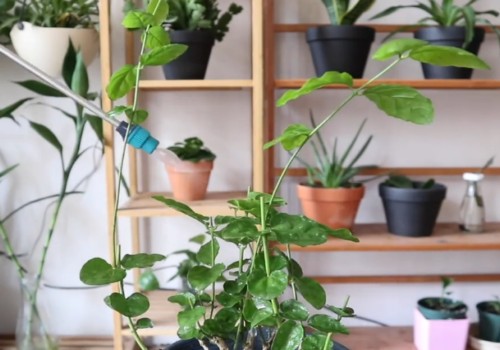
If we find that jasmine shows leggy growth, it is often caused by a lack of light. Therefore, once the plant has successfully adjusted to the pot, promptly provide it with sufficient light. If growing it indoors, be sure to choose a sunny spot with good ventilation that receives light for a long time.
Placement plays an important role in the growth of potted jasmine. Generally, it is best to place it on a south-facing balcony or terrace, and it is recommended to provide more than 8 hours of light per day. Even for jasmine planted with bare roots, as long as it has smoothly completed the recovery period and successfully established in the pot, it should promptly be placed in a suitable location for care.
Next, the jasmine will resume normal growth and will also continuously sprout new shoots. Because the plant consumes a good amount of nutrients during the sprouting period after resuming growth, timely topdressing is very important. Generally, a quick-acting compound fertilizer is recommended, mainly nitrogen-based. A nutrient solution for promoting seedling growth is recommended, since at this time the goal is to promote plant growth.
When jasmine enters the flowering period, the original plant will begin to form flower buds and enter the bud stage. At this time, nutrients also need to be supplemented promptly. But at this stage, the purpose of supplementing nutrients is flowering, so the fertilizer applied should be changed to one mainly based on phosphorus and potassium. You can use a flower-promoting nutrient solution and monopotassium phosphate alternately.
Many gardening friends find that when their jasmine reaches the flowering period, it blooms little, has a weak fragrance, or even does not bloom at all. To a large extent, this is caused by a lack of phosphorus and potassium fertilizer, or by using mainly nitrogen fertilizer with too little phosphorus and potassium. Of course, we can also bury some slow-release fertilizer in the pot, that is, a long-acting flower-promoting fertilizer, so that the plant can be provided with nutrients over the long term.
It should be noted that if the potting soil is still relatively moist, it is not recommended to apply nutrient solution. Otherwise, it may cause the potting soil to become too wet and easily lead to root rot. So in this case, we can appropriately spray some foliar fertilizer. Roughly one bottle cap of flower-promoting nutrient solution mixed with 500 ml of water, sprayed once every 1-2 weeks during the growing season, and stopped after the flowers show buds.
Of course, after the first round of flowering, pruning should be carried out promptly. This can not only save nutrients, but also stimulate the plant to sprout, laying a good foundation for the next round of flowering. After pruning, the plant will soon bloom again, and the floral fragrance will also be very rich. It can be seen that in order to keep the plant flowering, pruning is an indispensable care method.