Buying bare-root succulents online in autumn and potting them up: do these 6 things well and they will establish quickly
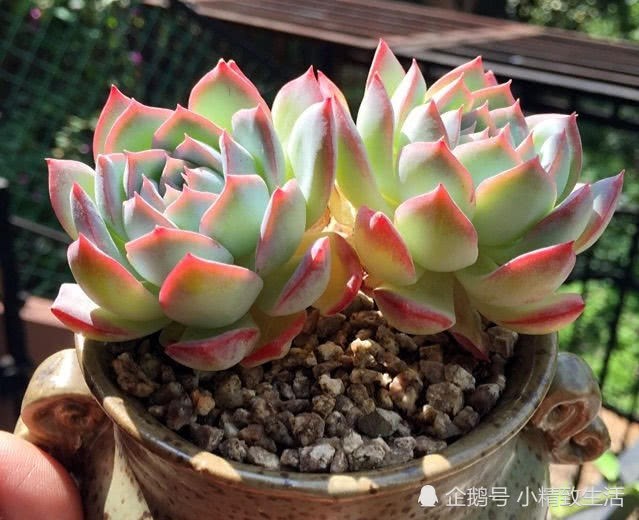
The cool autumn has arrived, and the good season for succulents has begun. At this time, succulent lovers, who have been holding back all summer, can finally go all out and buy, buy, buy. And because online shopping offers a complete range of varieties and low prices, buying bare-root succulents online has become the main source for many succulent lovers to fill their balconies. So what issues need attention when potting up bare-root plants bought online? Xiao Jingzhi Life learns together with you.
1. Trimming the roots
Unlike succulents from local flower markets or greenhouses, most succulents bought online are removed from the soil before shipping, that is, shipped bare-root. And during a journey that often crosses most of China, the succulents not only cannot access soil or water, but also get jostled along the way, so many of their roots will naturally be damaged or dry out. Therefore, the first thing to do after opening the box upon receiving an online order is to trim the roots of the succulent.
Trimming the roots has two main purposes: making it easier to grow new roots and making it easier to pot up. So how do you trim the roots? Mainly, remove some dead roots, dried roots, diseased roots, and some overly fine hair roots, and by the way also clean up some dead leaves at the base of the succulent. When trimming the roots, if you want to be careful you can use scissors; if you are more bold, you can just pull off with your hands any roots that can be pulled off.
2. Washing the roots
After trimming the roots, the next task is washing the roots. The purpose of washing the roots is mainly to wash away potential bacteria and insect eggs, because you do not know whether the seller's growing environment had bacteria or insect eggs before the succulent reached you. The method for washing the roots is to first rinse the soil and impurities off the succulent's root system with clean water, then soak it in a diluted carbendazim solution for 1-2 minutes.
3. Drying the roots
After washing the roots, place the succulent in a ventilated, dry environment with scattered light to dry the roots until the wounds heal, dry, and shrink. This is to avoid potting up before the wounds have healed, so that the wounds directly contact bacteria in the potting soil and cause root rot. For the drying time, there is a formula here: if the cross-sectional diameter of the wound is a few millimeters, then you need to dry the roots for that many days. For example, if after root trimming the thickest cut root of a succulent has a diameter of 3 mm, then that succulent needs to dry its roots for 3 days.
4. Mixing the soil
As for succulent potting soil, there is actually no unified formula. Different regions, different people, different varieties, and even the same variety at different growth stages may all use different soil mixes. Xiao Jingzhi Life can only tell you the most basic: peat soil makes roots grow very quickly, but after a period of care the root system will become very fragile; while coarse sand and other granules make rooting difficult, but after a period of care the root system will become thicker and stronger. So if beginner friends do not yet have experience in mixing soil, you might as well try the most basic soil ratio of 1 part peat + 1 part coarse sand. Then you can mix in Huahuashen and carbendazim to prevent pests and diseases.
5. Potting up
Finally it is time to pot up. When potting up, "moist soil, dry planting" is generally recommended, that is, the potting mix should be only slightly moist. During potting up, first use a piece of tile to cover the drainage hole at the bottom of the pot, then add a layer of large granules, and then add soil to the pot for the first time according to the length of the succulent's root system.Fill to the appropriate position, make a conical mound of soil in the center, spread the succulent's root system evenly over the mound, and then continue adding soil. This can help the succulent be fixed better and provide more rooting space in the future.
6. Establishing
After adding soil and potting up, water for the first time 24 hours later, mainly to prevent some small wounds scratched on the roots during potting from being infected by contact with water. The watering method is to water 2 rounds along the edge of the pot, which can induce the succulent's roots to stretch outward in all directions. After watering, place it in a ventilated environment with scattered light to establish. When the succulent's leaves become soft and then return to plumpness again, it means establishment is complete. After that, normal care can begin.
Actually, caring for succulents is not very difficult. As long as we are attentive, the succulents will repay us with their most beautiful appearance.
Compiled and published by Xiao Jingzhi Life, hoping it is helpful to you!