Detailed Explanation of Earless-Base Cultivation Techniques for Yellow-Back Wood Ear
Yellow-back wood ear (Auricularia auricula-judae) is a popular edible mushroom, characterized by ease of cultivation, strong disease resistance, high economic yield and a short production cycle. Annual cultivation nationwide has remained stable at around 500 million bags. As cultivation scale expands, not only do yields vary widely, but quality differences are also great. The author, in the main production areas of yellow-back wood ear in Sichuan Province...
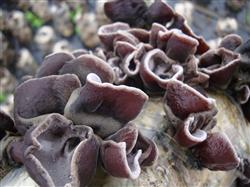
Yellow-back wood ear is a popular edible mushroom, characterized by ease of cultivation, strong disease resistance, high economic yield and a short production cycle. Annual cultivation nationwide has remained stable at around 500 million bags. As cultivation scale expands, not only do yields vary widely, but quality differences are also great. The author conducted on-site surveys in the main yellow-back wood ear production areas of Jintang County, Jianyang County and Chongzhou City in Sichuan Province, as well as Lushan County in Henan Province, and found that with the same spawn, the same formula and an equal amount of dry material (about 110 grams), some bags produced 210 grams of dried ear each, while others produced only about 50 grams; on the other hand, yellow-back wood ear of the same variety could differ greatly in price even within the same flush. All high-priced yellow ears share the characteristics of good color and a relatively small ear base. After comparing cultivation techniques and wood ear quality across regions, the author summarized the earless-base high-yield cultivation technique for yellow-back wood ear. Here, the traditional cultivation method and this cultivation technique are compared respectively, highlighting their differences and the characteristics of earless-base cultivation.
I. Traditional cultivation methods
1. Commonly used varieties
Chuan'er No. 1, Shanghai No. 3, Taiwan No. 2, Hupo, 781.
2. Substrate formulas
① 60% cottonseed hulls, 30% corncobs, 10% miscellaneous sawdust and rice bran, etc., 2%-3% gypsum or lime;
② 30%-40% cottonseed hulls, 30% corncobs, 20%-30% miscellaneous sawdust, 10% rice bran, 2%-3% lime. Mixing with spawn, bagging, sterilization, cooling, inoculation and incubation are all carried out by conventional methods.
3. Fruiting method
The traditional methods of promoting fruiting are horizontal shelf cultivation or hanging-bag fruiting. Horizontal shelf cultivation generally stacks 3-4 layers and fruits from both ends. For hanging-bag fruiting, 10-15 "V"-shaped or "/"-shaped holes are evenly cut around the cultivation bag, followed by fruiting management. In traditional horizontal shelf cultivation, because aeration during fruiting is poor, water easily accumulates and rots the ear, there are few fruiting points, the nutrients in the bag are not easily fully converted, and the product's ear base is especially large, so the dried product price is low; although hanging-bag fruiting improves aeration and provides more fruiting points so that nutrients in the bag are easily fully converted, the "V"-shaped openings easily become waterlogged and rot the bag, causing low yields. The "/"-shaped method gives higher yields and better quality. The product from hanging-bag fruiting has a relatively smaller ear base, so its price is somewhat higher.
II. Earless-base cultivation technique
Compared with traditional cultivation techniques, the earless-base cultivation technique differs only in the fruiting method. The fruiting method of earless-base cultivation has the following characteristics:
1. Site selection
A greenhouse or indoor space that retains moisture, has good ventilation and is far from pollution sources will do. Indoor spaces must be disinfected.
2. Design of the cultivation bed
Fruiting can use either horizontal shelf fruiting or hanging-bag fruiting. Horizontal shelf fruiting is generally single-layer, with a palm's width of space between bags, a palm's width of gap between layers, and an aisle between two racks; the cultivation bags lie evenly flat on the bed surface.
3. Treatment of fruiting bags
Evenly nail disinfected rust-free iron nails into a smooth wooden board so that their pointed ends protrude about 2 mm from the board. After the mycelium of the fruiting bag has fully colonized the bag, before entering the fruiting room, roll the spawn bag over the nail-studded board so that about 30-45 punctures of roughly 2 mm in size are evenly made around the bag.
4. Mushroom house management
Spray water 2-3 times a day; when spraying, spray lightly and frequently, and keep the temperature between 24-30°C. When the mushrooms mature, pick them all in one go; a gentle wipe with the hand is enough. Do not introduce bags one after another and fruit intermittently, otherwise humidity is very difficult to regulate, and bags and ears are easily rotted.
III. Characteristics of the earless-base cultivation technique
Compared with traditional cultivation methods, the earless-base cultivation technique mainly has the following characteristics:
1. Earless base
In the traditional two-end fruiting method, the ear base of yellow-back wood ear is very large; although "V"-shaped or "/"-shaped openings overcome the shortcoming of a large ear base, an ear base is still always present, only somewhat smaller. In contrast, yellow-back wood ear produced by the earless-base cultivation technique has no ear base.
2. Good quality
For yellow-back wood ear products, the presence or absence of an ear base is an important indicator of quality; earless-base products have good marketability and a high price, with each kilogram of earless-base product costing 1-2 yuan more than ear-base products.
3. High yield
The earless-base fruiting method resolves the contradiction in yellow-back wood ear during fruiting between requiring both good moisture retention and good air permeability, and therefore yields are high.