What to do if the rain lily does not bloom? Adjusting temperature, increasing light and applying fertilizer in moderation are key
The benefits of the rain lily are mostly seen in its ornamental value, and its ornamental value is mainly shown in its beautiful flowers. So once the rain lily does not bloom, its ornamental value will be seriously affected, and by then flower lovers must be very anxious! So what should be done if the rain lily does not bloom? For this, the editor has summarized 3 reasons. Let us take a look together.
I. What to do if the rain lily does not bloom, causes/solutions
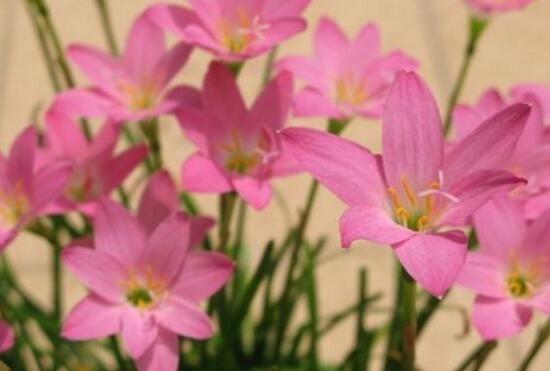
Anyone who has seen the beauty of the rain lily should be deeply impressed. Its emerald green clumps of leaves, paired with pink flowers, are bright and eye-catching, and look extremely beautiful. But because many flower lovers do not grow it according to the rain lily's cultivation methods, the situation of no blooming occurs, and as a result all this beauty is ruined. So finding the reasons why the rain lily does not bloom and solving them is very important.
(1) Reasons why the rain lily does not bloom
1. Insufficient light
According to the growth habits of the rain lily, it can bloom only under sufficient light. So if the rain lily has not bloomed for a long time, you can observe its growth state and see whether it is lacking light. If light is insufficient and growth is poor, it will naturally also affect flowering.
2. Insufficient nutrients
Plants need to consume a large amount of nutrients to bloom. So when the rain lily does not bloom, everyone should check whether the plant has insufficient nutrient supply. Because if only nitrogen fertilizer is applied, without ensuring sufficient phosphorus fertilizer and potassium fertilizer, flowering will also be affected.
3. Unsuitable temperature
The rain lily is not cold-tolerant, so in winter attention should be paid to keeping it warm. Once the temperature is too low and the plant is frostbitten, it may not bloom the following year.
(2) Solutions for the rain lily not blooming
1. Increase light
If the rain lily does not bloom because of insufficient light, then everyone should move it to a place with sufficient light and let it bathe in the warm sun. Of course, the light cannot be too strong, otherwise the flowers will not open and symptoms of yellowing rain lily leaves will also appear.
2. Apply fertilizer in moderation
If it is caused by insufficient nutrients, everyone can use some fertilizer for it, such as some monopotassium phosphate and other nutrients, which can help the rain lily bloom. However, nutrients should be balanced; while applying nitrogen fertilizer, also pay attention to ensuring sufficient phosphorus fertilizer and potassium fertilizer.
3. Adjust the temperature
If the cause is too low a temperature, there is no other way but to care for it carefully. When this winter comes, adjust the temperature so that the rain lily overwinters safely, and then next year it will bloom beautiful flowers.
Overall, the rain lily is not difficult to grow, but to make it bloom beautiful flowers, everyone still needs to care for it carefully. Of course, when the situation of the rain lily not blooming occurs, everyone does not need to be too anxious; just solve it according to the methods above. Finally, may everyone's rain lilies bloom beautiful flowers.
How to grow the rain lily, cultivation methods and precautions for the rain lily/light must be sufficient
The rain lily, also called the rain flower, is a very beautiful plant. Its clumps of leaves are emerald green, paired with pink flowers, bright and eye-catching, beautiful and elegant, making people like it at first sight. In daily life, many people want to grow the rain lily, so how do you grow the rain lily? Below are the cultivation methods and precautions for the rain lily carefully compiled by the editor. They are very comprehensive. Friends who want to grow it, come in and take a look!
I. How to grow the rain lily, understand its habits
The rain lily likes a warm, humid environment with sufficient light. When growing it indoors, we should water it frequently, keep the potting soil moist, and let it get some sun from time to time. In winter, when the temperature is low, everyone should also take good measures to keep it warm. As for the soil, it requires good drainage. Therefore, for how to grow the rain lily, just meet its growth needs. For specific requirements, let us continue reading below.
II. Cultivation methods and precautions for the rain lily
1. Soil
For how to grow potted rain lilies, the first thing is naturally choosing soil. According to the growth habits of the rain lily, we should choose for it a sandy soil with good drainage and rich in humus. As for pH, everyone does not need to care too much, because the rain lily is tenacious by nature and does not have high requirements for soil. It can adapt from slightly acidic soil to weakly alkaline soil, and from sandy soil to light clay.
Precautions: In order for the rain lily to grow better, when planting, everyone should place a layer of broken hard plastic foam blocks or broken bricks and tiles at the bottom of the pot to allow air and drainage. Potting soil choice: half leaf mold and half vegetable garden soil each, mixed with a small amount of sand, plus a little bone meal and nitrogen-phosphorus-potassium compound fertilizer to make the growing medium.
2. Light
Plant growth cannot be separated from light, and the rain lily likes an environment with sufficient light, so for how to grow the rain lily, we should give it sufficient light. Usually, when the outside light is not strong, it can be placed outside to receive full sun. When the light is very strong, it can also be placed outside, but it should be properly shaded.
Precautions: The rain lily is tolerant of partial shade, but do not place it in too dark a place for a long time, otherwise it may result in no blooming. In partial shade, although the rain lily can still bloom, the number of flowers is small and the flowering period is short. Therefore, during the growth of the rain lily, it must be given sufficient light outdoors.
3. Temperature
In the cultivation methods of the rain lily, temperature is something everyone cannot ignore. It is understood that the rain lily likes a warm environment and is not cold-tolerant. Its most suitable growth temperature is 16-28°C, so for it to grow well, everyone should maintain this temperature.
Precautions: The rain lily is not cold-tolerant, and the overwintering temperature should not be lower than 5°C. It is worth mentioning that if the indoor temperature can be kept above 15°C in winter, the rain lily can continue to grow healthily and can even bloom.
4. Watering
The rain lily likes a humid environment, so for how to grow the rain lily, everyone should water it appropriately to ensure the soil is slightly moist and on the dry side. During the growth period, watering should follow the principle of "water when dry, stop when wet", and it must never be allowed to have standing water. After September, reduce the amount of watering. From November to the following spring in February, keeping it slightly dry and slightly moist is enough.
Precautions: The rain lily is drought-tolerant and fears waterlogging, so keeping it slightly dry and slightly moist is enough; do not water too much. When the air is dry, everyone should also spray around the plant to maintain humidity at 30%-35%. In addition, after the first batch of rain lily flowers fade, everyone should control water for 50-60 days, then restore normal watering. This can make the rain lily bloom more.
5. Fertilizing
After talking about watering, let us talk about fertilizing, which is also very important in the cultivation methods of the rain lily. Flower lovers can apply it once every 2-3 months. Increasing phosphorus and potassium fertilizer proportionally can promote bulb enlargement and good flowering. Fertilizer choice: organic fertilizers such as oil cake, compost, or nitrogen, phosphorus and potassium fertilizers.
6. Repotting
In order for the rain lily to bloom more, everyone should repot it once every 1-2 years. Potting soil choice: half leaf mold and half vegetable garden soil each, mixed with a small amount of sand, plus a little bone meal and nitrogen-phosphorus-potassium compound fertilizer to make the growing medium.
7. Pruning
During the growth of the rain lily, proper pruning is also very important. During the flowering period of the rain lily, some of its stems and leaves will turn yellow. At this time, everyone should cut them off, because this affects appearance, and it can also achieve proper thinning and density so as to ensure healthy growth of the rain lily during the flowering period.
How to repot the rain lily, repotting time for the rain lily/repotting once a year can lead to more blooming
The rain lily, also called rain lily, is a very beautiful plant. It is not only good-looking, but can also predict the arrival of feng shui. In daily life, flower lovers who grow rain lilies all look forward to it blooming, and this requires everyone to master some care techniques, such as repotting. So how do you repot the rain lily? How long is the repotting time for the rain lily? For this, the editor will answer your questions.
I. Repotting time for the rain lily, once every 1-2 years
In the cultivation methods of the rain lily, it was introduced like this: in order for the rain lily to bloom more, everyone should repot it once every 1-2 years. So the repotting time for the rain lily is 1-2 years, and for better results, of course once a year is even better.
Potting soil choice: half leaf mold and half vegetable garden soil each, mixed with a small amount of sand, plus a little bone meal and nitrogen-phosphorus-potassium compound fertilizer to make the growing medium.
II. How to repot the rain lily, materials/methods
Materials: one pot of rain lily, a new flower pot, nutrient soil, a small trowel
1. Repotting method
① Removing from the pot: For how to repot the rain lily, the first thing is naturally removing it from the pot. Take the rain lily out of the flower pot, and be careful not to damage the roots, otherwise the survival rate will be affected. Everyone can use the prepared small trowel, starting from the edge of the flower pot and extending vertically toward the bottom of the pot, then loosen and turn the soil, and then lift the rain lily upward from the bottom.
② Dividing: Separate the rain lilies one by one, and divide the large clumps into small plants suitable for replanting. When dividing, you can gently hold each clump of rain lily, slowly shake off the soil on it, then separate the tangled roots, and the large clumps of rain lily can be divided.
③ Repotting: For how to repot the rain lily, the above 2 steps are preparation work. After finishing them, you can carry out transplanting and repotting: spread some nutrient soil in the new flower pot, then hold the rain lily with one hand and use a trowel with the other to scoop soil and sprinkle it around the rain lily, and pat it gently, but do not make it too firm.
2. Care after repotting
① Water and fertilizer: After repotting, the rain lily should be watered and fertilized appropriately. When applying fertilizer, you can sprinkle some around the roots of the rain lily, but it does not need to be too much or too concentrated, so as not to burn the roots. When watering, first water a little at a time, then water more after two days, and afterward water regularly and in fixed amounts every day.
② Light: Place the repotted rain lily in a place with sufficient sunlight, and pay attention to proper shading in summer. After that, you can slowly grow it and wait for the rain lily to bloom.
3. Precautions for repotting
The rain lily has relatively strong vitality, but no matter how tenacious a plant is, it is hard to survive without roots. So when repotting, be careful not to damage the roots of the rain lily, and then care for it carefully during cultivation.
Overall, the rain lily is not difficult to grow, but if you want to grow it beautifully and make it bloom more, besides paying attention to water and fertilizer, repotting is very important. So in order for the rain lily to bloom more beautiful flowers, everyone should master the repotting method for the rain lily, and then repot it once every year.