-

How to achieve simplicity amid complexity and apply techniques according to the material in bonsai creation
The creative process of bonsai art is a long, meticulous, and painstaking one. You must not only master the traditional basic knowledge, but also carefully savour the various kinds of knowledge brought by experience through earnest and meticulous work. To put it plainly, it is about seeking a way out within the basic rules and conventions.
-

How do you apply lime sulfur to bonsai greenery and flowers?
How do you prune bonsai? Only suitable for bonsai growth! One hope in growing potted bonsai is that it can grow luxuriantly and become satisfying. On the other hand, you want to make it compact, attractive and beautiful, with a good overall appearance. Therefore, during growth, continuous pruning is needed. How do you prune bonsai? 1
-
Does applying chlorsulfuron to wheat fields affect cotton?
Chlorsulfuron is a sulfonylurea herbicide with high herbicidal activity, mainly used in wheat and flax fields to control annual monocotyledonous and dicotyledonous weeds. In China, it is currently restricted to use only in wheat fields in the wheat-rice rotation areas of the Yangtze River basin. It is not easily decomposed in soil, and its residual effect lasts up to 6 months. Crops such as cotton, peanut, soybean and vegetables are sensitive to this herbicide. When chlorsulfuron is applied to wheat fields and sensitive crops such as cotton are planted in the following crop, phytotoxicity of varying degrees will occur. In wheat fields where chlorsulfuron has been applied, it is best not to transplant cotton; other crops with strong tolerance can be planted instead.
-
Detailed Explanation of Key Technical Points for Applying Soybean Rhizobia
The use of rhizobia in soybean production is a mature and widely used technology that can substantially enhance the soybean plant's own nitrogen-fixing capacity during the growing period, supplying sufficient nitrogen for soybean production needs. Soybean rhizobia come in two formulations: liquid and solid. Solid rhizobia are applied by seed dressing or soil application. Liquid rhizobia are used by seed soaking. Soybean rhizobia inoculant can also be added during seed coating, but care must be taken that the coating agent and the rhizobia inoculant are compatible with each other, and that the activity of the rhizobia is not inhibited by the efficacy of the seed coating agent. One
-
How to Apply Fertilizer Skillfully to Cotton? A Explanation of Practical Technical Points
Fertilizer is the material basis for high cotton yields, and applying fertilizer according to need is the highest principle of cotton fertilization. Where conditions allow, soil testing and fertilizer recommendation should be carried out, and based on the available nutrient content of the soil and the needs for high cotton yields, the type and amount of fertilizer to apply should be determined. For most cotton fields in the north, the amount of potassium fertilizer should be increased, the amount of phosphorus fertilizer reduced, and nitrogen fertilizer mainly used for topdressing, or a formula fertilizer with "high potassium, low phosphorus, medium nitrogen" should be applied. If a compound fertilizer with equal amounts of nitrogen, phosphorus and potassium is used, the amount per mu should not exceed 25 kg, plus an additional 12.5 kg of potassium fertilizer
-
Key Technical Points and Correct Methods for Applying Boron to Cotton
In recent years, statistics from cotton boron fertilizer trials in various regions show that on boron-deficient soils (soil available boron below 0.5 mg/kg) and potentially boron-deficient soils (soil available boron below 0.8 mg/kg), applying boron fertilizer to cotton can achieve good yield increases. 1. Base fertilizer: Apply before cotton sowing or before transplanting nutrient (pot) seedlings, incorporated during land preparation. Apply about 0.5 kg of borax per mu, which can be mixed evenly with fertilizers such as nitrogen, phosphorus and potassium and applied together, or mixed with fine dry soil before application. 2. Seed fertilizer: At cotton
-
Preliminary Report on the Effects of Applying Kebao Plant Super-Vitamin to Cotton
1 Materials and Methods 1.1 Test material Kebao Plant Super-Vitamin, produced and supplied by Zhejiang Kebao Biotechnology Co., Ltd.; the test variety was Xiangza Cotton No. 2. 1.2 Test site Dasha Lake Farm, Honghu City, Hubei Province. The soil texture was sandy loam; spring plowing and spring irrigation were carried out, and before land preparation, 300 kg/hm2 of 52% diammonium phosphate and 75 kg/hm2 of 46% urea were broadcast.
-
Applying boll fertilizer to cotton pays off, and this investment account must be calculated clearly
This year, due to early drought followed by flooding and the recent hot, high temperatures, cotton development progress has been very uneven. In particular, the number of bolls set on cotton varies greatly. In cotton fields planted earlier and managed better, the average number of early summer bolls per cotton plant has already reached 8 to 10, and for high-yield cultivation farmers, the early summer bolls on cotton can be as many as more than 20, while in general fields the early summer bolls on cotton are only 4 to 6. From the perspective of cotton's growth process, field cotton has now generally entered the boll-setting stage. The period when cotton concentrates on setting bolls is precisely the period of greatest fertilizer demand. From the stages divided by cotton boll setting,
-
Observe the growth of cotton bolls and apply the cotton flowering and boll fertilizer precisely
In the middle and late stages of cotton growth, flowering and boll fertilizer should be applied accurately according to changes in bolls and leaf color. Generally, where soil fertility is good, seedling and bud fertilizer is plentiful, growth during the bud and flowering stage is vigorous, leaves are large, leaf color is deep, internodes are sparse, bracts do not tightly enclose the flower buds, few bolls are set, and leaf color does not fade at early flowering, flowering and boll fertilizer in such cotton fields should not be applied early; it should be postponed until bolls increase and leaf color turns lighter. Conversely, where soil fertility is poor, seedling and bud fertilizer is applied in small amounts, growth during the bud and flowering stage is weak, leaves are small, leaf color is light, internodes are short and thin, bract color is light, flower buds are few, and leaf color is pale yellow at early flowering, 5-8 kg of urea per mu can be applied as a relay fertilizer
-
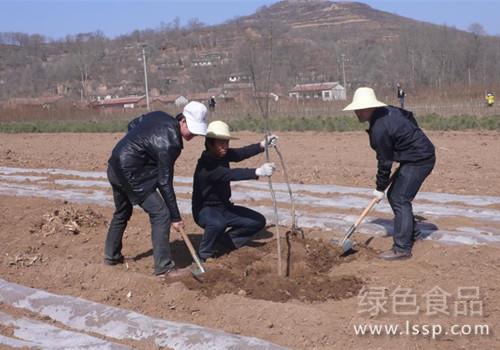
Eight key points for walnut cultivation; only by applying techniques according to the specific conditions can you achieve high yields
Only by applying techniques according to the specific conditions can you achieve high yields. Eight key points to note in walnut cultivation
条件筛选