-

What to Do If Too Much Nitrogen Fertilizer Is Applied to Rice? Detailed Treatment Methods
Treatment Methods for Excessive Nitrogen Fertilizer Application in Rice
-

Rice straw return technology is being vigorously promoted and applied.
Vigorously promoting rice straw return is one of the most economical and effective ways to recycle nutrients through the soil-crop-soil cycle. It not only plays a very important role in improving soil and building up soil fertility, but also has great significance for improving soil potassium and silicon nutrient conditions, balancing crop nutrition, and alleviating the contradiction between the shortage of potassium fertilizer resources in our country and the excessively rapid rise in chemical fertilizer prices. 1. Increasing soil organic matter content. Rice straw has a high organic matter content. Generally, dry rice straw has an organic matter content of 40%. After being returned to the field, it is beneficial to the
-
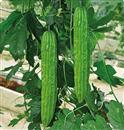
Bitter melon topdressing should not be applied by flushing; master the correct fertilization method
At present, the topdressing method commonly used by vegetable growers cultivating bitter melon is flushing with water, which can apply fertilizer evenly into the soil, but this method of topdressing is not advisable. The reason is that bitter melon is planted at a relatively low density, only 200-300 plants per mu, with only 3-6 plants per row. When topdressing is applied by flushing with water, the fertilizer utilization rate is very...
-
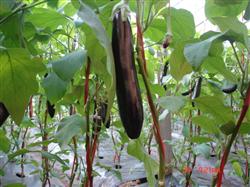
How should base fertilizer be applied to eggplants? These methods need to be mastered
Sclerotinia rot is an important disease on early-spring greenhouse eggplants in coastal areas in recent years. It can occur from the seedling stage to the mature plant stage, with the most severe damage during the early flowering and fruiting period, often causing the buds and young fruits of the first eggplant and the second eggplant to rot and drop, the main stem and branches to die, and early yield to drop sharply. Symptoms of the disease: at the seedling stage, the disease starts at the base of the stem, ...
-
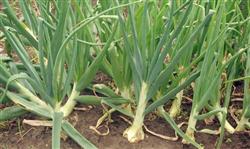
How should fertilizer be applied when growing organic onions?
How should fertilizer be applied when growing organic onions? Please give guidance. For organic onions, you can refer to the following fertilization methods: Base fertilizer: organic base fertilizer combined with 15 kg of urea, 10 kg of diammonium, and 7 kg of potassium fertilizer, applied all at once. Top dressing: apply in three rounds. First round: two weeks after transplanting, apply 6 kg of nitrogen fertilizer as top dressing, ...
-

How should fertilizer be applied scientifically when growing mung beans?
How should fertilizer be applied scientifically when growing mung beans? Please explain that the fertilization principle for mung beans is to rely mainly on farmyard manure, with inorganic fertilizer as a supplement; farmyard manure and inorganic fertilizer should be applied together; apply sufficient base fertilizer, and topdress appropriately. For base fertilizer, human excrement and urine, plant ash, kang soil, and pig, chicken, and sheep manure are best, applied at 1000-3000 kg per mu. Topdressing...
-
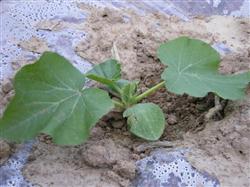
How should base fertilizer be applied correctly when growing pumpkins?
How do you apply base fertilizer when growing pumpkins? Please advise. Base fertilizer for pumpkins is mainly organic fertilizer, combined with a nitrogen, phosphorus and potassium compound fertilizer. Commonly used base fertilizers include barnyard manure, compost or green manure, etc., applied in fairly large amounts, generally accounting for 1/3 to 1/2 of the total fertilizer application, with 3000 to 4000 kg of organic fertilizer applied per 667 sq m. All or...
-
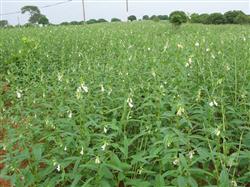
How should micronutrient fertilizers be applied during sesame cultivation?
How should micronutrient fertilizers be applied when growing sesame? Please give guidance. The main trace elements needed during the growth and development of sesame include boron, zinc, manganese, iron and other elements, but the absorption amount differs at different growth stages. During the seedling stage, the absorption rate is slow and the accumulated amount is small; from the flowering stage to the topping stage, the absorption rate is fast and the accumulated amount is large; from topping to mat...
-
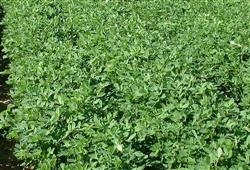
What trace element fertilizers can be applied to peanuts?
Which trace element fertilizers can be applied to peanuts? Please give an introduction. Trace elements play a role in the growth and development of peanuts that major elements (such as nitrogen, phosphorus, potassium, etc.) cannot replace. Scientifically increasing the application of trace element fertilizers is an important measure for high quality and high yield of peanuts. Iron fertilizer: for every 1 ton of dry matter formed by peanuts, 264...
-
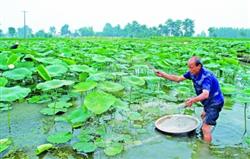
How should fertilizer be applied when growing lotus root?
How should fertilizer be applied when growing lotus root? Please provide guidance. When growing lotus root, you can refer to the following methods for fertilizing: The growth and development of lotus root is divided into 3 stages, namely the sprouting stage, the vigorous growth stage and the lotus root formation stage. The sprouting stage runs from plant sprouting to the appearance of standing leaves. After the standing leaves appear, the lotus root grows new roots and mainly relies on the nutrients stored in the lotus root; the vigorous growth stage runs from the plant...
条件筛选