-
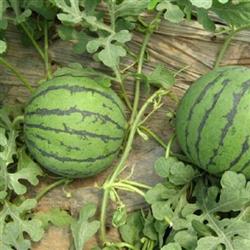
Detailed Guide to Plant Growth Regulator Application Methods
What use are growth regulators in watermelon cultivation? Educational obstacles and countermeasures - Application of growth regulators in watermelon growth regulation: improving seed vigor - regulating plant growth - increasing fruit set rate - fruit ripening - preventing fruit cracking - post-harvest preservation. Improving seed vigor. Watermelon winter-spring cultivation, temperature...
-
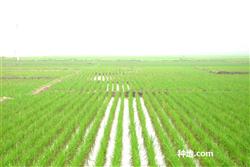
Methods and Key Technical Points for Scientific Potassium Fertilizer Application in Rice
How should potassium fertilizer be applied to rice? What method to use In rice production, scientific and rational application of potassium fertilizer plays an important role in cultivating strong seedlings, improving resistance to disease, insects and lodging, increasing the seed-setting rate, and achieving high and stable yields. According to monitoring, for every 500 kg of rice grain produced, about 15 kg of potassium chloride...
-
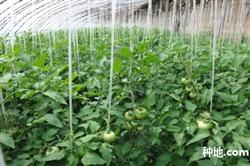
Correct application methods for topdressing water-soluble fertilizer for greenhouse vegetables
How should fertilizer be applied as a topdressing with irrigation when growing vegetables in greenhouses? A request for technical guidance. In greenhouse vegetable production, many farmers apply water-soluble fertilizer as a topdressing with irrigation too frequently and in excessive amounts, often causing soil compaction, root rot, root waterlogging, and plant wilting, which seriously affects farmers' economic returns. For this reason, it is recommended that in greenhouse vegetable production, fertilization should follow the "four combinations"...
-
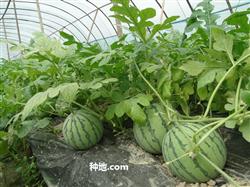
Detailed Explanation of the Differences Between Types of Water-Flush Fertilizers and Their Correct Application Methods
Should organic fertilizer be applied when growing watermelons now? What is the use of applying organic fertilizer? Growing watermelons that are sweet and refreshing is what every melon farmer strives for. Only by continuously improving watermelon quality can one win the market, be favored by the vast number of consumers, and achieve increased production and income for melon farmers. Watermelons have a short growth period and high yield...
-
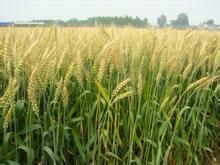
Correct application methods and precautions for slow-release nitrogen fertilizer
Traditional nitrogen fertilizer management for strong-gluten wheat is generally divided into two applications. The first is a portion of nitrogen fertilizer applied before wheat sowing in conjunction with plowing, accounting for 60%-70% of the total nitrogen application; the second is a topdressing applied from the spring green-up stage to the stem elongation stage of wheat in conjunction with watering, accounting for 30%-40% of the total fertilizer application. Some apply it before wheat overwintering...
-
Types of Nitrogen Fertilizers and Scientific Application Methods
At present, the effective utilization rate of nitrogen fertilizers in our country is generally very low. How to reduce nitrogen loss and improve nitrogen fertilizer utilization rate is a problem of common concern to the vast number of farmers. Here are seven methods for improving the effective utilization rate of nitrogen fertilizers, introduced to the vast number of farmers: 1. Implement mixed application and deep application, and strengthen water management. A large number of field...
-
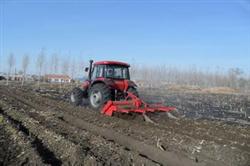
Smart ways to use nitrogen fertilizer: economical and efficient application
1. Good nitrogen retention. Changing nitrogen fertilizer from surface application to deep application can greatly reduce volatilization losses and denitrification. It reduces fertilizer consumption by weeds and algae, giving nitrogen fertilizer a good nitrogen-retention effect. Apply nitrogen fertilizer 7--9 cm deep. According to measurements, when ammonium bicarbonate spherical fertilizer is applied deep, 30 days after fertilization the nitrogen loss is 3...
-
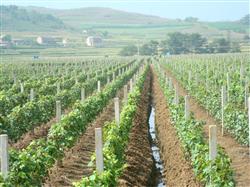
What Types of Nitrogen Fertilizers Are There? A Detailed Guide to Application Methods
The nitrogen fertilizers commonly used in fruit tree production mainly include urea, ammonium bicarbonate, ammonium nitrate, ammonium sulfate, ammonium chloride and slow-release urea. Urea is an amide-form nitrogen fertilizer with a nitrogen content generally of 46%, and can be used as a base fertilizer, a top dressing and a foliar top dressing. Ammonium bicarbonate is an ammonium-form nitrogen fertilizer with a nitrogen content generally of 16.5%-16.8%, and can be used as a base fertilizer, ...
-
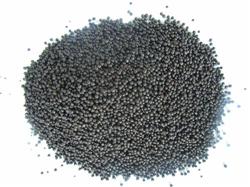
Organic fertilizer can be used year after year; long-term application is no problem
Organic fertilizer and chemical fertilizer used together complement each other, but if the combination is unreasonable, both will suffer damage and cause harm. 1. Benefits of mixing organic fertilizer and chemical fertilizer: 1. Making up for each other's shortcomings and building soil fertility. Chemical fertilizer has a single nutrient, high content, and quick effect, but a short duration; organic fertilizer has complete nutrients, a long-lasting effect, and can improve the soil...
-
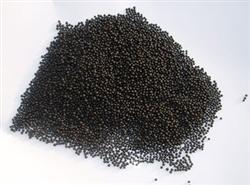
A Detailed Explanation of the Role of Organic Fertilizer and Common Application Methods
In the total nutrient amount currently applied as fertilizer to farmland in our country, about more than 1/4 of the nitrogen, more than 1/3 of the phosphorus, more than 80% of the potassium, and more than 90% of the trace elements are supplied through the application of organic fertilizer. Applying organic fertilizer is an important foundation for the sustainable development of modern agriculture. A large amount of research and practice holds that organic fertilizer has comprehensive nutrients and long-lasting fertilizer efficiency....
条件筛选