Correct application methods for topdressing water-soluble fertilizer for greenhouse vegetables
How should fertilizer be applied as a topdressing with irrigation when growing vegetables in greenhouses? A request for technical guidance. In greenhouse vegetable production, many farmers apply water-soluble fertilizer as a topdressing with irrigation too frequently and in excessive amounts, often causing soil compaction, root rot, root waterlogging, and plant wilting, which seriously affects farmers' economic returns. For this reason, it is recommended that in greenhouse vegetable production, fertilization should follow the "four combinations"...
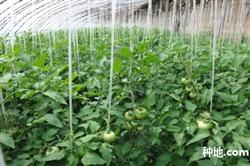
How should fertilizer be applied as a topdressing with irrigation when growing vegetables in greenhouses? A request for technical guidance
In greenhouse vegetable production, many farmers apply water-soluble fertilizer as a topdressing with irrigation too frequently and in excessive amounts, often causing soil compaction, root rot, root waterlogging, and plant wilting, which seriously affects farmers' economic returns. For this reason, it is recommended that in greenhouse vegetable production, fertilization should follow the "four combinations".
(1) Combine topdressing with water-soluble fertilizer applied with irrigation and select high-quality fertilizers. Use multi-element compound fertilizer as the main type, and adopt a method combining topdressing with application via irrigation. On the one hand, this solves the problem of nutrient requirements by surface roots; on the other hand, topdressing can activate the soil layer, increase roots, and buffer fertilizer effects.
(2) Combine organic and inorganic fertilizers. Many farmers use mainly chemical fertilizers whether applying with irrigation or as topdressing. Although some water-soluble fertilizers applied with irrigation contain humic acid, inorganic fertilizers are mostly nitrogen fertilizers such as ammonium nitrate and urea, which promote rapid growth in the short term, with large leaves and long stems. On the surface, growth looks good, but there is a lack of long-term effect. Attention should be paid to the balance between vegetative growth and reproductive growth. Some water-soluble fertilizers applied with irrigation consist of cake fertilizer (hemp seed cake, cottonseed cake, soybean cake) and diammonium phosphate (or ammonium nitrate), plus fertilizers such as potassium chloride and potassium sulfate, but the effect is poor because cake fertilizer requires a certain amount of time to ferment.
(3) Combine biological fertilizer with chemical fertilizer. Biological fertilizer contains more than a dozen kinds of beneficial bacteria and has the effect of activating soil and regulating nutrients. When applied together with inorganic fertilizer (chemical fertilizer), it can eliminate fertilizer damage, increase soil organic matter, and promote root development.
(4) Combine flushing with large amounts of water and small amounts of water. Many farmers apply fertilizer with large amounts of water during both the seedling stage and the fruiting stage, resulting in excessive fertilizer and water, which causes seedling diseases, root rot, and root waterlogging. Whether biological fertilizer, organic fertilizer, or chemical fertilizer, fertilizer should be applied according to the seedlings and in reasonable amounts. "Small amounts of fertilizer and water nourish roots, medium amounts of fertilizer and water protect seedlings, and large amounts of fertilizer and water nourish fruit" is exactly the principle. If the soil is cultivated and loosened in time after fertilizer and water are applied, the effect will be even better.
Get more techniques for using water-soluble fertilizer
Get more fertilizer application techniques