Smart ways to use nitrogen fertilizer: economical and efficient application
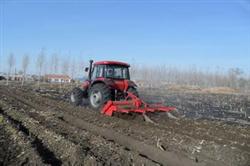
1. Good nitrogen retention. Changing nitrogen fertilizer from surface application to deep application can greatly reduce volatilization losses and denitrification. It reduces fertilizer consumption by weeds and algae, giving nitrogen fertilizer a good nitrogen-retention effect. Apply nitrogen fertilizer 7--9 cm deep. According to measurements, when ammonium bicarbonate spherical fertilizer is applied deep, 30 days after fertilization the nitrogen loss is 3...
 Apply according to soil characteristics. For alkaline soil, acidic or physiologically acidic nitrogen fertilizers can be applied, such as ammonium sulfate, ammonium chloride, etc. Besides neutralizing the alkalinity in the soil, they can also form ammonium nitrogen that is easily absorbed by crops; while on acidic soil, alkaline or physiologically alkaline nitrogen fertilizers can be selected, such as urea, sodium nitrate, calcium nitrate, calcium ammonium nitrate or lime nitrogen, etc. On the one hand, they can reduce the acidity in the soil, and on the other hand, under acidic conditions they form nitrate nitrogen that is easily absorbed by crops. In saline-alkali soil, chlorine-containing ammonium chloride should not be applied, so as not to increase salinity and affect crop growth. Fertile soil should receive less nitrogen; soil with strong fertilizer retention capacity can be fertilized fewer times; conversely, the amount of nitrogen applied should be appropriately increased, and it should be applied in split doses.
Apply according to crop type and growth conditions. The nitrogen requirements of various crops are different. For example, crops such as sugarcane and leafy vegetables need more nitrogen, crops such as rice, corn and wheat need moderate nitrogen, while legume crops have rhizobia that fix nitrogen from the air, so they need less nitrogen. Different crops also respond differently to nitrogen fertilizer types. For example, rice responds well to ammonium nitrogen fertilizer, especially ammonium chloride, ammonium bicarbonate and urea. Potatoes respond well to ammonium sulfate. Chlorine-sensitive crops such as tobacco, starch crops and grapes should receive little or no ammonium chloride. Most vegetables respond well to nitrate nitrogen fertilizer. The effect of nitrogen fertilization also differs at different growth stages of crops. Fertilizing at the key periods of crop nutrient demand, such as the critical nutrient period or the period of maximum efficiency, has a significant yield-increasing effect. For example, corn needs the most nutrients around heading and flowering, and heavy application of ear fertilizer can achieve significant yield increases. Therefore, according to the nutrient requirements of crops, mastering the appropriate fertilization timing and amount is the key to effective nitrogen fertilizer application.
Apply according to the nature of the nitrogen fertilizer. Ammonium bicarbonate and ammonia water must both be applied deeply and covered with soil to prevent volatilization. Because they are both quick-acting fertilizers and are not easily lost in the soil, they can be used as base fertilizer and topdressing, and are suitable for paddy fields and dry land; nitrate nitrogen fertilizer moves greatly in the soil and has quick fertilizer effect, so it is suitable for topdressing on dry land. The nitrogen in urea exists in amino form and generally needs to be transformed in the soil before crops can absorb it in large amounts. Before transformation, its fertilizer effect is not as fast as that of ammonium nitrogen fertilizer and nitrate nitrogen fertilizer. As topdressing, it should be applied 3~5 days earlier than general fertilizers, and it is not suitable as seed fertilizer, but urea is most ideal as foliar topdressing and is suitable for all kinds of soil and all kinds of crops. In short, the application method should be considered according to the characteristics of the nitrogen fertilizer.
Apply in combination with an appropriate amount of phosphate and potassium fertilizer. On soil lacking available phosphorus and available potassium, applying nitrogen fertilizer alone has a very poor effect, and increasing nitrogen fertilizer may even reduce yield. This is because in the absence of phosphorus and potassium, proteins and many important nitrogen-containing compounds are difficult to form, seriously affecting crop growth. Tests in various places have proved that applying nitrogen fertilizer in combination with an appropriate amount of phosphate and potassium fertilizer has a significant yield-increasing effect.