-
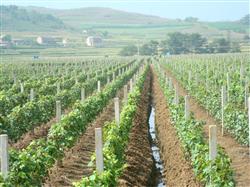
What Types of Nitrogen Fertilizers Are There? A Detailed Guide to Application Methods
The nitrogen fertilizers commonly used in fruit tree production mainly include urea, ammonium bicarbonate, ammonium nitrate, ammonium sulfate, ammonium chloride and slow-release urea. Urea is an amide-form nitrogen fertilizer with a nitrogen content generally of 46%, and can be used as a base fertilizer, a top dressing and a foliar top dressing. Ammonium bicarbonate is an ammonium-form nitrogen fertilizer with a nitrogen content generally of 16.5%-16.8%, and can be used as a base fertilizer, ...
-
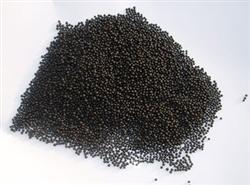
A Detailed Explanation of the Role of Organic Fertilizer and Common Application Methods
In the total nutrient amount currently applied as fertilizer to farmland in our country, about more than 1/4 of the nitrogen, more than 1/3 of the phosphorus, more than 80% of the potassium, and more than 90% of the trace elements are supplied through the application of organic fertilizer. Applying organic fertilizer is an important foundation for the sustainable development of modern agriculture. A large amount of research and practice holds that organic fertilizer has comprehensive nutrients and long-lasting fertilizer efficiency....
-
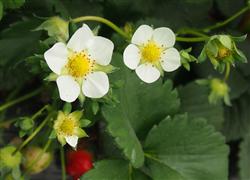
Rational application methods and technical key points for potassium fertilizer
Strawberries bloom and bear fruit continuously, with many flowers and a large fruit load, and a long flowering and fruiting period, so they consume a lot of phosphorus and potassium fertilizer. Once phosphorus is deficient and potassium is low during the flowering and fruiting period, cold resistance will decrease, few flowers will form, flower buds will be weak, and flowering and fruiting will be affected. Not only will the fruit-setting rate be low and the fruit prone to deformities, but the coloring will also be poor, the sugar content will drop, and the taste will be bland, ...
-
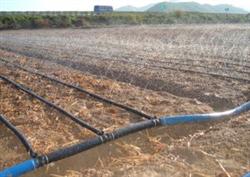
Correct Application Methods for Water-Soluble Fertilizers
Water-soluble fertilizer (WSF) is a multi-element compound fertilizer that dissolves completely in water. It dissolves rapidly in water, is more easily absorbed by crops, and has a relatively high absorption and utilization rate. More importantly, it can be applied in facility agriculture such as spraying and drip irrigation, achieving...
-
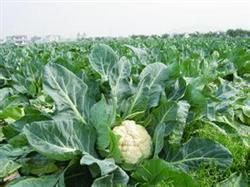
Reasonable Application Methods for Water-Soluble Fertilizers
Plants need to absorb various nutrients for growth and development. However, what determines crop yield is the nutrient factor present in the smallest relative amount in the soil, and yield also changes relatively within a certain limit as this factor increases or decreases. This is usually explained using a water-filled wooden bucket. The bucket is made of staves representing different nutrient contents and factors...
-
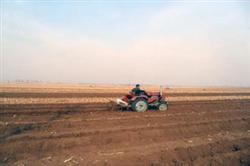
The Benefits of Deep Fertilizer Application and the Correct Application Methods
In recent years, production practice has proven that deep fertilizer application is a technical measure for improving fertilizer efficiency, reducing costs and increasing yields. I. Main forms of deep fertilizer application technology 1.1 Deep application of base fertilizer Use a fertilizing and soil-preparation machine, or add a fertilizer box and fertilizer-discharging device to a moldboard plow or paddy field tillage machine, so that while turning the soil it applies...
-
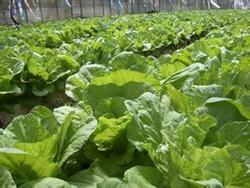
Scientific application methods and technical key points for potash fertilizer
Potassium is one of the three essential fertilizer elements. Many vegetables often require more potassium than nitrogen and phosphorus; well-grown vegetables contain potassium at 2.5%-7% of their dry matter, higher than their nitrogen and phosphorus content. Most vegetables absorb more potassium than nitrogen; for example, the nitrogen-to-potassium ratio absorbed by cucumber is 1:(1.5-1.7), by pumpkin is 1:2.1, and by tomato is 1:...
-
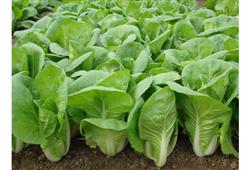
Application Methods of Potassium Fertilizer in Vegetable Cultivation
There are many types of potassium fertilizer, and different types have different application methods. Commonly used potassium fertilizers include potassium chloride, potassium sulfate, potassium-magnesium fertilizer and plant ash. Potassium chloride and potassium sulfate are physiologically acidic fertilizers and should be applied together with lime and organic fertilizer. For chlorine-sensitive crops such as potatoes, potassium chloride and potassium-magnesium fertilizer with high chlorine content should not be applied...
-
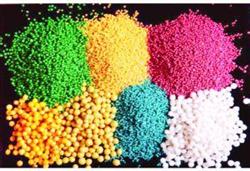
Detailed Explanation of Fertilizer Types and Application Methods (Part 6)
Achievement of Shandong Agricultural University: The fertilizer coating controlled-release technology involves spraying a uniform controlled-release film onto the surface of crop-specific compound fertilizer or urea granules. Its core technology lies in the film material and corresponding additives. By adjusting the formula, the number and size of pores on the film can be set to control nutrient release. Controlled-release fertilizer...
-
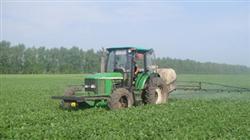
Correct Application Methods and Key Spraying Points for Foliar Fertilizers
1. Different foliar fertilizers have different application concentrations; higher is not always better. 2. Different crops and different growth stages respond differently to foliar fertilizers. 3. Different crops react differently to foliar fertilizers. 4. How well a foliar fertilizer dissolves and its dilution concentration greatly affect the spraying results...
条件筛选