-

How are herbicides used in rice paddies? A detailed guide to application methods
How are herbicides used in rice paddies? What should you do if herbicide damage occurs? We hope experienced readers can help share their knowledge. Zhongdi Network has compiled the methods for applying herbicides in rice paddies and how to identify and remedy herbicide damage. These are listed below for readers' reference. Methods for using herbicides in rice paddies: The common...
-
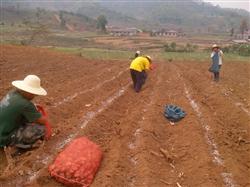
Fertilizer Application Methods for Base Fertilizer and Top Dressing in Yam Cultivation
How do you apply base fertilizer and top dressing when growing yams? Please provide guidance on the methods. For applying base fertilizer and top dressing when growing yams, you can refer to the following methods: 1. Base fertilizer. After selecting a good field, before plowing apply 2000 kg-4000 kg of decomposed farmyard manure and 60 kg-80 kg of compound fertilizer per mu as base fertilizer, then plow the soil 30 cm...
-
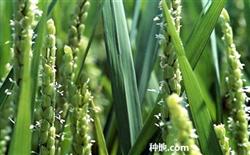
What is the correct application method for rice flower-promoting fertilizer?
How should rice flower-promoting fertilizer be applied? Please guide. Rice flower-promoting fertilizer and flower-preserving fertilizer are collectively called ear fertilizer. Flower-promoting fertilizer is generally applied from the 4th leaf from the top to the 3rd leaf from the top stage of rice. The 4th leaf from the top to the 3rd leaf from the top stage is a reverse leaf age stage. For early-maturing late japonica rice, it is generally applied when the first internode has reached its final length and the second internode is elongating. Flower-promoting fertilizer should be applied according to the seedlings. High-yield fields generally do not apply flower-promoting fertilizer. Only fields with small population growth and obvious yellowing at the early stage of jointing and ear elongation should be topdressed with an appropriate amount. Fields with little base fertilizer, a small population, and obviously faded leaf color should be applied early; fields with sufficient base fertilizer, a large population, and no yellowing of leaf color should be applied less or not at all.
-
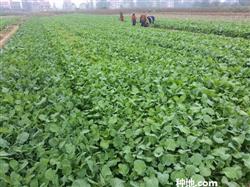
What should be noted when applying boron to rapeseed? Master the correct application method
How to fertilize rapeseed scientifically? Please advise. In rapeseed production in the Yangtze River Basin, the application rates of nitrogen, phosphorus and potassium fertilizers are generally low, the nutrient ratios are unbalanced, organic fertilizer application is insufficient, the straw return rate is low, and deficiencies of trace elements such as boron occur from time to time. Fertilization principles: increase organic fertilizer application and advocate straw return; supplement according to the soil...
-
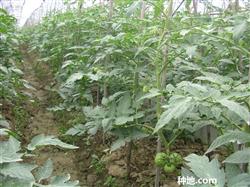
Proper application methods of foliar fertilizer for tomatoes
How should foliar fertilizer be applied to tomatoes? Please explain how to guide the timely spraying of calcium fertilizer on the leaves. Tomato fruit growth requires a relatively large amount of calcium, and when the soil supply of calcium is insufficient, the fruit is prone to blossom-end rot. Therefore, during the fruiting period of tomatoes, calcium chloride, superphosphate, amino acid calcium, calcium supplement preparations, etc. should be sprayed to meet the tomato's need for calcium...
-
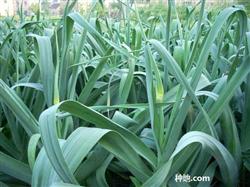
Correct application methods of foliar fertilizer for garlic
How to apply foliar fertilizer when growing garlic? Please give guidance. Foliar fertilization allows nutrients to enter the plant body through the leaves and directly participate in the plant's metabolic processes and the synthesis of organic matter. Its effect is faster than soil fertilization, and it is an economical and reasonable fertilization technique. After garlic is treated with garlic growth promoter, the garlic seedlings'...
-
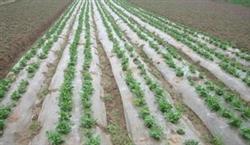
Proper application of the four fertilizers is very important for spring peanuts, and the fertilization method must be mastered
Spring peanut cultivation with plastic film mulching has the advantages of heat preservation, moisture retention, fertilizer retention, improving the soil environment, ensuring uniform and strong seedlings, promoting growth and development, earlier maturity, and increased yield and income. It can usually increase yield by 20%-30%, and increase net income by 50-100 yuan per mu. 1. Fine land preparation and full-layer fertilization for peanut mulching...
-

A detailed guide to the application technology of phenthoate: master the correct method of use
50% Miechonglu emulsifiable concentrate (phenthoate) is an organophosphorus insecticide with moderate toxicity (only 1/30 that of methamidophos). It also has stomach-poison and contact-killing effects, and gives good control of various pests on many crops such as rice, cotton, vegetables and fruit trees. It is especially outstanding against rice stem borers, and no pest has yet developed resistance to it. The application technology of this insecticide is described below: 1. Use technology: 1. To control rice striped stem borer and rice yellow stem borer, use 50% Miechonglin emulsifiable concentrate per mu
-
Planting Performance and Application Prospects of Different Simplified Rice Cultivation Methods
1 Planting performance of several simplified rice cultivation methods 1.1.1 Actual harvested yield. The actual harvested yield was highest for machine-transplanted rice, with an average yield of 9000 kg/hm2; followed by hand-transplanted rice, with an average yield of 8850 kg/hm2; third was seedling-throwing rice, with an average yield of 8700 kg/hm2; fourth was wheat-intercropped rice, with a yield of 8400 kg/hm2; direct-seeded rice had the lowest yield, averaging 8250 kg/hm2. 1.1.2 Number of panicles per unit. Direct
-
Application methods of Shangnong Iprobenfos for controlling rice blast
Shangnong Iprobenfos is a systemic fungicide with a pre-harvest interval of more than 20 days and low toxicity to humans and livestock. Its formulation is a 40% emulsifiable concentrate. Shangnong Iprobenfos is mainly used to control rice neck blast, and is also effective against rice sheath blight (small sclerotium disease), small grain sclerotium disease, rice sheath blight, and planthoppers, and also has insecticidal and lodging-resistant effects. Application methods: To control rice blast, sheath blight, and small sclerotium disease, dilute 600-1200 times with water and spray. Precautions: (1) This agent is also a cotton defoliant, so when applying
条件筛选