Correct Application Methods for Water-Soluble Fertilizers
Water-soluble fertilizer (WSF) is a multi-element compound fertilizer that dissolves completely in water. It dissolves rapidly in water, is more easily absorbed by crops, and has a relatively high absorption and utilization rate. More importantly, it can be applied in facility agriculture such as spraying and drip irrigation, achieving...
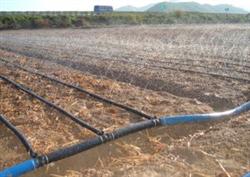
Water-soluble fertilizer (WSF) is a multi-element compound fertilizer that dissolves completely in water. It dissolves rapidly in water, is more easily absorbed by crops, and has a relatively high absorption and utilization rate. More importantly, it can be applied in facility agriculture such as spraying and drip irrigation, achieving integrated water and fertilizer management and attaining the efficiency of saving water, fertilizer and labor.
At present, water-soluble fertilizers are mainly used for drip irrigation, sprinkler irrigation, soilless cultivation, soil drenching and foliar feeding.
In actual production, for a particular plant, choosing the right fertilizer formula, at the right time, and using the correct fertilization method can achieve twice the result with half the effort. How to correctly apply water-soluble fertilizer and improve its utilization rate is a topic of concern for flower growers. Based on my own experience, the author briefly introduces how to apply water-soluble fertilizers from the following 8 aspects.
1. Choose the best formula according to the different growth stages of the plant.
(1) Seedling stage: The seedling stage is the vegetative growth period of the plant and a critical period for plant growth. To enable healthy plant growth, it is necessary both to increase the nitrogen content in the fertilizer formula and to consider the balance of nitrogen, phosphorus, potassium and trace elements, promoting the growth of roots, stems and leaves. During this period, a high-nitrogen formula and a balanced formula can be applied alternately.
(2) Flower bud differentiation stage and flowering stage: Phosphorus can promote root development and flowering in plants. To promote flower bud differentiation, make flower buds plump and strong, and increase the number of flowers, it is necessary to increase carbohydrates and raise the carbon-to-nitrogen ratio. At this stage, it is recommended to use a high-phosphorus water-soluble fertilizer formula.
(3) Fruiting stage of the plant growth cycle: At this stage, fertilizers with higher phosphorus and potassium content should be applied, and calcium and magnesium should also be supplemented. Peters Professional 15-5-15-7CaO-3MgO can be applied. Applying calcium and magnesium fertilizer at this time can achieve the effect of improving quality. For fruiting crops, it can also increase the sugar content of the fruit, enhance the disease resistance of the fruit, make the fruit suitable for long-distance transport, and extend storage time.
2. Apply specialized fertilizers according to the physiological characteristics of different plants, supplying whatever is needed.
Based on the physiological characteristics of plants, the American company Scotts has developed specialized production fertilizers, such as a specialized formula fertilizer for poinsettia and a boron-free formula fertilizer for bromeliad cultivation. Choosing specialized fertilizers can have a good effect on improving product quality for growers.
3. Fertilize in a targeted manner according to the pH of the soil and nutrient solution.
The pH of the soil and nutrient solution affects the availability of nutrients and the absorption of nutrients by plants. For example, phosphorus nutrients have the highest availability within a pH range of 6 to 7, while nutrients such as iron, copper, manganese and zinc have extremely high availability below pH 6 and extremely low availability above pH 7. At the same time, pH also affects the roots' absorption of nutrients. Under acidic conditions, roots mainly absorb anion nutrients, while in an alkaline environment, roots have a stronger ability to absorb cations. The optimal pH range for the availability of the vast majority of nutrient elements is 5.5-6.5.
4. Fertilize in a targeted manner according to the different cultivation media.
Plant cultivation can mainly be divided into two major categories: soil cultivation and soilless cultivation. Soilless cultivation includes sand culture, gravel culture, rockwool culture, peat culture, as well as hydroponics, aeroponics, etc. In soil cultivation, the soil itself can provide a certain amount of nutrients to plants; while the core of soilless cultivation is that the nutrient solution replaces the soil, and almost all the nutrient elements needed by plants must be provided by the nutrient solution. Therefore, the fertilizer formulas and amounts used in soil cultivation and soilless cultivation are different and should be selected and used accordingly.
5. Try to ensure that the various nutrient elements promote each other's absorption and prevent antagonism from occurring.
So-called antagonism means that although there are sufficient quantities of ions of various elements in the plant's growth environment, when their content proportions are out of balance, the ions of some elements will inhibit the absorption of the ions of other elements, causing plants to fail to absorb or absorb insufficient amounts of some elements, resulting in physiological disorders. It has been found that among cations, monovalent ions can inhibit plants' absorption of higher-valence ions. For example: H+ (hydrogen ions), NH4+ (ammonium ions) and K+ (potassium ions) can inhibit plants' absorption of Ca2+ (calcium ions), Mg2+ (magnesium ions) and Fe2+ (ferrous ions), among which H+ (hydrogen ions) and NH4+ (ammonium ions) have a particularly obvious inhibitory effect on Ca2+
(calcium ions). For example, if the pH of the soil solution is too low (H+ concentration is too high), calcium absorption is often blocked and calcium deficiency symptoms appear. Among monovalent cations, Na+ (sodium ions) can inhibit plants' absorption of K+ (potassium ions); among divalent ions, Ca2+ (calcium ions) can inhibit plants' absorption of Mg2+ (magnesium ions); and among anions, Cl- (chloride ions) can inhibit plants' absorption of NO3- (nitrate ions).
6. For different water quality, the fertilizers used should also be adjusted accordingly.
Many flower growers overlook the impact of irrigation water quality on fertilizer effectiveness. In fact, water composition should be the starting point for formulating a fertilization plan. For example, for hard water, acidic fertilizers should be used to correct the influence of bicarbonate; while for soft water, calcium and magnesium need to be supplemented. For example, Peters Professional has some fertilizer formulas specifically targeting soft and hard water to solve the problems brought by different water qualities.
7. Fertilization time: Fertilization should be chosen before ten o'clock in the morning and after four o'clock in the afternoon, avoiding fertilization under strong sunlight. It is best to avoid fertilizing on rainy days, especially foliar fertilizer; do not apply it on rainy days, in order to reduce fertilizer loss.
8. For plant fertilization, the best plan should be chosen.
Different plants require different types of fertilizer and different fertilization periods. Base fertilizer (controlled-release fertilizer) and supplementary fertilizer (water-soluble fertilizer) should be applied together. Only by fertilizing in a targeted manner can low cost and high benefit truly be achieved.