-

How pig farmers can guard against furazolidone poisoning
Furazolidone is a yellow powder, slightly soluble in water, and is not easily absorbed after oral administration; its concentration in the intestinal tract is high, but its toxicity is relatively low. It is effective against bacteria such as Clostridium, Salmonella, and Staphylococcus, as well as streptococci and Escherichia coli. The general dosage for pigs should be 0.007 g per kg of body weight, given orally in 2-3 divided doses. Adult pigs are less sensitive to furazolidone, while piglets are highly sensitive. When the feeding amount is too large or it is used for a long time, it can cause acute or chronic poisoning. After poisoning, piglets show reduced appetite, weakness of the limbs, and an inability to stand
-
Fox and raccoon dog mange mite disease must be carefully guarded against in autumn and winter, never be overlooked
In the current season, the breeding of fur animals is entering the fur growth period. In addition to meeting the various nutrients required for fur growth, special attention should be paid to the occurrence of external parasitic diseases. Zhaoyuan Farm has 100,000 foxes and raccoon dogs in stock and has rich experience in the prevention and treatment of lice and mange mite disease. The precautions are introduced as follows: Pay attention to observation. Skin diseases such as lice and mange mite disease cause great harm to fur animal breeding. They should attract sufficient attention from the vast number of breeding farms and breeders. Especially in the current winter fur growth season, inspecting and preventing mange mite disease is work that breeders must not neglect before pelting.
-
How to defend tea plants against heat damage? A detailed explanation of practical technical measures
Tea plant heat damage refers to the meteorological disaster that, under long-term high-temperature and dry climate conditions, causes tea yield reduction, stunted tea plant growth, or plant death. The tea plant originated in the subtropics and is a perennial evergreen plant, with the habit of preferring warmth and humidity, tolerating shade, and fearing drought. When there is prolonged high temperature and severe drought, scorching sun, low rainfall, and relative air humidity below 50%, leaf transpiration intensifies, and the water absorbed by the root system cannot compensate for the consumption of the aboveground parts, thus causing the tea plant to wither, drop leaves, and even die. To prevent tea plant heat damage, in addition to selecting heat-resistant tea
-
Three Major Types of Phytotoxicity to Guard Against in Cotton Cultivation
Diagnosis and identification of phytotoxicity from insecticides and fungicides. The severity of phytotoxicity from insecticides and fungicides depends not only on the cotton variety, growth stage and morphological characteristics, but also on the type of pesticide, as the symptoms of damage differ for each. For example, dichlorvos has an extremely strong vaporizing effect; spraying twice with a 1000-fold solution can scorch cotton leaves dry. After phytotoxicity from lime sulfur mixture, the leaves and boll husks of the cotton plant develop scorched patches, and the leaves soon dry up and drop off. Lime sulfur mixture is a strongly alkaline pesticide; Bordeaux mixture can only be used 7 to 10 days after its application. If lime sulfur mixture is sprayed within 1 to 2 months after spraying Bordeaux mixture, the cotton leaves will develop black copper sulfide deposits, causing phytotoxicity. In short, when using insecticides and fungicides on cotton, a certain interval should be maintained between successive applications of several pesticides (especially inorganic pesticides), to prevent phytotoxicity caused by reactions between pesticides with different modes of action. In addition, the severity of cotton phytotoxicity is also affected by the environment; for example, when pesticides are sprayed under high temperature, the large amount of water evaporation caused by the heat increases the pesticide concentration, causing spots, yellowing and curling of cotton leaves, and even scorching and death.
-
Causes of and Preventive Measures against Contaminant Infection in Northern Nameko Mushroom Cultivation
As the production volume of northern nameko mushrooms increases year by year, diseases have become severe, causing reduced yields in mild cases and total crop failure in severe cases. In fact, diseases of edible fungi are not incurable; as long as we understand their occurrence and development patterns and find effective control methods, the problem can be solved. Through years of cultivation practice, the author has identified the patterns of contaminant infection. The causes and preventive methods are presented below: 1. Late inoculation - starting inoculation only in April is too late, as the weather has already turned warm and is prone to contaminant infection. Inoculating in February-March is best, because edible fungus mycelium begins to germinate and grow at above 5°C, while molds only proliferate in large numbers above 15°C. Therefore, early inoculation should be arranged with low-temperature mycelium incubation to pass through the mold infection stage.
-
Giant Octopus Appears Again, Revealing Its Ferocious Face
For octopus enthusiasts, these days are absolutely worth celebrating! Recently, researchers just released footage they had taken of the giant squid (Architeuthis) glowing in the deep sea (see February 27 issue of Science Times, page A2, "Deep-Sea Squid 'Comes to the Surface'"), and now people have captured the first live specimen of an adult giant octopus (Mesonychoteuthis). According to an online report in the American journal Science, a fishing vessel operating in the waters south of New Zealand recently caught
-
How to preserve tree stumps for bonsai against rot? These practical methods are a must-know
A fine bonsai work can only be completed after 5-8 years of careful management, but during the care process, how to prevent dead branches from continuing to rot is the most worrying thing. The most common way to preserve tree stumps against rot is to coat them with lime-sulfur mixture (a mixture of lime and sulfur). The preparation method of lime-sulfur mixture: one part quicklime powder, 2 parts sulfur powder, 10 parts water, boiled and prepared. One point to emphasize is boiling! That is, boil it in a pot and then use it, because sulfur powder generally does not dissolve in water. Tree stumps can be treated during both the growing season and the dormant season; in winter it is mainly for prevention, and the effect is very good.
-
Be on Guard Against Copper and Zinc Poisoning in Koi Keeping
I believe none of you will be surprised by this: copper and zinc in the water will kill koi. Of course, this is not news to me either. What I mean is, before you heard the story about a copper-connected heater releasing a large amount of copper into the water and thus killing all the koi, had you ever thought that copper and zinc could kill your koi? Perhaps many of us have not yet heard such a story. Before telling you these things, let me first review some of my own history. Of course, I have been keeping koi for quite a long time.
-
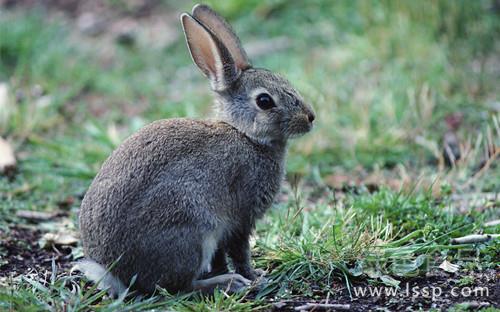
Rabbit epizootic enteritis is highly prevalent in winter; be on guard against refusal to eat, abdominal bloating, severe watery diarrhea and dehydration
Refusal to eat, abdominal bloating, severe watery diarrhea and dehydration; be on guard against rabbit epizootic enteritis in winter
-
Be on strict guard against physiological diseases in edible mushroom cultivation
Wild mushroom: caused by high nitrogen, high moisture and high temperature in the substrate. Control methods: reduce the nitrogen content of the substrate and raise the pH value of the substrate to 8-9. Green mold: caused by a too low pH value, poor ventilation of the substrate bags, and excessive bag temperature leading to a stuffy stack. Control methods: raise the pH value to 8-9, strengthen microporous aeration to promote mycelial growth, and prevent stuffy stacks from high humidity. Dead mushrooms: shortly after pinning, large numbers of small mushroom pins sometimes shrink, turn yellow and even die. This is mainly because the temperature of the substrate bags in the mushroom stack is too high and the heat from mycelial metabolism cannot
条件筛选