-

Green copper emulsion is highly effective against rice bacterial leaf streak
In an average epidemic year, the control efficacy reaches 85-91%, which is 10-15 percentage points higher than that of Japanese-made chlorothalonil. Method of use: in an average epidemic year, spraying twice is sufficient. The first spray is applied at stages 2-4 of young panicle differentiation in rice; 7 days after treatment the disease tends to stabilize, new acute lesions decrease significantly, and the original lesions stop developing after turning yellow. The second spray is applied 10 days later, using 100 mL of 12% green copper emulsion per mu each time, diluted 500-600 times for spraying. After 20 days, the rice leaf color turns noticeably greener, and the newly emerged flag leaf and the second leaf from the top have no
-
Feeding Livestock with Fresh Wheat Bran Requires Vigilance Against Stomatitis
Many breeders are accustomed to feeding fresh wheat bran directly to livestock, and untreated fresh wheat bran often punctures the oral mucosa of livestock and causes stomatitis. After livestock develop stomatitis, they want to eat but refuse food; they take feed into their mouths but dare not chew, or after chewing a few bites they spit the feed back out; white turbid mucus continuously flows from the mouth; and wheat awns can be seen stuck all over the tooth roots and the base of the tongue in the oral cavity. Once this disease occurs, first clean the wheat awns from the livestock's oral cavity thoroughly, then rinse the oral cavity with clean water to prevent infection. Then
-
What pesticide gives the best control effect against older larvae of the rice leaf roller?
Chlorpyrifos and abamectin-monosultap are effective agents for controlling the rice leaf roller, but they must be applied during the 1st-2nd instar young larval stage (at this stage the rice leaf roller has not yet rolled leaves and caused damage, or has just begun rolling the leaf tips and causing damage), when the rice in the field has just begun to roll leaves. For rice leaf roller larvae of the 3rd instar and above, on the one hand they are protected because they are wrapped inside the rice leaves, and on the other hand they are insensitive to nereistoxin-type pesticides such as monosultap and to organophosphorus pesticides such as chlorpyrifos, methamidophos and monocrotophos, so the control effect after spraying is poor. Relatively speaking, older rice leaf
-
How to manage garlic under plastic mulch after it turns green again? Remember these key points
1. Topdressing and watering. From late February to early March, temperatures rise and garlic under plastic mulch begins to turn green again. Because plastic mulch has a heat-preserving and moisture-retaining effect on the soil, generally, when garlic under plastic mulch has been watered thoroughly before winter for overwintering, it should not be watered early in spring, to prevent the soil temperature from dropping. If there is a spring drought and the soil lacks water, water once in early to mid-March. Remove the mulch in April, weed, loosen the soil, apply topdressing, and water. Apply 15-20 kg of urea or 30-40 kg of ammonium bicarbonate and 10-15 kg of potassium sulfate per mu. After fertilizing, irrigate once thoroughly. Appropriately control watering in the later stage. Keep the field
-
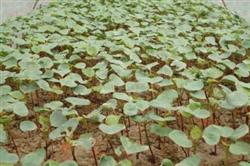
To grow strong cotton seedlings, the seedbed must be protected against five major threats
Common problems in cotton nutrient-cup seedbeds are mainly manifested as drought, waterlogging, disease, fertilizer burn, herbicide damage, and cold damage to seedlings, heat injury to seedlings, and spindly seedlings. The preventive measures are as follows: The moisture content of the cup soil should be moderate. The nutrient-cup seedbed should be located where both drainage and irrigation are convenient. The ideal moisture content of the cup soil is such that it forms a ball when squeezed by hand and breaks apart when dropped to the ground. ...
条件筛选