-

Morel mushrooms become a new star food on the dining table
Known as the "king of mushrooms", the morel is a very precious fungus in the world, a premium nutritional tonic, with a natural function of tonifying the kidney and strengthening yang. According to measurements: morel mushrooms contain 28.1% protein, 4.4% crude fat, and as many as 20-plus kinds of amino acids, accounting for 48.47%; in particular, the content of the 8 essential amino acids for the human body is very high, making up 44.14 of the total amino acids, among which arginine has the highest content, becoming an important factor in tonifying the kidney and strengthening yang. In addition, morel mushrooms also contain a large amount of hormones and other nutritional components. It is both
-
-
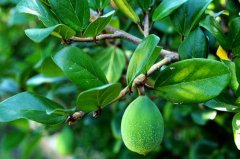
What is jelly fig (Ficus pumila var. awkeotsang) and how is it grown, and what new variety seeds are available?
Where does jelly fig usually grow, and can it also be planted at low altitude? Let's take a look. What characteristics does it have? It seems jelly fig has been bred into new seeds, so let's find out about that too. Jelly fig is a plant unique to Taiwan, mainly divided
-
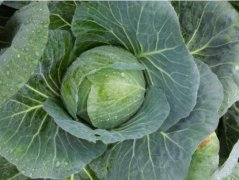
Does Cabbage Contain Sugar? A Detailed Look at Cabbage's Nutritional Value and Benefits
Is cabbage also an anti-cancer crop? Some say it is the best anti-cancer crop - is that true? Let's take a look. Cabbage, also known as "wrapped-heart cabbage" because its leaves roll into a head, is the stem and leaf of the cruciferous plant cabbage, also called "cabbage greens." It originated
-

Analysis of the Characteristics of Legume Vegetables and Their Pesticide Residue Situation
Do you like eating legumes? Do you know whether they have pesticide residues? Inspections have found that the pesticide residue failure rate of legume vegetables such as green beans, peas and common beans is as high as 63%. Among the pesticide residues detected were chlorothalonil and acetamiprid
-
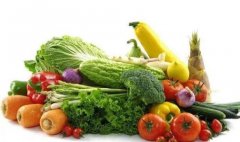
Do Organic Vegetables Contain Pesticides? Pesticide Residues Detected in Organic Fruits and Vegetables
Are organic vegetables necessarily better than ordinary vegetables? In what ways are they better, what do you think? Organic fruits and vegetables fined for lacking certification? What is this all about, let's take a look. Organic fruits and vegetables fined for lacking certification! The Taipei City Regulations Committee yesterday released the results of its organic fruit and vegetable inspection
-
Growing environment requirements and suitable cultivation conditions for Pinellia ternata
Pinellia ternata is a shallow-rooted plant that prefers fertile soil, and was originally mostly found growing wild on moist, loose, and fertile sandy loam or humus soil. It prefers a mild, humid climate and a shaded environment, is afraid of drought, and avoids high temperatures. In summer, it is best grown in a semi-shaded, semi-sunny environment; it grows relatively well when soil moisture content is 20%-40%; drought and water shortage easily cause the seedlings to fall over. Generally, with changes in the growing environment, it can fall over 1-3 times a year. For Pinellia ternata, falling over is, on the one hand, an adaptation to adverse conditions, and more importantly, it increases the number of bulbils, that is, it carries out one round of asexual
-
Key points of boxwood cutting propagation technology, suitable for northern regions
Boxwood is an evergreen tree species from the south, belonging to the Buxaceae family, genus Buxus. For many years, because of its many advantages such as low, compact growth, dense leaves, beautiful shape and evergreen foliage, it has been deeply loved by people and widely used in hedges and topiary design in landscaping. It is one of the tree species with the largest usage and the widest application in northern landscaping, but due to the influence of climate and other factors, raising seedlings in the north has always been relatively difficult. Greening seedlings in the north can only be transported over long distances from the south, which not only increases costs but also results in a low seedling survival rate. In response, we carefully summarized the experience
-
Remarkable Achievements in the Research and Development of Improved Qingyuan Wapiti Varieties in Fushun, Liaoning
Qingyuan wapiti is a science and technology project jointly researched and developed by the Institute of Special Animal and Plant Sciences of the Chinese Academy of Agricultural Sciences and the Fushun Academy of Agricultural Sciences. In December 2002, it passed the review of the National Livestock and Poultry Breed Committee, and in February 2003, the Ministry of Agriculture approved it as a new national livestock and poultry breed. In 2003, it won the first prize for scientific and technological progress in Fushun City, and in 2004, it won the second prize for scientific and technological progress in Liaoning Province. The Fushun Academy of Agricultural Sciences, as one of the main completing units of this scientific and technological achievement, through years of unremitting efforts, has built the Qingyuan Wapiti Improved Breed Breeding Base, possessing excellent purebred Qingyuan wapiti
-
The hard-fleshed peach variety 21st Century is suitable for cultivation in the Yangtze River Basin
Originating in Beijing, the average single fruit weight is 240 g, with the largest exceeding 380 g, and the fruit shape is highly uniform; when ripe, 70% of the fruit surface turns rose red. The fruit surface has few hairs, the fruit is round, the flesh is white with red, with 20% red blush, the flesh is extremely firm and fine in texture, the soluble solids content is 15.7%, the taste is richly sweet with no sourness and a slight fragrance, and the quality is excellent. The stone is small, and the edible rate is 93.7%. In the Chongqing area, buds sprout in mid-February, full bloom occurs in early March, and the fruit ripens in mid-to-late July. It is storage- and transport-resistant and high-yielding; in a high-density orchard (222 trees/667 sq m), the third-year
条件筛选