-
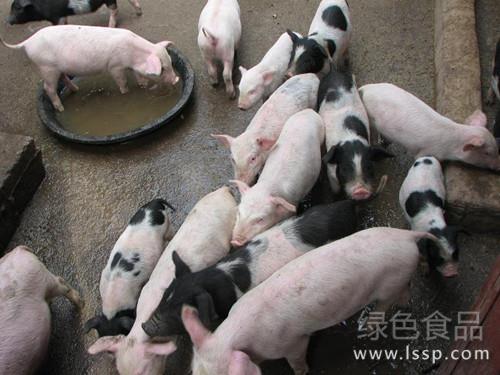
Why is it hard to raise finishing pigs in winter yet still profitable, and how can management be done well?
Raising pigs in winter is difficult but profitable; how to best manage finishing pigs
-

There is an art to spraying cotton, and methods matter even more in unfavorable weather
When spraying pesticides on cotton to control pests and diseases, unfavorable weather often affects spray quality, reduces control effectiveness, and can even cause pesticide damage. In response to this situation, in production practice I have adopted the following countermeasures according to different weather changes and achieved relatively good control results. Windy days On windy days, spraying pesticides causes uneven pesticide coverage on cotton plants, affecting control effectiveness. In response to this situation, pesticide varieties with systemic action and strong penetration can be selected. When spraying, the nozzle should be closer to the cotton plants to prevent the spray mist from being blown away by the wind and causing loss,
-
Detailed Explanation of the Morphological Characteristics and Suitable Growing Environment of Angelica sinensis
[Morphological Characteristics] Perennial herb. Plant height 1-1.5 m. Fleshy taproot system, main root distinct, cylindrical, outer skin yellowish-white, cross-section white, with a chrysanthemum pattern. Stem erect, purple at the base, with obvious longitudinal and transverse striations, divided into vegetative stems and flowering stems. Leaves are divided into basal leaves and stem leaves; basal leaves alternate, with the base enlarged into a sheath clasping the stem, purple-brown. The basal leaves and lower stem leaves are 2-3 times odd-pinnately compound, with toothed notches and coarse serrations along the edges. Compound umbel, terminal, each small umbel has 12-36 florets, white, schizocarp
-
Reasonable flower and fruit thinning of bayberry (Chinese bayberry, Myrica rubra) promotes stable and high yields
Bayberry (Chinese bayberry, Myrica rubra) bears fruit mainly on short and medium fruit branches. Because on these two types of bearing branches only the terminal bud is a leaf bud, while the rest mostly differentiate into flower buds, if they are allowed to set fruit naturally, they often bear excessively, the fruits are small and of poor quality, and it easily causes alternate bearing. To achieve stable and high yields, fruit thinning should be carried out. (1) The thinning period is generally in mid-to-late April, after fruit set is determined and before the fruits rapidly swell. (2) Thinning method: out of every 6 bearing branches, keep 3 to bear fruit and thin out 3, and each fruit-bearing branch keeps 2 fruits. (3) Thinning principle: keep fewer on the upper part of the canopy and more on the lower
-
Tips for Extracting Honey by Spinning: Suitable for Honey Harvesting in All Four Seasons
The main economic benefit of beekeeping comes from extracting honey by spinning. As the seasons change throughout the year, the methods of honey extraction also differ. In the Yangtze River basin, the basic principles for honey extraction are: early in spring, frequent in summer, steady in autumn, and stop in winter. 1. Early in spring. After the beginning of spring, the queen bee begins to lay eggs, worker bees go out to forage, and their enthusiasm for nurturing young bees rises day by day; especially for Chinese bees (Apis cerana), when the temperature is just turning warm but still cold, they fly around searching and collecting scattered nectar. They generally produce their first batch of mature honey around the end of March. Apart from feeding young bees and
-
Which edible mushroom varieties are suitable for cultivation in autumn and winter?
In autumn and winter, as mid-to-late rice, corn, cotton and sugarcane are harvested, not only is space and labor freed up for developing edible mushrooms, but waste materials such as straw, cottonseed hulls, bagasse, corn cobs and mixed wood shavings are also good raw materials for cultivating edible mushrooms. Therefore, autumn and winter are among the best periods for developing edible mushrooms. The button mushroom, commonly known as the mushroom, can be cultivated in open fields using mid-to-late rice paddies. Wheat straw, corn stalks, rice straw and thatch leaves can be used as raw materials; from composting to fruiting takes about 50 days.
-
Detailed Explanation of Variable-Temperature Germination Treatment Methods for Korean Pine Seeds
The Korean pine (Pinus koraiensis) is an excellent timber and food forest tree species in Northeast China. Korean pine seeds have a thick, hard seed coat with a waxy layer that is not easily permeable to water and air. The seed coat contains tannins, and other parts contain inhibitors such as abscisic acid. These factors affect the rapid germination of Korean pine seeds, keeping them in a long-term dormant state. To break the long-term dormancy of Korean pine seeds, under natural conditions, after the seeds mature, they must undergo burial through winter--summer--winter, and can only be sown when taken out in the spring of the third year. In recent years, due to the shortage of Korean pine seeds and high market prices, seed
-
What is the box tree pyralid, an insect found beside vegetable fields?
As spring warms and flowers bloom, insects begin to become active. During a recent science-and-technology outreach activity in the countryside, it was found that a pest called the box tree pyralid had begun to occur and cause damage on boxwood along the roadsides of the park. The box tree pyralid is one of the common pests on plants such as boxwood, small-leaved box, large-leaved box, littleleaf box, Chinese box, spoonleaf box, Korean box, and holly, and it occurs in Shanghai and other provinces and cities. In Shanghai it has 3 to 4 generations per year, with severe overlapping of generations. It usually becomes active in March in spring, begins pupating in mid-April, begins emerging in late April, and the first-generation lar
-
How to reasonably choose the suitable sowing time for wheat?
The suitable sowing time for wheat generally refers to sowing when the average daytime and nighttime temperature in autumn steadily drops to 18-15°C. Within this range, sow semi-winter varieties first, then spring varieties. By making use of the suitable natural conditions such as temperature and light in autumn and winter, strong seedlings can be formed before winter, which is conducive to safe overwintering and improves the tillering and ear-bearing rate and grain weight. Right now is the critical season for wheat sowing, and wheat across the province has begun to be sown from north to south. According to the requirements of different regions and different types of wheat varieties for sowing time, and in response to the issue of suitable wheat sowing time that farmers generally care about, the following suggestions are put forward
-
How to Supplement Vitamins to Chickens in a Scientific and Reasonable Way
1. When the flock has a stress response (such as vaccination, moving to another house, etc.), an additional 10% of vitamins A, E, D, and C should be added. 2. When the flock has a chronic disease (such as chronic respiratory disease), an additional 10% of vitamins A, E, and C should also be added. 3. For chicks, the lower the vitamin A content in the feed, the higher the incidence of coccidiosis in chickens, so when chickens suffer from coccidiosis, an additional 20% of vitamins A, K, and C should be added to the feed. 4. When chickens suffer from fatty liver syndrome
条件筛选