-

How to choose suitable species for edible mushroom cultivation
How to choose species for edible mushroom cultivation
-
Which edible mushrooms are suitable for cultivation in summer
These edible mushrooms are suitable for cultivation in summer
-
Recommended edible mushroom varieties suitable for summer cultivation
Edible mushrooms suitable for summer cultivation
-
Two "Suitables" and Two "Musts" for Fertilizing Edible Fungi, with a Detailed Explanation of Disease Identification Methods
Fertilizing Edible Fungi: Pay Attention to the "Two Suitables and Two Musts"
-
Fertilization Methods for Edible Mushrooms and Varieties Suitable for High-Temperature Cultivation in Summer
Edible Mushroom Varieties Suitable for High-Temperature Cultivation in Summer
-
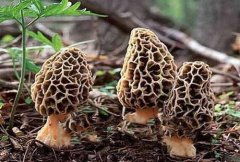
Who should not eat morel mushrooms? Raw-eating poisoning risks and main production areas
The morel mushroom gets its name because its shape closely resembles a sheep's stomach, so it is called morel. Wild morels are distributed in China's Shaanxi, Gansu, Qinghai, Tibet, Xinjiang, Sichuan, Shanxi, Jilin, Jiangsu, Hebei, Beijing, Hunan, Guizhou and other regions. Now
-
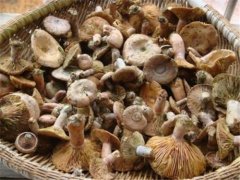
What to Do When Mushrooms Won't Sell? Mushroom Sales Channels and Ways to Find Buyers
Mushroom cultivation is already very widespread now, so when production is good but the mushrooms won't sell, what methods can we use to handle the mushrooms well? First of all, you need a market outlet; if there is no outlet for mushroom cultivation, do not blindly expand production. It is best
-
What is the suitable cultivation season for the button mushroom?
The button mushroom (Agaricus bisporus) is a low-temperature fruiting fungus; it only produces fruiting bodies below 18°C, and the optimal temperature for mushroom production is around 16°C. Therefore, the cultivation season is mostly arranged in autumn and winter, continuing into early spring. Because of regional climate differences and variations in local microclimates, the cultivation period for mushrooms can be determined based on local meteorological data. Generally, the sowing period is when the local autumn average day-night temperature stabilizes at 22-25°C. Counting back about 23 days from this gives the date for building the compost pile; in the Jiangsu-Zhejiang area this is mid to late August,
-
Fresh mushrooms are available in all four seasons. How is that achieved?
In Yangpingsi Town, Zoucheng City, Shandong, fresh mushrooms can be eaten all year round, because the mushrooms here all grow in special mushroom houses. Mushroom houses fitted with shade nets can extend the harvest period of button mushrooms (Agaricus bisporus) into summer. And the mushroom houses kept tightly sealed even in the heat of summer are meant to let straw mushrooms (Volvariella volvacea), which love high temperatures, come to market 2 months earlier. Mushroom houses fitted with air conditioning are meant to maintain a constant temperature and humidity, so that enoki mushrooms (Flammulina velutipes) grow like chives - after one crop is cut, another crop follows. Through technological means, the north-south differences in edible fungus cultivation have been changed, and its
-
Adding table salt to oyster mushroom substrate can increase yields
In oyster mushroom cultivation, using carbendazim to control contamination by foreign fungi is effective, but pesticide residues remain in the mushrooms, which is harmful to human health, and the cost is relatively high. According to experiments: when cultivating oyster mushrooms on raw substrate, adding 1.5 kg of table salt per 100 kg of dry substrate (dissolved in advance in a measured amount of water) and mixing thoroughly can prevent infection by foreign fungi and also bring mushrooms out 5-7 days earlier. At the same time, because table salt is rich in sodium, calcium, magnesium and other metal ions needed for oyster mushroom growth, if a 10% salt solution is sprayed in the early stage of fruiting body differentiation and after each flush is harvested, the mushrooms can be free of pesticide residues and their quality
条件筛选