-

How profitable is Gastrodia elata cultivation? A planting income analysis
Question: How profitable is cultivating Gastrodia elata? Is it guaranteed? Answer: It can be said with certainty that the production benefit of Gastrodia elata is relatively high. At present, the purchase price of fresh Gastrodia tubers is generally around 40 yuan per kilogram. Calculated at a yield of 10 kilograms per square meter, the output value is about 400 yuan. In the first year of planting, the input cost is about 200 yuan, and the production benefit is about 200 yuan; from the second year onward, using self-produced tuber seeds to expand the cultivation area, about 5 times the cultivation area of the first year, and at the same time using first-generation high-quality fungal strains to self-cultivate fungal wood, that is,
-
What are the suitable humidity conditions for the growth of Gastrodia elata?
In addition to temperature, humidity is also an important factor in the growth of Gastrodia elata. The annual rainfall in Gastrodia elata-producing areas is generally above 1000 mm. In some producing areas in the southwest, rainfall is mostly around 1700 mm, and the average relative humidity is 70%-80%. The climate conditions are often continuous drizzle and rainy and humid, which are most suitable for the growth of Gastrodia elata. Therefore, in artificial cultivation of Gastrodia elata, the humidity during the growth period should be controlled at about 60%, and during the overwintering period at 30%-40%. When the temperature is high, it does not matter to Armillaria mellea, but the Gastrodia elata tubers are prone to rot; while when the humidity is low, Gastrodia elata
-
The most suitable planting time for Gastrodia elata and its impact on yield
Gastrodia elata is best planted during its dormant period. Winter planting in October to November and spring planting in March to April both give relatively good results. Gastrodia elata is generally not planted in summer, because this is precisely its growing season; digging it up at this time disrupts the relationship between Gastrodia elata and Armillaria mellea, and even if it barely survives, the results are very poor. Choosing an appropriate cultivation time is one of the important measures for increasing Gastrodia elata yields. The most suitable cultivation time is October to November (called autumn-winter planting), followed by February to March (called spring planting), and the worst is June to July
-
Growing environment requirements and suitable cultivation conditions for Pinellia ternata
Pinellia ternata is a shallow-rooted plant that prefers fertile soil, and was originally mostly found growing wild on moist, loose, and fertile sandy loam or humus soil. It prefers a mild, humid climate and a shaded environment, is afraid of drought, and avoids high temperatures. In summer, it is best grown in a semi-shaded, semi-sunny environment; it grows relatively well when soil moisture content is 20%-40%; drought and water shortage easily cause the seedlings to fall over. Generally, with changes in the growing environment, it can fall over 1-3 times a year. For Pinellia ternata, falling over is, on the one hand, an adaptation to adverse conditions, and more importantly, it increases the number of bulbils, that is, it carries out one round of asexual
-
Detailed Explanation of the Morphological Characteristics and Suitable Growing Environment of Pinellia ternata
[Morphological Characteristics] A perennial herb, 15-30 cm tall. The tuber is spherical or flattened-spherical. Leaves are basal, with long petioles; seedlings have a single leaf that is ovate-cordate, with a pointed tip and entire margin; from the 2nd and 3rd years onward, the leaves are trifoliolate compound leaves, elliptical to lanceolate. On the inner side of the lower part of the petiole, bulbils are produced, which can be used as propagation material. Monoecious; flowers are small and pale green. [Suitable Growing Environment] It prefers moisture and fears drought; it is averse to strong light; it is shade-tolerant and cold-tolerant, and the tubers can overwinter naturally. It is advisable to choose moist, fertile, deep, neutral sandy loam soil.
-
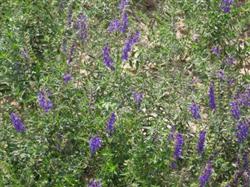
In which regions is Astragalus membranaceus suitable for cultivation and planting?
Where is Astragalus membranaceus suitable for cultivation? Please introduce the growing habits of Astragalus membranaceus. It has very strong adaptability and can be planted in ordinary soil. It is drought-tolerant and cold-tolerant, and yields abundantly in deep, loose, fertile soil. Planting method: it can be sown in spring, summer, or autumn. Before sowing, soak the seeds in warm water. After soaking for 6 hours, scoop the seeds out...
条件筛选