-

Key Technical Points for Low-Temperature Fresh-Keeping and Processing of Edible Fungi
Low-Temperature Fresh-Keeping and Processing of Edible Fungi
-
Research on the Cultivation of Edible Fungi Using Yellow Ginger Residue
Study on the Cultivation of Edible Fungi Using Yellow Ginger Residue
-
Fertilizing and topdressing during edible mushroom care and management should follow the principle of "two suitables and two musts".
Fertilizing and topdressing during edible mushroom care and management should follow "two suitables and two musts".
-
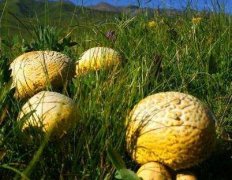
Qinghai Qilian Wild Yellow Mushroom: Benefits, Uses, and Stew Recipe with Pictures
In Xining, Qinghai, apart from the local mutton, there are three things that are local specialties you have to take home: black goji berries, highland barley wine, and yellow mushrooms. Black goji berries are rich in anthocyanins, highland barley wine is a grain liquor brewed from locally produced highland barley, and yellow mushrooms grow on the grasslands
-
Pay attention to light when growing flowers, add color to the festive home
Pay attention to light factors when growing flowers to add color to the festive home
-
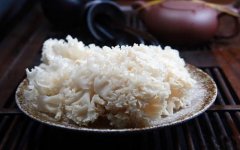
Differences Between Cauliflower Mushroom and Snow Fungus, Price Per Jin and Shelf Life Explained
The superoxide dismutase content in cauliflower mushroom ranks first among all edible fungi, earning it the title of King of Ten Thousand Mushrooms, so its price is relatively high, but artificially cultivated ones are much cheaper. How much is cauliflower mushroom per jin? Jinxiang County, Jining City, Shandong Province
-
Analysis of the Causes of Abundant Yellow Mushrooms and Prevention and Control Methods
The main causes are improper management during the low-temperature season. During the low-temperature season, the humidity inside the mushroom shed may be too high, with excessive watering, and too much free water adhering to the mushroom bodies. After absorbing water, it cannot evaporate, which weakens the metabolism of the mushroom bodies, causing various pathogens to take advantage of the opportunity, multiply in large numbers, and trigger various diseases of the fruiting bodies; continuous low-temperature weather causes the temperature inside the mushroom shed to be too low, and the edible fungus fruiting bodies remain in a poor living environment for a long time, leading to disease; some edible fungus varieties are at the 3rd to 4th flush during the fruiting period, and the nutrient supply in the fungus bags is insufficient. After budding, the
-
What are the reasons for the recent surge of yellow mushrooms?
Recently, many mushroom growers have called in, saying that the edible fungi they cultivated have shown yellowing and death, and they do not know the cause. After investigation, the author believes that the following aspects can be provided as reference for mushroom growers. 1. The disease types occurring recently are mostly brown rot, brown spot, yellow spot, etc. The pathogens are Mycogone perniciosa, Verticillium, Cladobotryum varium, etc. These pathogens have strong survivability, tolerate low temperatures, and prefer high humidity. They can grow normally at around 10°C, and are common pathogens from late autumn to early spring. 2.
-
Key Technical Points for Mushroom Cultivation and Management in Winter Fallow Fields
Using winter fallow fields to cultivate mushrooms with rice straw and manure as the main raw materials can greatly increase income, and the spent substrate after cultivation can be returned directly to the field or used as raw material for bio-organic fertilizer. The winter fallow field mushroom cultivation technique is introduced as follows: Substrate formula: when stacking materials, calculated per square meter of mushroom bed, use 12.5-13.5 kg of dry rice straw, 0.8 kg of rapeseed cake powder, 0.45 kg of gypsum powder, 0.45 kg of superphosphate, 0.45 kg of compound fertilizer, and 0.45 kg of lime powder. Per mu
-
Growing button mushrooms (Agaricus bisporus) in winter-fallow rice fields delivers good returns
In 2004, our county carried out cultivation demonstrations of growing button mushrooms (Agaricus bisporus) in winter-fallow rice fields across 16 townships. After the late rice harvest, rice straw and other materials were used as the main raw materials and composted and fermented into growing substrate, making use of the winter temperature and light resources and the idle winter season of the rice fields; open-field cultivation of button mushrooms achieved notable returns. Chen Yeru, a farmer at the Lixian Institute of Agricultural Sciences, is a button mushroom cultivation demonstration household, with a family of 4 people and 2 laborers, and had never previously cultivated edible fungi. After technical training at the Lixian Edible Fungi Research Institute, he set up on his own contracted field
条件筛选