-
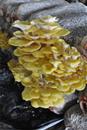
Cultivation Techniques for Phoenix Oyster Mushrooms and Control Methods for Yellow Mushroom Disease
How to control yellow mushroom disease in phoenix oyster mushrooms? Please explain the methods. Yellow mushroom disease in phoenix oyster mushrooms is a bacterial disease caused by infection with Pseudomonas bacteria, which makes the fruiting bodies discolored, rotten, and foul-smelling, and the incidence rate is generally higher in the first flush. When the disease occurs, slime-like pathogenic bacteria appear on the surface of the substrate bags, some mycelia show yellowing symptoms, and in severe...
-

Research on the Cultivation of Edible Fungi Using Yellow Ginger Residue
Study on the Cultivation of Edible Fungi Using Yellow Ginger Residue
-
How to Cultivate Mushrooms in Winter Fallow Fields? Detailed Technical Points
Using winter fallow fields to cultivate mushrooms is a good way to increase income. At the same time, it helps to build soil fertility and increase grain yields. The technical points are: 1. Material preparation. For every 100 sq m cultivated, prepare 1250 kg of rice straw, 1750 kg of cow manure, 45 kg of peanut bran (select well-composted), 15 kg of urea, 40 kg of lime, 25 kg of superphosphate, and 25 kg of gypsum. 2. Pile composting and fermentation. Generally, start piling the material 1 month before sowing, that is, around early October, and the composting period is about 1 month,
-
Causes and Control Methods of Yellow Mushroom Disease in Oyster Mushrooms
In recent years, the cultivated area of oyster mushrooms has continued to increase, but due to poor management by growers, weak awareness of disease prevention, and other reasons, the incidence of yellow mushroom disease in oyster mushrooms has shown an upward trend year by year. In some mushroom sheds, after one flush of mushrooms, no more mushrooms appear for a long time; in others, the small mushrooms that do appear turn yellow before growing up, then shrivel and die, leading to a decline in oyster mushroom quality and making it difficult to increase yield. For this reason, the author studied the causes of the disease and integrated control techniques, and reports as follows: 1. Disease symptoms. Yellow mushroom disease mostly starts from the caps of young mushrooms or the junction between the stipe and cap of small mushrooms. After onset, pale yellow spots appear on the caps of young mushrooms or in the depressions of the caps of small mushrooms. The young mushroom bodies become sticky, stop growing, and die; small mushroom bodies grow slowly and lose elasticity, breaking apart at the slightest touch, after which the mushroom bodies become sticky and shrivel, giving off a foul rotting odor. The disease spreads rapidly, causing the cultivation substrate surface to become sticky and cease producing mushrooms.
-
Golden Star Yellow Umbrella Mushroom Successfully Cultivated Artificially in Jiangxi
Recently, fresh "Golden Star Yellow Umbrella" mushrooms were successfully cultivated artificially in Shicheng County, Jiangxi Province, and quickly became a new favorite in local residents' "vegetable baskets," selling out rapidly after hitting the market. The "Golden Star Yellow Umbrella" mushroom originally had no history of artificial cultivation and is also quite rare growing naturally in the wild. Luo Yijin, a farmer from Taohua Village in the Yangdi area of Hengjiang Town in the county, accidentally discovered wild "Golden Star Yellow Umbrella" mushrooms during an operation deep in the mountains. After picking the mushrooms and bringing them home, Luo Yijin began actively practicing and boldly exploring artificial cultivation methods for them.
-
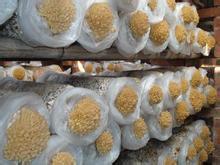
Detailed Explanation of the Facility Cultivation Process for Yellow Flammulina velutipes
The main Flammulina velutipes varieties cultivated in China are divided into two major categories: yellow Flammulina velutipes and white Flammulina velutipes. Among them, white Flammulina velutipes has already been widely cultivated in factory settings, but yellow Flammulina velutipes is still mainly cultivated agriculturally. The year-round facility cultivation technology has not yet been fully solved, and only high-altitude areas can be used for off-season cultivation. In order to understand...
-
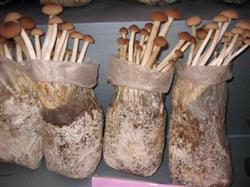
What are the reasons for low yields in tea tree mushroom cultivation?
What causes low yields of tea tree mushroom? What methods can increase tea tree mushroom yields? We also ask experienced netizens to help share. Zhongdiwang has compiled the main factors affecting high and stable yields of tea tree mushroom, for reference as follows: 1. Strain degeneration: tea tree mushroom breeding work is relatively lagging, strain sources are single, and...
-
Key Technical Points for Low-Temperature Fresh-Keeping and Processing of Edible Fungi
Low-Temperature Fresh-Keeping and Processing of Edible Fungi
-
Fertilizing and topdressing during edible mushroom care and management should follow the principle of "two suitables and two musts".
Fertilizing and topdressing during edible mushroom care and management should follow "two suitables and two musts".
-
Pay attention to light when growing flowers, add color to the festive home
Pay attention to light factors when growing flowers to add color to the festive home
条件筛选