-

Causes and Control Methods of Hollow Stems with White Cores in Mushrooms
Symptoms: The mushroom stem tissue is not solid, with a white, loose pith appearing inside; after the fruiting body dries or is cooked, the pith shrinks or falls away, becoming hollow. Causes: This is mainly due to improper water management. If the air humidity in the mushroom house is low and the soil layer humidity is low, especially when the water content of the coarse soil layer is insufficient, the rapidly growing fruiting bodies cannot obtain sufficient water from the soil layer, and consequently the transport and supply of nutrients are also reduced. Combined with the continuous evaporation of water from the fruiting bodies themselves, this causes a lack of water in the middle of the stem and loose tissue, thereby
-
What are the symptoms of hollow-stem white-core mushrooms?
Symptoms: The mushroom stipe tissue is not solid, with a white, loose pith appearing inside; after the fruiting body dries or is cooked, the pith shrinks or falls away, becoming hollow. Causes: This is mainly due to improper water management. If the air humidity in the mushroom house is low and the moisture of the casing soil is low, especially when the water content of the coarse casing layer is insufficient, the rapidly growing fruiting bodies cannot obtain enough water from the soil layer, and the transport and supply of nutrients are also reduced. In addition, the fruiting body's own water continuously evaporates, causing a lack of water in the middle of the stipe and loose tissue, resulting in
-
Causes and Control Methods of Yellow Mushroom Disease in Pleurotus pulmonarius
In recent years, because Pleurotus pulmonarius has good economic returns and can fill the gap in summer edible mushroom products, its production in Jiangshan City has developed rapidly, and by 2004 the total had exceeded 8 million bags. However, in the recent period, some mushroom farms in Jiangshan have experienced mushroom death. Through observation, it was clearly determined that the dead mushrooms were caused by yellow mushroom disease. 1. Symptoms of yellow mushroom disease. Yellow mushroom disease is a bacterial disease caused by infection with Pseudomonas bacteria, which causes the fruiting bodies to discolour, rot and stink, and the incidence rate is generally higher in the first flush. When the disease occurs, a slime-like pathogen appears on the surface of the mushroom bags, part of the mycelium shows yellowing symptoms, and in severe cases the pathogen directly attacks the mushroom bodies, causing the affected mushrooms to develop lesions, turn yellow, and even die. It takes only a few hours from infection of the mushroom body by the pathogen to the appearance of symptoms (dead mushrooms). ① Dry rot type: it can occur from the young mushroom stage to the mature stage; after onset, the cap or stipe shows localized scorched yellow, causing light-coloured mushrooms to become yellow mushrooms, and the mushroom bodies grow slowly, gradually becoming rigid until the whole mushroom body shrinks and dries up, like being dried by lack of water. ② Wet rot type: the affected site or the entire cluster of mushrooms has a sticky, moist feeling; in severe cases, all diseased mushrooms show pale yellow water-soaked rot, with sticky secretions and a foul odour.
-
What to Do When Hollow Mushrooms Appear? Causes and Solutions
This condition is often accompanied by thin, small fruiting bodies, thin caps, and sparse fruiting. It mostly occurs in the late fruiting stage, and is caused by insufficient water in the substrate, insufficient nutrients, low humidity, a relative air humidity staying below 80% for a long time, and disrupted cell elongation within the stipe. Prevention methods: after harvesting the first flush, promptly inject water and nutrient solution into the growing bags, or carry out soil casing cultivation again. The mushroom shed should be shaded to lower the temperature, and when spraying water, spray lightly and frequently, raising the relative air humidity to around 90% to prevent it.
-
Arrowhead Cigu Swallowtail Grass White Water Chestnut
Scientific name: Sagittaria sagittifolia. Aliases: Cigu, Swallowtail Grass, White Water Chestnut. Family and genus: Alismataceae, Sagittaria. Category: perennial emergent aquatic plant. Morphological characteristics: up to 12cm tall, with underground rhizomes, the tip forming a corm, the corm surface covered with membranous scales. The tip has a relatively long terminal bud. Leaves are borne at the base, emerge from the water in a truncate form, the leaf blade is arrow-shaped, entire, the petiole is relatively long and hollow. Submerged leaves are linear, the flower stem is upright,
-
Golden Star Yellow Umbrella Mushroom Successfully Cultivated Artificially in Jiangxi
Recently, fresh "Golden Star Yellow Umbrella" mushrooms were successfully cultivated artificially in Shicheng County, Jiangxi Province, and quickly became a new favorite in local residents' "vegetable baskets," selling out rapidly after hitting the market. The "Golden Star Yellow Umbrella" mushroom originally had no history of artificial cultivation and is also quite rare growing naturally in the wild. Luo Yijin, a farmer from Taohua Village in the Yangdi area of Hengjiang Town in the county, accidentally discovered wild "Golden Star Yellow Umbrella" mushrooms during an operation deep in the mountains. After picking the mushrooms and bringing them home, Luo Yijin began actively practicing and boldly exploring artificial cultivation methods for them.
-
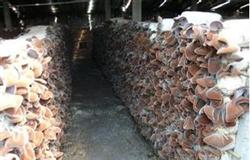
Detailed Explanation of Key Points for Cultivating Yellow-Back Wood Ear Mushroom (Auricularia polytricha) on Rice Straw
1 Rice straw softening treatment. The quality of rice straw treatment is the key to the success or failure of cultivating yellow-back wood ear mushroom and to achieving high yields. Rice straw is a loose material that easily accumulates water but is difficult to shape, and its epidermis in particular has a waxy layer that can hinder mycelial colonization of the substrate. Through experimentation, we have developed 3 methods for softening rice straw...
-
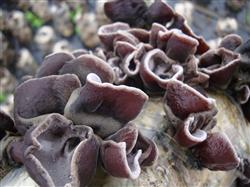
Detailed Explanation of Earless-Base Cultivation Techniques for Yellow-Back Wood Ear
Yellow-back wood ear (Auricularia auricula-judae) is a popular edible mushroom, characterized by ease of cultivation, strong disease resistance, high economic yield and a short production cycle. Annual cultivation nationwide has remained stable at around 500 million bags. As cultivation scale expands, not only do yields vary widely, but quality differences are also great. The author, in the main production areas of yellow-back wood ear in Sichuan Province...
-
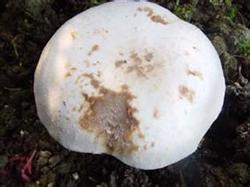
What are the control methods for yellow blotch disease in button mushrooms?
How do you control yellow blotch disease in button mushrooms? Please explain the methods. In the early stage of infection by yellow blotch disease in button mushrooms, small spot-like pale yellow diseased areas appear on the cap. As the fruiting body grows, the areas expand and infect other fruiting bodies, after which the color darkens and the areas spread to the entire cap. In the late stage of infection, the mushroom body secretes yellow-brown water droplets...
-
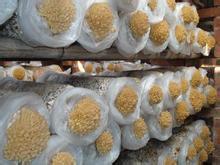
Detailed Explanation of the Facility Cultivation Process for Yellow Flammulina velutipes
The main Flammulina velutipes varieties cultivated in China are divided into two major categories: yellow Flammulina velutipes and white Flammulina velutipes. Among them, white Flammulina velutipes has already been widely cultivated in factory settings, but yellow Flammulina velutipes is still mainly cultivated agriculturally. The year-round facility cultivation technology has not yet been fully solved, and only high-altitude areas can be used for off-season cultivation. In order to understand...
条件筛选