-
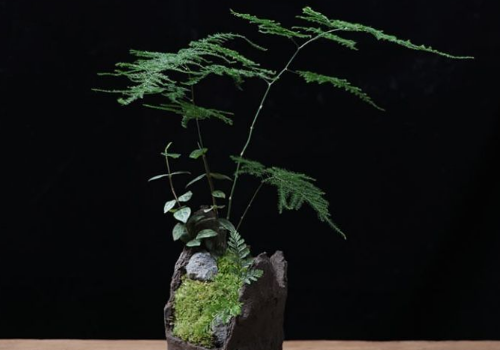
What is the use of keeping a rabbit's foot fern indoors, and why do its leaves turn yellow and wither
The cultivation method of the rabbit's foot fern is actually not difficult. What is the use of keeping a rabbit's foot fern indoors? Why do its leaves turn yellow and wither: What is the use of keeping a rabbit's foot fern indoors: Most green plants have the effect of purifying the air, and the rabbit's foot fern is no exception, though its effect is not particularly greater. Its leaf shape is graceful, its form is elegant
-
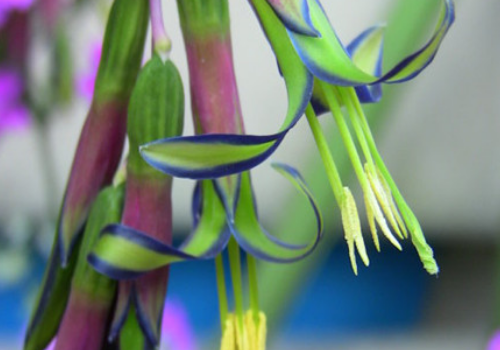
How to Grow Billbergia nutans and Tips for Dealing with Rhizome Rot
The emerald-green leaves of Billbergia nutans are also very beautiful. How do you grow Billbergia nutans? What should you do if the rhizome rots? How to grow Billbergia nutans: Billbergia nutans likes a warm, humid environment with plenty of sunlight. Only under bright light conditions can it flower normally and produce the most beautiful leaves.
-
How to Raise Quail Without Them Dying? Breeding Methods and Techniques
How exactly do you raise quail? Do you know? What should you pay attention to when raising quail? Would you like to find out? Then let us take a look together. Raising young quail: Before 40 days of age they are young quail. After the small quail hatches and its down dries, it can be placed in a
-

Detailed Explanation of the Key Technical Points for Cultivating Reishi Mushroom with Corncobs
Reishi mushroom, also known as red reishi, is a traditional precious medicinal material. The average retail market price is 150-200 yuan. For a long time, artificial cultivation has used log segments or sawdust as the main substrate, combined with supplements for large-scale production, while cultivation of reishi mushroom with corncobs has rarely been reported. While developing edible (medicinal) mushroom production, the author conducted experiments on cultivating reishi mushroom using corncobs and achieved good results. The key technical points are introduced as follows: 1. Raw material processing. Select fresh, dry, mold-free corncobs, crush them to the size of soybean grains
-
Feed Formulation and Processing Techniques for Medicinal Silkworm Larvae Infected with Beauveria bassiana
Currently, medicinal silkworm larvae infected with Beauveria bassiana are in strong demand on the Chinese medicinal herb market, and raising and processing them is profitable. The methods for raising and processing them are: 1. Rearing the mature silkworms. Raising and processing medicinal silkworm larvae infected with Beauveria bassiana should be carried out as a specialized operation in non-cocoon-producing areas, so as to avoid a devastating impact on cocoon silkworms. The raising and processing can be carried out throughout the year. As for the feed, besides a small amount of mulberry leaves, more evening primrose, Jiancan grass, white clover, cup plant (Silphium perfoliatum) and the like can be added to replace mulberry leaves, so as to supplement the shortage of mulberry leaves and reduce feeding costs. For
-
The Meiren Suli pear has bright red fruit with excellent market appeal.
Bred through cooperation between China and New Zealand (Kosui x Huoba), it is a sister-line variety of Mantianhong. It matures in mid-September. The fruit generally weighs around 200 g, with a maximum of 350 g. It is oval-shaped, with a pale yellowish-white background and a fully bright red blush, extremely attractive, and is a near all-red high-quality variety. The flesh is white, fine, tender and crisp, extremely juicy, with a sweet-and-sour taste, top-grade quality, a small core, and no stone cells. The soluble solids content is 11.3%-12.2%. It stores well, has a high fruit-setting rate, and is very productive. It is a bright red commercial pear high-quality variety and the most ideal replacement variety for earning foreign exchange through export. Plant price: under 40 cm 14 yuan, 40 cm 16 yuan, 70 cm 18 yuan, 100 cm 20 yuan, scion buds 5 yuan. Seedlings start at 10 plants, buds start at 60 buds for sale.
-
How to save seed potatoes for autumn planting with good results
1. Fine land preparation For autumn potatoes, choose a field with high terrain, convenient drainage and irrigation, and fertile soil, preferably loamy soil. 2. Sprouting seed potatoes In mid-August, remove diseased potatoes, cracked potatoes, and irregular potatoes from the harvested spring potatoes, and cut them into pieces according to the seed potato eyes. Cut each seed potato lengthwise into 4-6 pieces, and prepare a medicinal solution with 0.1 g gibberellin mixed with 100 kg water. Soak the potato pieces for 10-20 minutes, take them out and dry them, then layer them with wet sand to sprout. During sprouting, generally do not sprinkle water, and keep the sprouting temperature above 30°C. Under low temperature, ventilated, and moist
-
Detailed Explanation of High-Yield Cultivation Techniques for Autumn Potatoes with Rice Straw Mulching
Potatoes have the characteristic of preferring cool conditions and fearing heat, making them perfectly suited for no-till planting in idle winter fields. This method requires no plowing or soil covering, saving labor and effort, and is simple to operate. Harvest can be achieved after 3 months, with an average yield of over 1,500 kg per 667 sq m, a 30% increase compared to traditional cultivation methods. At 0.8 yuan per kg, this yields a gross profit of 1,200 yuan. This is a quick and effective project for improving land utilization and increasing farmers' income. 1. Selecting improved varieties and soaking seeds for sprouting: Choose varieties with high quality and yield, a relatively short growth period, relatively high tolerance to high temperature and drought
-
Six Improvements in No-Till Cultivation of Autumn Potatoes with Rice Straw Mulching
Autumn potatoes can be harvested in December and marketed as vegetable potatoes, giving relatively good returns. Adopting no-till cultivation of autumn potatoes with rice straw mulching not only saves labor and time, reduces labor intensity, and prevents environmental pollution caused by burning rice straw, but also yields about 1500 kg per mu, an increase of more than 10% over plowed and sown crops. Especially in recent years, in conjunction with production demonstrations, agricultural technicians have made some improvements to this technology, making it further mature. Specifically, these are the "six improvements": switch to early-maturing excellent varieties. Effective growth period of autumn potatoes
-
Key Techniques for No-Till Cultivation of Autumn Potatoes with Rice Straw Mulch
Autumn potatoes can be harvested in December and marketed as table potatoes, giving good returns. Adopting no-till planting of autumn potatoes with rice straw mulch not only saves labor and time and reduces labor intensity, but also prevents environmental pollution caused by burning rice straw, and can increase yield by more than 10% compared with plowed planting. The key cultivation points are as follows. 1. Select early-maturing, excellent varieties. The effective growth period of autumn potatoes is short, generally 80-90 days. Therefore, seed potatoes should be selected from varieties with early maturity, fast tuber enlargement, and good yield and disease resistance, such as Dongnong 303, Holland 15, etc.
条件筛选