-
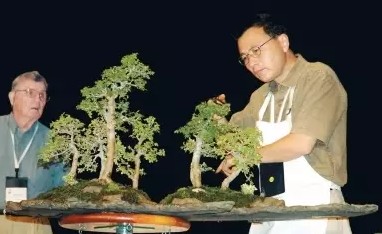
Yangzhou-style penjing debuts on the world stage, with Chinese penjing art master Zhao Qingquan giving a special presentation
With no prominent signboard hung high and no luxurious decoration, Master Zhao Qingquan's studio, tucked away in a corner of the Penjing Museum in the Ten Thousand Flower Garden of Slender West Lake, looks quite simple and understated. When the reporter walked into Zhao Qingquan's office, he was on the phone with Su Yiji, former chairman of the International Bonsai Association and a famous penjing and viewing stone artist from Taiwan, China
-
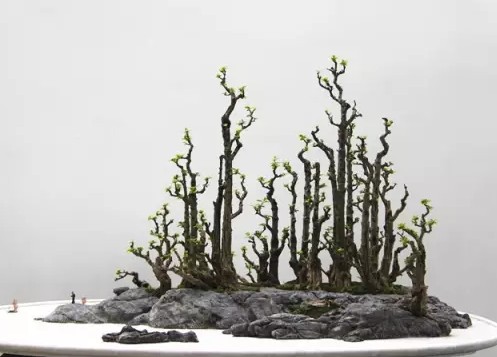
Landscape bonsai come in a myriad of forms, with the world's finest scenery distilled into a single pot
Landscape bonsai is a group of scenery created by mountains, rocks, grass and trees arranged and combined in a pot, and this combination follows a certain pattern of mountain momentum or structural composition. Below, let us appreciate some of the more representative landscape bonsai works of Shanshui Renjia, in the hope of better exchange with the broad community of bonsai enthusiasts
-
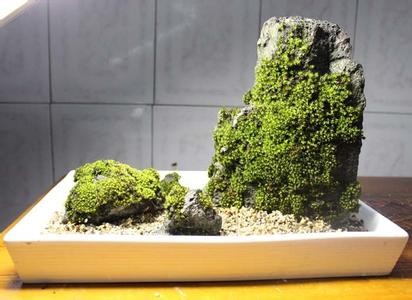
Detailed Explanation of the Art of Accenting Landscape Bonsai with Moss
Ordinary root-textured stones have strong water absorption and tend to grow moss easily; hard stones, if kept in a damp and shady place for a long time, can also grow a thin layer of moss on their lower parts. As for where moss grows, there is more moss on the lower part of the rock and less on the upper part, less moss on the light-facing side and more on the shaded side; less moss on the ridges and more in the hollows. This is the law of natural ecology.
-
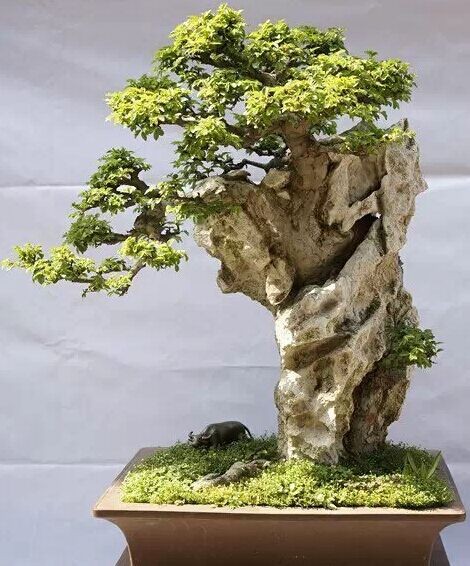
How do you make a root-over-rock bonsai? Practical experience shared with you
A root-over-rock bonsai is made by exposing thick roots and letting them cling to and grow over rocks, with some bonsai accessories appropriately chosen to embellish it. It has the imposing air of standing atop a peak, giving people a feeling of indomitability, ceaseless upward striving, and unending life
-
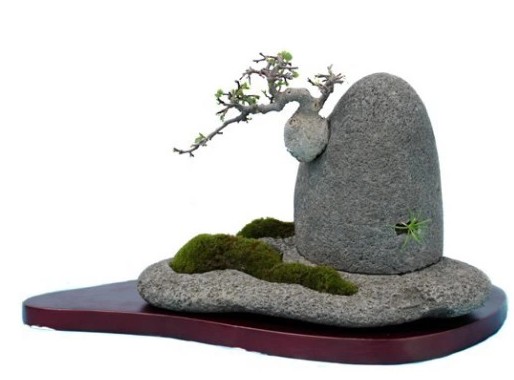
Why Rock-Clinging Bonsai Is So Popular with the Public
Rock-clinging bonsai reflects the natural scene of trees growing on rocks. It is an exaggeration and close-up portrayal of the image of trees tenaciously growing in cliff crevices or on mountain peaks and rocky summits, rich in content and profound in artistic conception. At the same time, it can also make up for some natural defects of tree bonsai (for example, bonsai material with a trunk that is too tall).
-
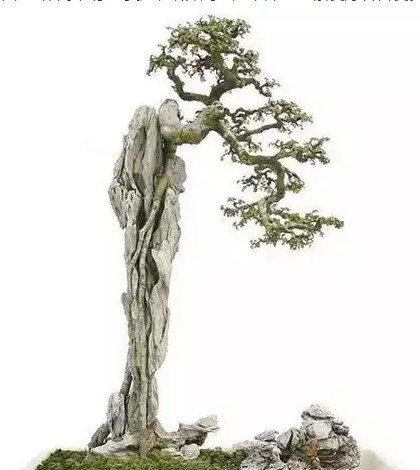
The exquisite beauty of rock-clinging bonsai, revealing the charm of nature within a tiny space
China's bonsai art has been passed down for more than a thousand years and is praised as "three-dimensional painting" and "silent poetry." Rock-clinging bonsai is a further inheritance and development of bonsai art; the perfect blend of the firmness of stone and the softness of trees deeply attracts stone enthusiasts and bonsai lovers. As usual, below are exquisite rock-clinging bonsai presented for your appreciation.
-

What are the principles for matching tree bonsai with pots? Explained in one article
China produces a great variety of pots, with ever-changing styles and extremely rich colors. In terms of material, there are clay pots, pottery pots, glazed pots, porcelain pots, stone pots, and so on, each with different properties and uses, among which pottery pots and glazed pots are more commonly used. Yixing sandy pottery pots and Guangdong Foshan glazed pottery pots have a long history
-
Measures for Dealing with Abnormal Leaf Drop in Winter Flowers and Methods for Preserving Edible Fungi
Suggestions on Abnormal Leaf Drop in Winter Flowers
-
Edible Fungus Disease Prevention and Control Methods and How to Deal with Root Rot in Clivia
How to Deal with "Heart Rot" in Clivia
-
Causes and prevention of root rot in clivia, with methods for controlling edible fungus diseases
Causes and prevention of root rot in clivia
条件筛选