-

Three key steps must be done well during the dehydration of shiitake mushrooms
Timely harvesting is the foundation for the bright color of the finished mushrooms. One of the main reasons shiitake mushrooms change color during drying is that the mushroom bodies are injured before drying. To overcome this shortcoming and enhance the resistance of the mushroom bodies to external pressure, timely harvesting is very important. When the veil has fully split and the cap has curled upward like a copper gong, they should be harvested. Do not spray water within 2 hours before harvesting. Use the "twist-harvest method" to pick them. After harvesting, handle them gently, remove debris and stems, and immediately send them to the nearest dehydration room for dehydration. Generally, from harvest to entering the drying stove, the distance should preferably not exceed 5
-
Which type of inoculation tent works well for edible mushroom inoculation
1. Construction. The mosquito-net-style plastic inoculation tent is made from 3 m wide, 0.5 mm thick agricultural plastic film, and the specifications of the inoculation tent are 3 m long, 3 m wide and 3 m high. First cut a 13.5 m length of plastic film as the 3 m square enclosure wall of the inoculation tent, and take another 3 m length of film as the tent roof. Then use a plastic sealing machine or electric soldering iron to seal the two films along the edges, leave an overlapping joint line on one side of the tent as the door of the inoculation tent, and at the same time tie a rope at each of the 4 top corners of the inoculation tent for easy hanging. 2. Disinfection. Before use, first clean the inoculation
-
How to prevent mushroom wilting? Doing these six things well is key
1. Mix the substrate and prevent early When using corn cobs, wheat straw, or rice straw as the main material, add 5% bran or 4% fermented decomposed livestock and poultry manure. When using nitrogen-rich cottonseed hulls as the main material, no nitrogen source needs to be added, but mite damage must be controlled; spray 800-fold trichlorfon solution when mixing the substrate. 2. Keep acidity and alkalinity moderate The amount of lime added during mixing should reach 5%. After each mushroom flush is harvested, spray 1% lime water or 4% wood ash water to raise the pH of the growing substrate. 3. Ensure ventilation and air exchange Within 4 days after sowing, around 10 o'clock each day
-
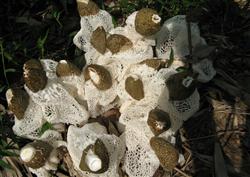
A detailed guide to bamboo fungus (Dictyophora indusiata) cultivation techniques, teaching you how to grow bamboo fungus well
Bamboo fungus cultivation can be carried out by referring to the following methods: 1. Field spawn production. As long as growers purchase bamboo fungus raw materials, they can make their own cultivation spawn at the field edge. From late December to early January, choose a corner of the field and prepare a compost bed for breeding. Use 80% mixed wood sawdust and 20% wheat bran as the culture medium for bamboo fungus spawn, add 110% water, then put it into woven bags, sterilize under normal pressure for 10 hours, take it out and flush water into the bags with clean water to let it drain, then mix in 1% gypsum powder, pile it onto the breeding bed, adopt the method of 2 layers of material and one layer of spawn sowing, and sprinkle some spawn on the surface of the last layer of material. For each sq m of bed, use 20 kg of dry material and 3-4 bottles of bamboo fungus stock spawn. To cultivate 100 sq m of area, only 4 sq m of field spawn production is needed, equal to 25:1. After sowing, cover the surface with woven bags, shade with rice straw, and finally cover with film supported by bamboo strips arched over. After sowing, uncover the film for ventilation once every 3-5 days. After 40-50 days of cultivation, when the mycelium covers the material pile, it becomes field bamboo fungus spawn.
-
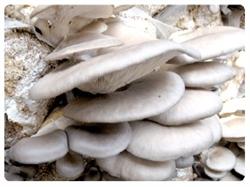
Clever prevention and control of contaminants in oyster mushroom cultivation: mud and sand covering works well
In the process of oyster mushroom cultivation, various cultivation methods will suffer from contaminant mold pollution to different degrees, and it is especially serious in seasons with higher temperatures. At best it affects yield and income; at worst it leads to reduced production or even total crop loss, causing severe economic losses. Many growers are helpless when they encounter this situation and apply large amounts of fungicides...
-
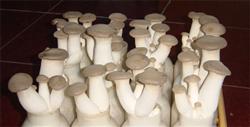
How should temperature be managed well during king oyster mushroom cultivation?
How should temperature be managed well during king oyster mushroom cultivation? Please give a detailed introduction. The king oyster mushroom (Pleurotus eryngii) is a medium-to-low-temperature, constant-temperature fruiting mushroom type. The optimum temperature for mycelial growth is 21-26°C, the fruiting body growth temperature is 8-20°C, and the optimum growth temperature is 12-16°C. Below 8°C, fruiting bodies are difficult to differentiate. In winter, the outdoor temperature is generally below 15°C,...
-
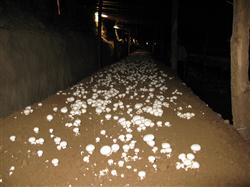
How to Grow Agaricus bisporus Well? A Full Analysis of the Key Cultivation Techniques
How to grow Agaricus bisporus well? An introduction to Agaricus bisporus, also known as the button mushroom or cultivated mushroom, the world's largest edible fungus by volume. Its nutritional value is extremely high, and it is currently developing very rapidly, growing at 15%-20% per year. Agaricus bisporus is a straw-decay fungus, a medium-to-low temperature mushroom; in northern regions, rice straw and wheat...
-
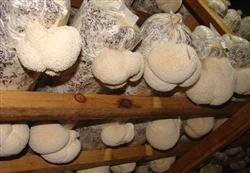
How to grow Hericium erinaceus (lion's mane mushroom) well? Detailed explanation of cultivation methods and techniques
How to grow Hericium erinaceus well? Please advise. Hericium erinaceus is a well-known edible and medicinal mushroom in China. The optimum growth temperature range for the mycelium is 22--24°C, and the best temperature for the fruiting body growth stage is 18--20°C. During bag-culture cultivation, the mycelium growth stage has no strict air humidity requirements, while the fruiting body growth stage requires a relative air...
-
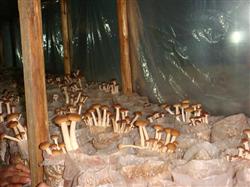
How to grow Agrocybe aegerita well? Detailed explanation of cultivation methods and key technical points
How to grow Agrocybe aegerita well? Please give a detailed introduction to Agrocybe aegerita, also known as the columnar poplar mushroom, tea mushroom, poplar mushroom, and willow pine mushroom. Under natural conditions it mostly appears in spring and autumn, and under artificial conditions it can also be cultivated year-round. The cap is thick and the stem is crisp, with a rich fragrance, and the texture of the mushroom stem is especially excellent. Regular consumption has the effects of lowering blood pressure and lowering cholesterol...
-
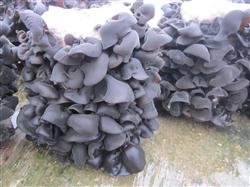
How do you grow black fungus (wood ear mushroom) so it grows well?
How do you grow black fungus well? Here is an introduction. For growing black fungus, you can refer to the following cultivation methods: 1. Seasonal arrangement. Black fungus is a wood-rotting fungus and belongs to the medium-to-high temperature type of mushrooms. Its mycelium growth temperature range is 6-35°C, with the optimum being 22-28°C; the general temperature range for the formation and growth of the fruiting bodies is 15-3...
条件筛选