Clever prevention and control of contaminants in oyster mushroom cultivation: mud and sand covering works well
In the process of oyster mushroom cultivation, various cultivation methods will suffer from contaminant mold pollution to different degrees, and it is especially serious in seasons with higher temperatures. At best it affects yield and income; at worst it leads to reduced production or even total crop loss, causing severe economic losses. Many growers are helpless when they encounter this situation and apply large amounts of fungicides...
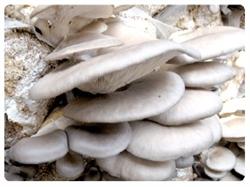
In the process of oyster mushroom cultivation, various cultivation methods will suffer from contaminant mold pollution to different degrees, and it is especially serious in seasons with higher temperatures. At best it affects yield and income; at worst it leads to reduced production or even total crop loss, causing severe economic losses. Many growers are helpless when they encounter this situation and apply large amounts of fungicides for control, but the results are minimal; instead, costs increase, and even phytotoxicity occurs, making losses heavier. Based on the aerobic, high-temperature- and high-humidity-tolerant living habits of various contaminants such as green mold, penicillium, mucor, trichoderma, aspergillus, rhizopus, white mold, and red neurospora, the following control methods can be adopted, requiring no investment in chemicals, using locally available materials, and being simple and easy to carry out:
I. Methods for controlling contaminants in oyster mushroom cultivation on large beds
Contamination caused by large-bed cultivation of oyster mushrooms has many causes. First, the cause of contamination should be identified according to different situations (such as sudden high temperatures, water entering the substrate, unclean surrounding environment, insect damage, etc.) and treated differently, eradicating the source of contamination, and then the contaminated oyster mushrooms should be handled as follows:
If contaminants appear scattered on the surface of the substrate, they can be controlled by smearing or covering the affected area with thick lime slurry. If a large amount of contaminants appears, dig river mud or yellow mud-sand from below 30 cm beneath the ground surface (deep underground mud-sand soil has no insect pests or diseases), then break it up, add 2% lime powder and mix evenly, remove the plastic film, and cover the contaminated parts of the substrate surface with 2-3 cm of mud-sand, with the covering area slightly larger than the contaminated area, and pat the mud-sand slightly firm. If the substrate surface is severely contaminated, the entire bed surface should be covered, and the plastic film should be washed clean with disinfectant solution before being put back on, then routine management should be resumed. After a few days, the mycelium resumes growth and will quickly spread throughout the mud-sand, not only having no adverse effect on oyster mushroom yield but also providing a certain yield-increasing effect.
II. Control methods for bag-cultivated oyster mushrooms: Pick out the bags contaminated by contaminants, choose a place with higher terrain and dig a soil pit about 60 cm deep (the size of the pit depends on how many contaminated bags there are, and note that there must be no standing water in the pit), place the contaminated parts of the bags facing downward in the pit (no need to remove the bags), fill soil at 5 cm spacing to isolate them, and cover the bags with 25-30 cm of wet fine soil or wet mud-sand. After 15-20 days of cultivation in this way, all contaminated bags will return to normal. After the mycelium has fully grown, move them to the mushroom yard, open the bags, and induce fruiting; the fruiting rate is basically unaffected.
If the groundwater level at the cultivation site is high, it is not suitable to dig a deep pit; only a shallow pit about 20 cm deep is suitable. After arranging the bags as described above, cover them with 20-25 cm of wet soil or mud-sand, and the effect is the same. Whichever method is used, plastic film should be used as cover on rainy days, drainage ditches should be opened around the pit, and there must be no standing water in the pit. Using this method to control contaminants is also suitable for many kinds of wood-rotting fungi, so it is worth a try.