How to grow Agrocybe aegerita well? Detailed explanation of cultivation methods and key technical points
How to grow Agrocybe aegerita well? Please give a detailed introduction to Agrocybe aegerita, also known as the columnar poplar mushroom, tea mushroom, poplar mushroom, and willow pine mushroom. Under natural conditions it mostly appears in spring and autumn, and under artificial conditions it can also be cultivated year-round. The cap is thick and the stem is crisp, with a rich fragrance, and the texture of the mushroom stem is especially excellent. Regular consumption has the effects of lowering blood pressure and lowering cholesterol...
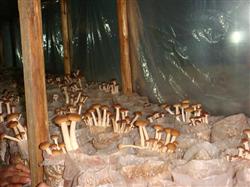
How to grow Agrocybe aegerita well? Please give a detailed introduction
Agrocybe aegerita, also known as the columnar poplar mushroom, tea mushroom, poplar mushroom, and willow pine mushroom. Under natural conditions it mostly appears in spring and autumn, and under artificial conditions it can also be cultivated year-round. The cap is thick and the stem is crisp, with a rich fragrance, and the texture of the mushroom stem is especially excellent. Regular consumption has the effects of lowering blood pressure and lowering cholesterol. The dried fruiting body can be used as medicine to treat cold stomach, nephritic edema, difficult urination, and other diseases. It is very popular, and consumption is increasing day by day. The market price remains high, and mushroom farmers therefore achieve relatively good economic benefits. The main cultivation techniques are briefly introduced as follows.
I. Biological characteristics
1. Temperature: The mycelium growth temperature is 5-30°C, with the optimum at 21-28°C. The fruiting body growth temperature is 13-25°C, with the optimum at 22-24°C. Different strains have different requirements, and primordium differentiation does not require stimulation by a temperature difference. Although relatively low temperatures result in slower growth efficiency, there is less contamination and the mushroom quality is high.
2. Water and humidity: The substrate can grow normally at a water content of 45-80%. A water content of 65% can accommodate a longer cultivation period; otherwise growth is slow. During the mycelium growth stage, a relative humidity of 65%-70% is required. When the fruiting body forms, a relative humidity of 85%-90% is required.
3. Air: During the mycelium growth stage, the incubation room should be ventilated intermittently, with ventilation 1-2 days per day. During the fruiting body growth stage, the cultivation room should be ventilated frequently, with ventilation 3-6 times per day, depending on the actual situation.
4. pH: It is suitable for a neutral to slightly acidic environment. The mycelium produces very little organic acid during metabolism, and the pH value of the substrate changes little. Therefore, the optimal pH value of the culture material can be adjusted to 5.5-6.5.
5. Light: Light is not needed for culturing mycelium. Primordium formation and fruiting body growth require 150-1000 lx of light. Fruiting body growth has obvious phototropism. Under certain conditions, products with small caps and long stems can be obtained, similar to enoki mushroom cultivation.
II. Cultivation season
According to the growth and development characteristics of Agrocybe aegerita, in spring it is suitable to cultivate the mycelium from late February to early April, and grow mushrooms from mid-April to mid-June; in autumn it is suitable to cultivate the mycelium from late August to the end of September, and grow mushrooms from early October to the end of November.
III. Preparation of materials and site
For substitute material cultivation of Agrocybe aegerita, the prepared materials include three major categories: raw materials for formulating the substrate, plastic bags, and disinfectants.
(1) There are mainly two synthetic material formulas:
1. Culture material formula with sawdust as the main material: sawdust 38%, cottonseed hull 35%, wheat bran 15%, cornmeal 6%, tea seed cake powder 4%, gypsum 1%, brown sugar 0.5%, potassium dihydrogen phosphate 0.4%, magnesium sulfate 0.1%.
2. Culture material formula with cottonseed hull as the main material: sawdust 9%, cottonseed hull 75%, wheat bran 15%, calcium sulfate 1%.
(2) Plastic bags: The specifications of plastic bags for Agrocybe aegerita cultivation are 15 cm (diameter) x 30 cm, or 17 cm (diameter) x 33 cm. Each bag holds 0.6-0.8 kg of prepared material.
(3) Disinfection of the site:
Before and after taking out the material, sun-drying the material, and bringing in the material, the mushroom house and site must be disinfected with an 800-fold dilution of carbendazim and 0.5% dichlorvos. The mushroom house must be fumigated once with formaldehyde to eliminate latent contaminating bacteria and pests.
IV. Mixing ingredients and bagging
The mixing and bagging of Agrocybe aegerita culture material are basically the same as the operation methods for bagged shiitake. When bagging, note that when the filling is about 6 cm from the bag opening, it can be tied off.
V. Sterilization
For sterilization of the Agrocybe aegerita substrate, the normal-pressure high-temperature sterilization method is mostly used. Because mushroom farmers mostly use large covered-film sterilization stoves, the capacity per batch is controlled at about 3000 bags. The sterilization temperature standard is: from ignition to 100°C should be controlled at about 2-3 hours; after the temperature rises to 100°C, it should be maintained for 20-22 hours, that is, about one day and one night.
VI. Cooling and inoculation
For the sterilized culture bags, when the temperature drops to 60°C, remove the bags from the stove while hot. Only after the temperature inside the bags drops to room temperature can the inoculation process begin. The inoculation and disinfection process is basically the same as for bagged shiitake.
VII. Indoor arrangement for mycelium cultivation
The temperature for indoor arrangement and mycelium cultivation should be controlled at about 22°C. Strengthen ventilation and air exchange, and pay attention to temperature prevention and light control. The relative humidity is preferably 70%, and darkness is preferred over light.
VIII. Cutting the bags to promote budding
After the Agrocybe aegerita fungus bags have been cultured for 50-60 days, the mycelium fills the fungus bags, the fungus bags are elastic, the mycelium secretes pigment and exudes yellow water, and the mycelium on the surface of the bag opening is slightly brown. This is color conversion. Cut the bags at the right time, using a sharp small knife along the tying rope to cut off the mouth of the bag.
IX. Fruiting management
The focus of fruiting management is to control temperature, humidity, air, light, and stimulation to meet the needs of Agrocybe aegerita growth and development. During fruiting, the relative air humidity is 90%, and the temperature is controlled at 20°C-28°C.
In short, the fruiting management of Agrocybe aegerita must coordinate the relationship among water, temperature, air, humidity, and light.
Click to get more Agrocybe aegerita cultivation techniques
Click to get more edible mushroom cultivation techniques