-
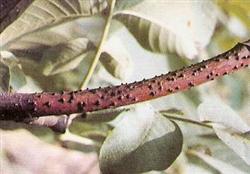
What is walnut branch blight? A complete guide to understanding it
What is walnut branch blight? How should it be prevented and controlled? Please advise. Walnut branch blight is caused by fungal infection and mainly damages branches and trunks. It occurs in all regions, with a general disease incidence rate of 20-30%, and in severe cases the incidence rate reaches more than 80%, causing a large number of branches to die, directly affecting tree growth and walnut yield...
-
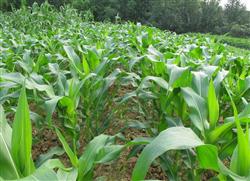
How is corn bred? Understanding corn breeding methods in one article
How is corn bred? Please explain corn's natural cross-pollination habit and the heterozygosity of its genetic basis, as well as the breeding procedure that exploits the heterosis of F1 generations between inbred lines arising from this, which together form the particularity of corn breeding. With almost no exception, every successful corn breeder and research institute starts from...
-
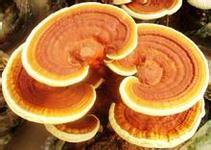
Understanding the Medicinal Value and Cultivation Techniques of Reishi Mushroom in One Article
Reishi mushroom, also known as divine grass, ten-thousand-year grass, red reishi, crimson reishi, wood reishi, etc. There are more than 40 species in China, with the more common and well-known ones being purple reishi, pine-fir reishi, black reishi, purple-glow reishi, etc. Reishi mushroom has a medicinal history of over two thousand years in China. In addition to containing minerals such as potassium, phosphorus, magnesium, calcium, iron, and manganese...
-
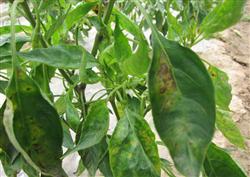
What Is Pepper Anthracnose? Understanding the Disease's Characteristics in One Article
What is pepper anthracnose? What methods can be used to control pepper anthracnose? Please help explain. Anthracnose is a major disease of peppers, spreading quickly under high temperature and high humidity conditions, with a long period of damage, often causing considerable losses. Peppers can develop anthracnose throughout the entire growth period, and anthracnose mainly damages leaves and fruits...
-
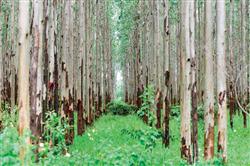
What Is Fast-Growing Eucalyptus? Understanding the Characteristics of Fast-Growing Eucalyptus in One Article
What is fast-growing eucalyptus? Please explain that eucalyptus is the general term for tree species in the genus Eucalyptus [EucalytusSPP.] of the family Myrtaceae. It is one of the world's three famous fast-growing tree species and also one of the world's most valuable hardwood broadleaf timbers. Native to Australia, there are about 1,000...
-
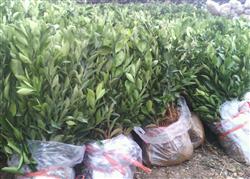
What is citrus seedling tatter leaf disease? Understanding this disease in one article
What is citrus seedling tatter leaf disease? What harm does citrus seedling tatter leaf disease cause? How to prevent and control it? Experienced netizens are also invited to give advice. Zhongdi Network has compiled the harm, causes and treatment methods of citrus seedling tatter leaf disease, listed below for netizens' reference. Harm of citrus seedling tatter leaf disease: citrus tatter leaf...
-
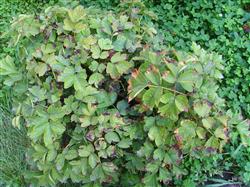
How to grow tree peonies? Understanding tree peony gray mold in one article
What is tree peony gray mold? What harm does gray mold do to tree peonies? We ask friends to help explain the harm of tree peony gray mold: Tree peonies are affected by gray mold throughout their entire growth period, with the most occurrences from June to July each year. When seedling stems and bases are affected, they show dark green, water-soaked, irregular-shaped lesions that gradually turn brown...
-

What Is Polypeptide Urea? Understanding This Fertilizer in One Article
What is polypeptide urea? How effective is polypeptide urea? Here is an introduction. Polypeptide urea is formed by adding polyaspartic acid during the production process of ordinary urea. Polyaspartic acid is an artificially biomimetic synthesized substance with characteristics such as long-chain proteins and anionic surfactants, and it has...
-
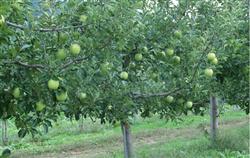
Six major misunderstandings about foliar feeding of crops to avoid
Foliar feeding, also called topdressing outside the roots, is a fertilization measure that cannot be ignored in fruit tree production. This method saves labor and effort, takes effect quickly, and has a high utilization rate. Within 24 hours, 80% of the sprayed fertilizer can be absorbed. For fruit trees such as apples, pears, and hawthorns, spraying during the flowering period can increase the fruit-setting rate; spraying during the leaf and fruit growth periods can promote...
-
What Is Water-Soluble Phosphate Fertilizer? Understanding the Definition and Characteristics in One Article
You often hear that high-end compound fertilizers contain large amounts of water-soluble phosphate fertilizer, but what exactly is water-soluble phosphate fertilizer? Let us introduce ordinary superphosphate and triple superphosphate among water-soluble phosphate fertilizers. Their common characteristic is that the phosphate they contain exists in the form of monocalcium phosphate [Ca(H2PO4)2·H2O], which is readily soluble in water and can...
条件筛选