Six major misunderstandings about foliar feeding of crops to avoid
Foliar feeding, also called topdressing outside the roots, is a fertilization measure that cannot be ignored in fruit tree production. This method saves labor and effort, takes effect quickly, and has a high utilization rate. Within 24 hours, 80% of the sprayed fertilizer can be absorbed. For fruit trees such as apples, pears, and hawthorns, spraying during the flowering period can increase the fruit-setting rate; spraying during the leaf and fruit growth periods can promote...
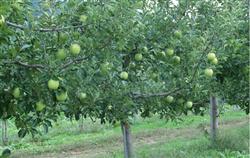 According to statistical analysis, generally on medium-fertility soil, foliar feeding of crops can increase crop yields by an average of 5%-10%, fruit trees by 5%-15%, and vegetables by 20%-30%. However, in some places, due to incorrect understanding or improper application, the yield increase effect is poor, and people even fall into misunderstandings, which deserves attention.
Spraying foliar fertilizer at any growth stage of the crop When the leaf area of the crop reaches as large as possible, using foliar feeding allows the leaves to intercept as much fertilizer liquid as possible and achieve the best effect; otherwise, a large amount of fertilizer liquid will not adhere to the leaves and will never play the role of foliar feeding. Therefore, foliar feeding should generally be carried out in the middle and late stages of crop growth to obtain the greatest benefit. For example, in the late growth stage of fruit trees, spraying phosphorus and potassium fertilizers often can increase fruit tree yields. For fruit trees deficient in calcium in the late stage, it is advisable to begin spraying a 0.3% calcium nitrate solution 40-50 days before fruit harvest, with a 1-week interval, for 3-4 consecutive sprays, which can effectively correct bean spot disease caused by calcium deficiency in apples and improve fruit quality.
Any fertilizer can be used for foliar feeding Many farmers believe that any fertilizer can be used for foliar feeding, but this is not true. Some fertilizers with strong volatility, such as ammonia water and ammonium bicarbonate, will volatilize ammonia gas after spraying, causing fumigation damage to crops. Another category is fertilizers prohibited for certain crops, such as potassium chloride, which should not be sprayed on chlorine-sensitive crops such as tobacco.
Foliar feeding can be done at any time Some people think that foliar fertilizer can be sprayed at any time, which is incorrect. If after rain or in the early morning, when there are water droplets or dew on the leaves, it is not suitable to spray fertilizer; otherwise, the concentration of the sprayed fertilizer will be reduced and the required concentration will not be reached. It is also not suitable to spray fertilizer while crops are flowering. For example, when crops such as rice, corn, wheat, rapeseed, and soybean are flowering, foliar feeding will affect their flowering, affect pollen release and pollen grain fertilization, etc. Under strong light conditions, foliar fertilizer should not be sprayed at noon on a sunny day when the sun is blazing, because after spraying it cannot remain moist for a long time, the leaf absorption conditions are poor, and the utilization rate is greatly reduced. Therefore, foliar feeding is best done on a windless cloudy day or on a sunny morning from 9 to 10 o'clock, or after 4 p.m. If it rains 3 hours after spraying, spray again after it clears, but the concentration should be appropriately reduced.
The higher the concentration, the better Some people also think that a slightly higher concentration will produce a more obvious effect, but this is incorrect. Foliar fertilization only plays a supplementary and regulatory role and cannot replace soil fertilization. The fertilization concentration must be strictly controlled. Within the suitable range of use, the spraying concentration should generally be low rather than high. However, different crops have different fertilizer tolerance and different requirements; different fertilizer types also require different spraying concentrations. If the concentration is too low, the spraying effect cannot be achieved; if the concentration is too high, it often causes leaf dehydration and fertilizer damage. This is one of the keys to the success or failure of foliar feeding. For example, when urea is used as foliar fertilizer, the concentration is generally 0.5%-2%; superphosphate 1%-5%; potassium dihydrogen phosphate 0.2%-0.5%; boric acid 0.1%-0.5%; ammonium molybdate 0.02%-0.05%; zinc sulfate 0.05%-0.2%. At the same time, it should be understood that the concentration sprayed at the seedling stage should be appropriately lower; the concentration sprayed in the middle and late growth stages can be appropriately higher; when crops are growing normally, the concentration should be lower, and when deficiency symptoms appear, the concentration should be appropriately higher; the concentration for trace element fertilizers should be appropriately lower; the concentration for macroelement fertilizers can be appropriately higher; the concentration for dicotyledonous plants should be appropriately lower; the concentration for monocotyledonous plants can be appropriately higher.
Mixing and applying at will When spraying fertilizer, people always think that mixing multiple fertilizers for spraying can achieve better results and also save labor. In fact, not all fertilizers can be mixed for spraying. The correct method is to carry out targeted fertilizer-fertilizer or fertilizer-pesticide mixed spraying, which can achieve the effect of "one spraying, multiple effects." However, many trace element fertilizers cannot be mixed with pesticides, and acidic fertilizers cannot be mixed with alkaline fertilizers. Generally, to be cautious, before mixing, take a small amount of each fertilizer and pesticide and mix them in the same container. After observing for a certain period, if there is no turbidity, precipitation, or bubbling, they can be mixed. After mixing, attention should also be paid to changes in the pH of the solution. Under normal circumstances, a pH of about 7 is favorable for leaf absorption.
Increasing the number of sprays A common misunderstanding is that the more times foliar feeding is done, the better. For crops with a short whole growth period, generally spray 1-2 times; for those with a long growth period, spray 2-3 times. According to seedling conditions and soil fertility, an additional 1-2 sprays may also be appropriate. For continuous spraying within the same growth period, each application should be about 10 days apart. For spraying trace element fertilizers, one spray is enough; when a second spray is needed, the interval should be longer. Spraying too much fertilizer liquid will increase costs and waste fertilizer.