-
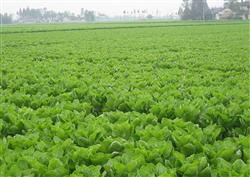
What types of plant growth regulators are there?
What should be noted when using plant growth regulators on vegetables? I would like to ask for advice. The use of plant growth regulators on vegetables is already very widespread and has brought considerable benefits to vegetable growers, but some vegetable growers rely too heavily on plant growth regulators, arbitrarily increasing the dosage and raising the concentration, causing phytotoxicity and unnecessary losses. To avoid...
-
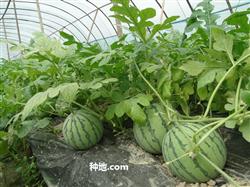
Detailed Explanation of the Differences Between Types of Water-Flush Fertilizers and Their Correct Application Methods
Should organic fertilizer be applied when growing watermelons now? What is the use of applying organic fertilizer? Growing watermelons that are sweet and refreshing is what every melon farmer strives for. Only by continuously improving watermelon quality can one win the market, be favored by the vast number of consumers, and achieve increased production and income for melon farmers. Watermelons have a short growth period and high yield...
-
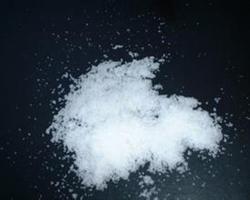
Types of Nitrogen Fertilizers and Scientific Application Methods
At present, the effective utilization rate of nitrogen fertilizers in our country is generally very low. How to reduce nitrogen loss and improve nitrogen fertilizer utilization rate is a problem of common concern to the vast number of farmers. Here are seven methods for improving the effective utilization rate of nitrogen fertilizers, introduced to the vast number of farmers: 1. Implement mixed application and deep application, and strengthen water management. A large number of field...
-
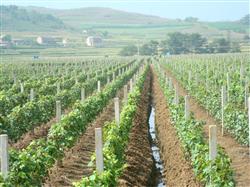
What Types of Nitrogen Fertilizers Are There? A Detailed Guide to Application Methods
The nitrogen fertilizers commonly used in fruit tree production mainly include urea, ammonium bicarbonate, ammonium nitrate, ammonium sulfate, ammonium chloride and slow-release urea. Urea is an amide-form nitrogen fertilizer with a nitrogen content generally of 46%, and can be used as a base fertilizer, a top dressing and a foliar top dressing. Ammonium bicarbonate is an ammonium-form nitrogen fertilizer with a nitrogen content generally of 16.5%-16.8%, and can be used as a base fertilizer, ...
-
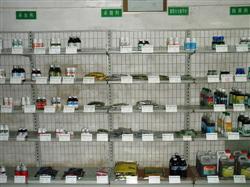
What Types of Pesticide Insecticides Are There? A Detailed Guide to Selection Precautions
1.1 Classification by composition and source: Inorganic insecticides, such as lead arsenate, calcium arsenate, arsenites, sodium fluoride, sodium fluorosilicate, sulfur, zinc phosphide, etc. Organic insecticides. Natural organic insecticides can be divided into botanical insecticides (such as derris, pyrethrum, tobacco, pine resin, santonin, toosendanin, etc.) and mineral-derived insecticides...
-
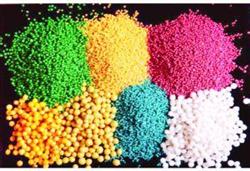
Detailed Explanation of Fertilizer Types and Application Methods (Part 6)
Achievement of Shandong Agricultural University: The fertilizer coating controlled-release technology involves spraying a uniform controlled-release film onto the surface of crop-specific compound fertilizer or urea granules. Its core technology lies in the film material and corresponding additives. By adjusting the formula, the number and size of pores on the film can be set to control nutrient release. Controlled-release fertilizer...
-
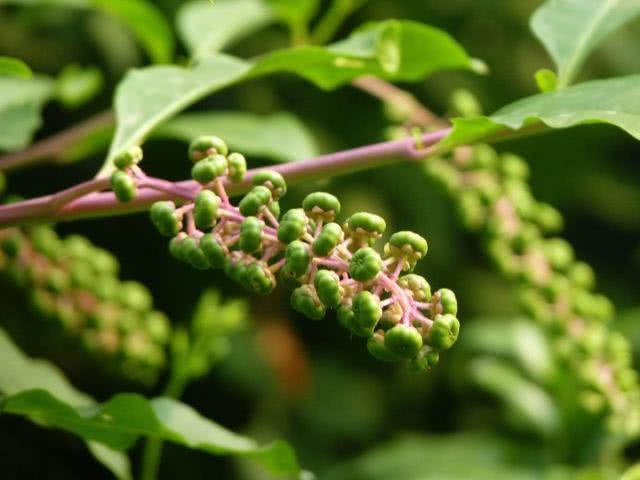
Pokeweed comes in two types: the one with purple-red stems is toxic, while the green-stemmed pokeweed seedling is a high-quality wild forest vegetable
Pokeweed (Phytolacca genus, Phytolaccaceae family) Pokeweed (Phytolacca acinosa Roxb.) is a perennial robust herbaceous plant in the Phytolaccaceae family and Phytolacca genus. It is widely distributed in the red soil low hilly areas south of the Yangtze River. Among the varieties currently distributed in China, the main ones...
-
Pay attention when irrigating and fertilizing farmland: these four types of fertilizer are not suitable for application with water
The application method of fertilizing with water is also called "fertilizing with irrigation water". It is generally a topdressing method that provides supplementary nutrients during the period of rapid crop growth. Since it is supplementary fertilization, it cannot replace main fertilization methods such as base fertilizer. However, because this method is both convenient and quick-acting, it is widely used on vegetable land and on irrigated land where cash crops and special edible crops are grown...
-
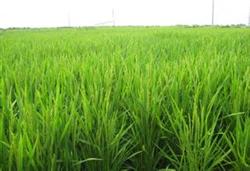
What types of fertilizers are prohibited for crops?
Fertilizers are essential for crop production, but not all fertilizers can be used. Some fertilizers not only fail to increase crop returns when applied to crops, but also cause pollution and affect consumer health. Below is an introduction to the types of fertilizers prohibited for use on crops. 1. Organic fertilizers made from urban, hospital, and industrial area waste, harmful sludge, etc. as organic raw materials...
-
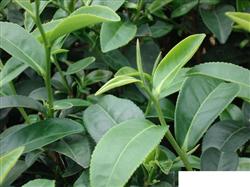
What types of foliar fertilizers are there? A detailed explanation of spraying precautions
Foliar fertilizer is a type of fertilizer in which nutrients are applied to the leaf surface of crops and perform their basic functions through absorption by the leaves. Plant leaves have two layers of epidermis, the upper and lower, composed of epidermal cells. On the outer side of the upper epidermal cells there is a cuticle and wax, which can protect the mesophyll cells beneath the epidermal tissue in carrying out photosynthesis, respir...
条件筛选