What types of foliar fertilizers are there? A detailed explanation of spraying precautions
Foliar fertilizer is a type of fertilizer in which nutrients are applied to the leaf surface of crops and perform their basic functions through absorption by the leaves. Plant leaves have two layers of epidermis, the upper and lower, composed of epidermal cells. On the outer side of the upper epidermal cells there is a cuticle and wax, which can protect the mesophyll cells beneath the epidermal tissue in carrying out photosynthesis, respir...
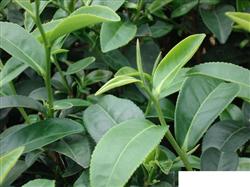
Foliar fertilizer is a type of fertilizer in which nutrients are applied to the leaf surface of crops and perform their basic functions through absorption by the leaves. Plant leaves have two layers of epidermis, the upper and lower, composed of epidermal cells. On the outer side of the upper epidermal cells there is a cuticle and wax, which can protect the mesophyll cells beneath the epidermal tissue in carrying out photosynthesis, respiration and other functions without being affected by changes in adverse external conditions. The leaf surface also has many tiny stomata that perform the function of gas exchange. Research shows that the cuticle is composed of a long-carbon-chain fatty acid polymer with hydroxyl and carboxyl groups. The gaps between the molecules of this polymer and the hydroxyl and carboxyl hydrophilic groups on the molecules allow aqueous solutions to penetrate into the leaf. Of course, the stomata on the leaf surface are a more convenient channel for foliar fertilizer to enter the leaf. Urea-type substances in chemical fertilizers have a softening effect on the cuticle of epidermal cells and can accelerate the penetration of other nutrients, so urea-type substances have a softening effect on the cuticle of epidermal cells and can accelerate the penetration of other nutrients, so urea has become an important component of foliar fertilizer.
I. Types of foliar fertilizer
At present, there are many types of foliar fertilizer, diverse and varied, with about several hundred to as many as a thousand kinds nationwide. According to their effects and functions, foliar fertilizers can be summarized into the following four major categories:
1. Nutritional foliar fertilizer: This type of foliar fertilizer has relatively high contents of nutrients such as nitrogen, phosphorus, potassium and trace elements. Its main function is to provide crops with various nutrient elements and improve the nutritional status of crops, and it is especially suitable for supplementing various nutrients in the later stage of crop growth.
2. Regulatory foliar fertilizer: This type of foliar fertilizer contains substances that regulate plant growth, such as auxins, hormones and other components. Its main function is to regulate the growth and development of crops. It is suitable for use in the early and middle stages of plant growth.
3. Biological foliar fertilizer: This type of fertilizer contains microorganisms and metabolites, such as amino acids, nucleotides and nucleic acid substances. Its main function is to stimulate crop growth, promote crop metabolism, and reduce and prevent the occurrence of diseases and insect pests.
4. Compound foliar fertilizer: There are many types of this kind of foliar fertilizer, with diverse compound and mixed forms. It has multiple functions; one kind of foliar fertilizer can both provide nutrition and stimulate growth and regulate development.
II. Benefits of spraying foliar fertilizer on crops
1. Supplementing the insufficiency of root fertilization
When it is inconvenient to fertilize the roots of crops, such as in the later stage of crop growth, when root vitality declines and the ability to absorb fertilizer decreases; or when the soil environment is unfavorable for crop growth, such as excessive moisture, drought, soil that is too acidic or too alkaline, causing obstruction of crop root absorption, while the crop still needs to recover growth quickly, if root application methods cannot meet the crop's needs in time, only foliar spraying can quickly supplement nutrients and meet the needs of crop growth and development.
2. Rapid nutrient supplementation
During crop growth, when crops have already shown symptoms of deficiency of certain nutrient elements, because soil fertilization takes a certain amount of time before nutrients can be absorbed by the crops, it cannot promptly alleviate the deficiency symptoms of the crops. At this time, foliar fertilization can enable nutrients to quickly enter the plant through the leaves and solve the problem of nutrient deficiency.
3. Giving full play to fertilizer efficiency
Some fertilizers, such as phosphorus, iron, manganese, copper and zinc fertilizers, if applied to the roots, are easily fixed by the soil, affecting the application effect, while foliar spraying is not restricted by soil conditions. For another example, some fruit trees and other deep-rooted crops absorb relatively small amounts of certain nutrient elements. If traditional fertilization methods are used, it is difficult to apply them to the root absorption sites, and their fertilizer efficiency cannot be fully exerted, while foliar spraying can achieve better results.
4. Reducing pollution of the soil
Applying large amounts of nitrogen fertilizer to the soil can easily cause the accumulation of nitrate in groundwater and vegetables, causing harm to human health. About 75% of the nitrate absorbed by humans comes from vegetables. If the method of foliar fertilization is adopted and the amount of soil fertilization is appropriately reduced, the nitrate content in plants and residual mineral nitrogen in the soil can be reduced. On salinized soil, soil fertilization may increase the concentration of the soil solution and aggravate soil salinization. Adopting foliar fertilization measures not only saves the amount of fertilizer applied but also reduces pollution of the soil and water sources. It is an effective fertilization technique that achieves two benefits at once.
5. Economical and cost-effective
Various trace elements are essential nutrients in the process of crop growth and development, but the application amount is very small. For example, for molybdenum fertilizer, the application amount per mu is only several tens of grams, and if the root application method is used, it is not easy to apply evenly. Only by foliar spraying can it be economical and effective. According to research estimates, for general crops, when boron fertilizer is sprayed on the leaves, the utilization rate of boron is 8.18 times that of basal application. From the perspective of economic benefits, foliar spraying is more cost-effective than root application.
III. Precautions in the application of foliar fertilizer
1. Spraying foliar fertilizer on vegetables should vary according to the vegetable
(1) Leafy vegetables. Such as Chinese cabbage, spinach, shepherd's purse, etc., require more nitrogen. Spraying fertilizer should mainly use urea and ammonium sulfate. The spraying concentration should be 1-2% for urea and 1.5% for ammonium sulfate, sprayed 2-4 times per season, preferably in the early stage of growth.
(2) Melon and fruit vegetables. Such as chili pepper, eggplant, tomato, snap bean and various melons, have a relatively balanced demand for nitrogen, phosphorus and potassium, so a mixed solution of nitrogen, phosphorus and potassium or a compound fertilizer should be selected. Spray a mixed solution of 1-2% urea and 0.3-0.4% potassium dihydrogen phosphate or a 2% compound fertilizer solution. Generally, spray 1-2 times each in the early and late growth stages. Spraying in the later stage can prevent premature aging, enhance staying power, and has a very good yield-increasing effect.
(3) Root and stem vegetables. Such as garlic, onion, radish, potato, etc., require more phosphorus and potassium. For foliar fertilizer, a 0.3% potassium dihydrogen phosphate solution or a 10% wood ash extract can be selected. Generally, spraying 3-4 times per season gives better results.
2. Choose an appropriate spraying concentration. The concentration of foliar fertilization is directly related to the spraying effect. If the solution concentration is too high, it is easy to burn crop leaves after spraying; if the solution concentration is too low, it not only increases the workload but also fails to meet the requirements for supplementing crop nutrition. Therefore, in application, it is necessary to prepare the formula according to the fertilizer, the crop and local conditions.
3. Choose an appropriate spraying method. The solution should be prepared evenly, the spray droplets should be uniform and fine, and the number of sprayings should depend on the need.
4. Grasp the spraying period well. The period for foliar fertilization should be determined according to the nutrient element requirements of various crops at different growth and development stages. Spraying should be carried out when the crop's demand for nutrient elements is greatest and most urgent, so as to achieve the best effect.
5. Choose an appropriate spraying time. The effect of foliar fertilization is directly related to temperature, humidity, wind and so on. For foliar spraying, it is best to choose a windless cloudy day or a morning with relatively high humidity and low evaporation before 9 o'clock. The most suitable time is after 4 p.m. If it rains 3-4 hours after spraying, then supplementary spraying is needed.
6. Choose appropriate spraying parts. Because the upper, middle and lower leaves and stems of the plant have different metabolic vitality, their ability to absorb external nutrients differs greatly, so appropriate spraying parts should be selected.
7. Add adjuvants. When spraying fertilizer solution on the leaves, appropriately add adjuvants to improve the adhesion of the fertilizer solution on plant leaves and promote the absorption of fertilizer.
8. Combine with soil fertilization. Because the roots have a larger and more complete absorption system than the leaves, for nutrients required in large amounts such as nitrogen, phosphorus and potassium, according to measurements, more than 10 foliar fertilizations are needed to reach the total amount of nutrients absorbed by the roots. Therefore, foliar fertilization cannot completely replace root fertilization of crops and must be combined with root fertilization.
Foliar fertilizer has a small application amount and rapid and obvious effects, improving the utilization rate of fertilizer. It is a fertilization measure that is both economical and effective, and the foliar application of some trace elements is especially unique. But we should also see that foliar fertilization is relatively troublesome, consumes a relatively large amount of labor, and is easily affected by climatic conditions. Also, due to different crop types and growth stages, the effects of foliar fertilization vary greatly. Therefore, only on the basis of root fertilization and by correctly applying foliar fertilization techniques can the yield-increasing and income-increasing role of foliar fertilizer be fully brought into play.