What Types of Pesticide Insecticides Are There? A Detailed Guide to Selection Precautions
1.1 Classification by composition and source: Inorganic insecticides, such as lead arsenate, calcium arsenate, arsenites, sodium fluoride, sodium fluorosilicate, sulfur, zinc phosphide, etc. Organic insecticides. Natural organic insecticides can be divided into botanical insecticides (such as derris, pyrethrum, tobacco, pine resin, santonin, toosendanin, etc.) and mineral-derived insecticides...
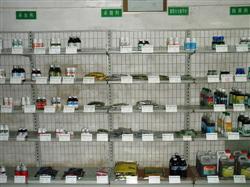
1.1 Classification by composition and source
Inorganic insecticides, such as lead arsenate, calcium arsenate, arsenites, sodium fluoride, sodium fluorosilicate, sulfur, zinc phosphide, etc.
Organic insecticides. Natural organic insecticides can be divided into botanical insecticides (such as derris, pyrethrum, tobacco, pine resin, santonin, toosendanin, etc.) and mineral-derived insecticides (such as diesel emulsion, petroleum emulsion, etc.). Synthetic organic insecticides include organochlorine insecticides, organophosphorus insecticides, organonitrogen insecticides, pyrethroid insecticides, etc.
Microbial insecticides, such as Bacillus thuringiensis, yellow cutworm granulovirus, cotton bollworm granulovirus, cabbage caterpillar granulovirus, diamondback moth granulovirus, Beauveria bassiana, Metarhizium anisopliae, Isaria fumosorosea, etc.
1.2 Classification by mode of action or effect
Stomach poisons: agents that kill pests when the pest's mouthparts ingest plant tissue or bait carrying the agent, which is then absorbed through the pest's digestive system and poisons the pest. Such as acephate, trichlorfon, etc.
Contact poisons: agents that kill pests after the pest comes into contact with the agent, which enters the insect body through the cuticle, legs, antennae, spiracles and other parts, poisoning the pest. Such as organophosphorus insecticides like malathion, pyrethroid insecticides, etc.
Fumigants. Agents that can volatilize into toxic gas at room temperature, or produce toxic gas through a certain chemical reaction, and enter the pest's body through the spiracles and other respiratory systems, poisoning the pest to death. Such as methyl bromide, phosphine, etc.
Systemic agents: agents that can be absorbed by the plant's roots, stems, leaves and other tissues and translocated to other parts of the shoot, or absorbed by seeds and then translocated to seedlings and even all parts of the plant, in amounts sufficient to poison and kill the pests feeding within. Such as phorate, isofenphos-methyl, mephosfolan-methyl, etc.
Repellents. The agent itself has no toxic effect in killing pests, but its special odor repels pests, thereby achieving the purpose of protecting crops from damage. Such as camphor balls.
Antifeedants. After the pesticide is applied to crops and contacted or ingested by pests, it can disrupt the pest's normal physiological functions and the secretion of digestive enzymes in the digestive tract, and interfere with the pest's nervous system, causing the pest to refuse to feed, and finally the insect body gradually starves and shrivels; insects that do not die will also undergo physiological stunting and abnormal metamorphosis. Such as chlordimeform, various terpenoid compounds (such as azadirachtin), etc.
Attractants are a class of agents that can lure various pests and then kill them. The most widely used are sex attractants released by female insects that, in extremely small amounts, can lure males of the same species to mate. When such sex attractants reach a certain concentration in the air, they cause mating disruption in pests, reducing mating, egg-laying and reproduction, thereby reducing pest damage. Such as cotton bollworm sex pheromone, pink bollworm sex pheromone, greater rice stem borer sex pheromone, diamondback moth sex pheromone, etc.
Sterilants: agents that, when insects contact or ingest them, destroy the function of their reproductive organs, causing them to lose reproductive capacity, so that female insects mate but do not lay eggs, or the eggs laid cannot hatch normally, and even if they hatch, the offspring cannot reproduce normally, reducing the population and even exterminating the species within a certain range. Such as tepa, thiotepa, etc.
Specific insect growth regulators. These agents mainly interfere with and disrupt the pest's normal metabolism, inhibit chitin synthesis, and cause larvae to become deformed or die.
At present, many synthetic organic pesticides have several insecticidal actions at the same time. For example, most organophosphorus pesticides have both stomach-poison and contact-poison actions; most pyrethroid insecticides have both stomach-poison and contact-poison actions, as well as a certain repellent effect. These insecticides with multiple insecticidal actions can be called broad-spectrum insecticides.
1.3 Classification by level of toxicity
Highly toxic and extremely toxic agents. Such as parathion, methyl parathion, phosphamidon, methamidophos, isocarbophos, etc.
Medium- and low-toxicity agents. Such as acephate, triazophos, profenofos, phoxim, fenitrothion, quinalphos, pyridaphenthion, isazofos, fenvalerate, esfenvalerate, deltamethrin, cypermethrin, alpha-cypermethrin, beta-cyfluthrin, cyhalothrin, beta-cyfluthrin, bifenthrin, fenpropathrin, flufenoxuron, buprofezin, Bacillus thuringiensis, Beauveria bassiana, tobacco, santonin, etc.
2 Selection Precautions
Like other commodities, insecticide products also have many problems, and consumers should pay attention when purchasing. In addition, insecticides are a special commodity involving a great deal of knowledge and technology, so consumers should be even more careful when selecting them.
Do not buy insecticides that do not indicate the active insecticidal ingredient.
Among chemical insecticides, pyrethroid insecticides are generally recognized as relatively safe, while organochlorine, organophosphorus and carbamate insecticides are less safe than the former. Among the many pyrethroid insecticides, there are also differences in safety; generally, permethrin, tetramethrin, allethrin and deltamethrin are safer.
Do not buy insecticide products processed and produced from insecticides that have been explicitly banned from use.
Products such as aerosol insecticides must strictly implement the "three certificates" system at the factory, indicating the production license number, insecticide registration number and product quality standard number; otherwise they are illegal products and must not be purchased.
Foreign insecticide products entering our country's market should also be carefully identified, and one should not blindly trust them.
3 Usage Precautions
Use insecticides as sparingly as possible, and avoid using them whenever possible. Minimize contact with insecticides; for example, do not linger in a room where the insecticide has been applied. Leave immediately after application, and only enter after opening doors and windows for full ventilation one and a half hours later.
Do not let infants and children whose brains are not yet fully developed come into contact with insecticides, so as not to adversely affect the child's brain development.
Be doubly careful when using insecticides in the kitchen, and never let them contaminate food, kitchen utensils, etc.
After applying insecticides and insecticidal emulsifiable concentrates, take a bath and change clothes.