-
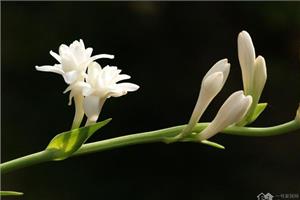
The Benefits of Tuberose and What Are the Planting Methods for Tuberose
The Benefits of Tuberose and What Are the Planting Methods for Tuberose
-

What are the key management techniques for sweet potato during the tuber bulking stage?
How should sweet potatoes be managed during the tuber bulking stage?
-

Detailed Explanation of the Planting Methods and Techniques for the Tuberous Sword Fern
How to Plant the Tuberous Sword Fern
-

Dahlia Tuber Planting Method and the Best Planting Time
Dahlias bloom in big, big flowers, they are extremely beautiful and very pleasing, dahlias are generally grown from tubers, let's take a look at what the dahlia tuber planting method is like
-

Can Gloxinia be grown hydroponically? Solutions for a rotted tuber
Gloxinia has high ornamental value, and its flowers are also very beautiful. Can Gloxinia be grown hydroponically? What to do if the tuber rots: Can Gloxinia be grown hydroponically: Gloxinia can be grown hydroponically. Gloxinia is a perennial herb in the Gesneriaceae family, genus Sinningia, with a flattened spherical tuber and a very short aboveground stem
-

For open-field cultivation of potatoes in the autumn crop, whole-tuber sowing should be adopted.
Since the sowing period for open-field potatoes in the autumn crop falls in August, which is hot and rainy, sowing after cutting the potatoes into pieces leads to serious problems such as tuber rot and dead vines. Therefore, whole-tuber sowing should be adopted for open-field potatoes in the autumn crop. When using whole-tuber sowing, select potatoes that are unbruised, disease-free, crack-free, with bright skin color and a moderate size. Because whole-tuber sowing of potatoes emerges more slowly than cut-piece sowing, and because potatoes harvested in spring are used as seed, the seed tubers are still in a dormant state at autumn sowing (except for some varieties with an extremely short dormancy period, such as Fengshoubai and Zheng
-
Evening primrose, tuberose, mountain sesame, wild sesame
Scientific name: Oenothera biennis. Common names: tuberose, mountain sesame, wild sesame. Type: perennial herbaceous plant. Origin: native to North America, introduced to Europe and then spread throughout the world. Family and genus: Onagraceae, genus Oenothera. Growth characteristics: evening primrose is cold-tolerant, drought-tolerant, tolerant of poor soil, light-loving, and intolerant of waterlogging; bolting and flowering require a certain low-temperature stimulus. Morphological characteristics: biennial plants are 100-140 cm tall; annual plants are 60-90 cm tall. Basal leaves grow in a rosette
-
Rot of Pinellia ternata tubers in the late growth stage: growers need to pay attention to prevention and control
Causes of the disease: When Pinellia ternata grows to August-October, that is, when the rainy season arrives, the second-, third- and fourth-generation bulbils formed by Pinellia ternata planted in early spring and the first- and second-generation bulbils formed by Pinellia ternata cultivated in summer rapidly expand and form tubers, and the small mother corms used as seed during cultivation are also expanding themselves. This period is the stage of fastest tuber growth in Pinellia ternata, and also the period when the tubers have the weakest ability to resist external infection. The larger the tuber, the weaker its resistance; the smaller the tuber and the bulbils, the stronger their defensive ability. Underground Pinellia ternata of various specifications
-
Detailed Explanation of Industrialized Production Technology for Potato Microtuber
This achievement includes a series of industrial technologies for virus elimination of potato microtubers, rapid propagation, and field planting of induced microtubers. Based on the basic theories and operational techniques of bioengineering, combined with the physiological mechanisms of tuber formation, suitable culture media and culture conditions are used to induce potato test-tube plantlets and axillary buds of test-tube plantlet segments to form microtubers suitable for field planting under tissue culture conditions, thereby achieving commercial production. Through suitable induction techniques and improvements in culture containers, the production rate of test-tube plantlets per unit culture area has been increased by 3 to 5 times, reaching a maximum of 2
-
Will potato tubers continue to enlarge?
The tuberization stage is the period when tubers form and rapidly expand. Water consumption during the peak tuberization stage accounts for more than half of the total water requirement of the whole growth period. Soil moisture content should be maintained at about 70% of field capacity, that is, when picked up it forms a ball, and when dropped from a height of one meter it breaks apart; this is ideal. In the late tuberization stage, that is, one week to 10 days before harvest, irrigation should be stopped to facilitate harvest.
条件筛选