Can Gloxinia be grown hydroponically? Solutions for a rotted tuber
Gloxinia has high ornamental value, and its flowers are also very beautiful. Can Gloxinia be grown hydroponically? What to do if the tuber rots:
Can Gloxinia be grown hydroponically:
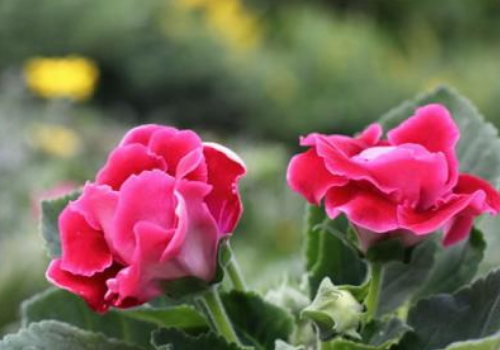
Gloxinia can be grown hydroponically. Gloxinia is a perennial herb in the Gesneriaceae family, genus Sinningia, with a flattened spherical tuber and a very short aboveground stem. The plant can reach 25 cm in height and is densely covered with white fuzz all over. The leaves are opposite, thick and fleshy, with serrated edges; the flowers are terminal or axillary, with bell-shaped corollas in colors such as pink, red, purple-blue, white, and multicolor, large and beautiful. The fruit is a capsule. It blooms from March to August, with peak bloom in summer.
What to do if the Gloxinia tuber rots:
1. Dig out the rotted tuber, then wash it clean, first remove the rotted roots; note that you can simply pull them off directly.
2. Use a relatively sharp small knife to cut away the rotted parts on the tuber, continuing to cut until healthy, intact parts of the tuber appear. This can prevent the infection from spreading further on the tuber and causing it to continue rotting.
3. Place the cleaned tuber of the Gloxinia, with the rotted parts already cut away, under the sun to dry. Generally, about 1 hour of drying is needed to dry the wound, but be careful not to let the tuber dehydrate.
4. Apply carbendazim to the tuber for disinfection.
5. Replant the treated tuber. First, you need to prepare a medium. You can prepare clean sphagnum moss, or vermiculite, river sand, etc., but sphagnum moss is still better. Sphagnum moss can be wrung dry and also allows you to control humidity.
6. Use the prepared sphagnum moss or soil to bury the tuber, burying only half of it. Be careful not to bury the wound. Then cover it with a transparent container to create a humid environment. Be careful that the air humidity inside the container is not too high, otherwise it will easily rot.
Now you know how to handle a rotted Gloxinia tuber.
An introduction to hydroponic methods for Gloxinia, and how to transplant it after hydroponic culture
When it comes to Gloxinia, many flower lovers in the north may not be very familiar with it, but for flower lovers in the south it is a very familiar ornamental flower. It is a very good indoor flowering plant. Generally, many households choose soil culture to grow it, but in fact it can also be grown hydroponically. Today, I will take everyone through an introduction to hydroponic methods for Gloxinia.
Hydroponic methods
1. Time for water cuttings
Cutting in May to June or August to September is more suitable. If it is in a greenhouse or at home where the temperature is higher, it can be done year-round. A temperature of 20 to 28°C is acceptable, and rooting is better at 25°C. If the temperature is too low, the rooting time will be prolonged.
2. Container for water cuttings
You can use a leak-proof, non-toxic, odorless plastic bottle or glassware. Before water cutting, it is best to scald it with hot water for sterilization and disinfection.
3. Selection of cuttings
After the tuber is planted and grows for a period of time, several young shoots will emerge. When they grow to 2-3 pairs of leaves, keep 1-2 stems to bloom, and the remaining young stems can be broken off. Remove the lower pair of leaves; there is no need to cut them, and they can be used directly as cuttings. You can also take healthy young stems after the flowers fade, with the top shoot 5-8 cm long, and use sharp scissors to cut the lower part of the stem 3-5 mm from the node, either with a flat cut or a slightly slanted cut, and remove the lower leaves before using as cuttings. Take thick, strong but not overly aged leaves from the middle and lower part of the plant, and carefully break them off from the base of the petiole to use as cuttings.
4. Steps for water cutting
Let ordinary tap water sit for 1 or 2 days, pour it into a container, then insert the cuttings into the water, with the leaves exposed outside the container and the petioles and lower stem immersed in water for about 1.5-2 cm. If there are few cuttings and the container is too deep and too large, you can use a thin foam board, dig small holes, insert the lower part of the cuttings, and then let it float on the water surface. After water cutting, place the container in a spot with scattered light, change the water about every two or three days, white adventitious roots will grow in about ten days, and tubers will grow in about twenty days. After that, you can continue water culture or transplant them.
Two planting methods after adventitious roots form
1. Transplanting after rooting
When the cuttings have 5-6 adventitious roots, transplant them into 10 cm flower pots and place them under semi-shade conditions, keeping the soil moist and maintaining a certain level of air humidity. Before long, flattened spherical tubers will grow at the lower part of the leaves, and then the original leaves will wilt, and new shoots will grow from the top of the tuber. With careful management, they can bloom after 5 months.
2. Transplanting after tuber formation
After the cuttings produce adventitious roots, continue water culture until flattened spherical tubers about 1 cm in diameter form, and then transplant them into flower pots.
Precautions
1. During tuber formation, sunlight must not be too strong, otherwise the tuber will turn green and gradually crack, affecting growth and flowering. Generally place it in semi-shade, or wrap the container with a sheet of kraft paper or black paper to block light;
2. Do not plant too late, otherwise it is easy to cause nutritional deficiency and affect plant development and flowering. If the leaves have already wilted and it still has not been planted, it will cause the tuber to suffocate and rot.
The above is the hydroponic method for Gloxinia that I have compiled, as well as transplantation after hydroponic culture. I hope it can be helpful to the many flower lovers, and please continue to follow Duorou Huapu to learn more about flower care.
What hydroponic flowering plants are there? Hydroponic flower cultivation techniques
Hydroponic flowers are a type of flower with excellent ornamental value. With hydroponic flowers, the fragrance of flowers fills the space above, while fish below can swim freely. They are not only hygienic and environmentally friendly but also very hassle-free. Therefore, hydroponic flowers are also called lazy-person flowers. They are a good helper for home decoration and are suitable for placement in the living room, bedroom, balcony, study, and courtyard. Today, what I want to share with you is an introduction to what hydroponic flowering plants there are and some knowledge and tips for hydroponic flower cultivation.
What hydroponic flowering plants are there——Variety introduction
1. Many plants, both common and uncommon in our daily lives, can be grown hydroponically, including ordinary green plants and beautiful flowers. Carnation, asparagus fern, African daisy, tulip, calla lily, Ficus benjamina, Brazilian wood, green giant, Gloxinia, cyclamen, Chinese rose, gladiolus, orchid, evergreen, Schefflera octophylla, hyacinth, chrysanthemum, and some potted flowers all have very good hydroponic results. They can be said to be excellent artworks.
2. Flowers and plants that can be grown hydroponically also include Monstera deliciosa, Aglaia odorata, clivia, camellia, jasmine, fuchsia, five-needle pine, banana shrub, rubber fig, Brazilian iron, rhododendron, goldenrain tree, violet, Phalaenopsis, begonias, ferns, palm family plants, and more. Some foliage plants can also be grown hydroponically, such as Sedum-type Aeonium, Aeonium haworthii, Araceae plants such as clustered Xanthosoma, Dieffenbachia, anthurium, Guangdong spider plant, as well as other types such as Paphiopedilum and Schlumbergera, totaling more than a hundred kinds.
Characteristics of hydroponic flowering plants
The ornamental value of hydroponic flowers is very strong. They not only have artistic vase shapes, but also pure white water roots and substrates of various colors. What is even more unique is that flowers and fish can be raised together, integrating multiple ornamental effects such as viewing flowers, leaves, roots, and fish. Moreover, hydroponic flowers are grown in water without soil, so there are also very few pests, diseases, fungal and bacterial contamination. Water and nutrient management are also more convenient, care is simple, and there is no need to water frequently. They can beautify the space.
Cultivation techniques and precautions for hydroponic flowers
1. When preparing nutrient solution for hydroponic flowers, metal containers must not be used, and they must not be used to store the nutrient solution either. For the sake of beauty and to benefit the growth of plants and flowers, it is best to use glass, enamel, and ceramic vessels as containers. Attention should also be paid to the water used when preparing the nutrient solution. If tap water is used, it must be treated to prevent harmful substances in the water from harming the plants. A small amount of humate compounds or sodium edetate needs to be added.
2. When hydroponic flowers are grown as potted plants, the cultivation water in the pot generally needs to be changed once every one or two months. Tap water can be used, but be sure to let the tap water sit for a period of time before use to keep the root temperature stable. Moreover, most hydroponic flowers are shade-tolerant and neutral flowers suitable for indoor cultivation, and they have different requirements for light. In hydroponic plants with appropriate light, temperature, and nutrient solution concentration, the whole roots or root tips are white.
Conclusion: There are many types of hydroponic flowers, and they are highly ornamental, beautiful, and elegant. Placing them in transparent glass bottles in the living room, bedroom, balcony, study, and courtyard are all very good decorations and artworks. They can not only add color to home life, but also better show the owner's unique taste. The above is the introduction I have brought to you about what hydroponic flowering plants there are and some knowledge and tips. I hope it can help friends who like hydroponic flowers.