The Benefits of Tuberose and What Are the Planting Methods for Tuberose
Tuberose is a flowering plant we love, with a rich fragrance. Planted in a courtyard, it can fill the whole courtyard with its scent, making it comfortable and pleasant. Tuberose is elegant and lovely, famous for its subtle fragrance. On the evening of a hot summer day, when the sunlight has gradually faded, it refreshes people who have worked all day and feel quite tired. So, what are the planting methods for tuberose? Let's take a look together.
I. Introduction to Tuberose
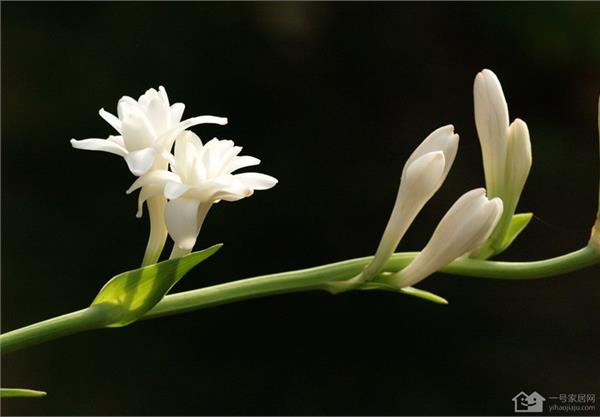
Tuberose (scientific name: Polianthes tuberosa), also known as night-blooming jasmine or incense of the moon, is a perennial bulbous flowering plant in the genus Polianthes of the Amaryllidaceae family (or Agavaceae family). It is a perennial herb with a tuberous rhizome; linear leaves grow in clusters with pointed tips; the flower stem is relatively long, with a raceme at the upper part, blooming white flowers in summer and autumn, with a strong fragrance that becomes even stronger at night. Tuberose flowers bloom at night. In eastern India, people call it "Ratkirani," which means "Queen of the Night."
When planted in open ground, the flowering period is usually from early July to early November, with the peak blooming period from August to September, making it a summer cut flower species. Because of its strong fragrance, slender flower stems and soft lines, and the ease of planting and flowering period regulation, it is one of the very important cut flowers and a main companion flower in applications such as bouquets and flower arrangements. Because of its strong fragrance, slender flower stems and soft lines, and the ease of planting and flowering period regulation, it is one of the very important cut flowers and a main companion flower in applications such as bouquets and flower arrangements.
II. The Benefits of Tuberose
1. Ornamental
Tuberose flowers are white, strongly fragrant, especially intense at night, with slender flower stems and soft lines. It is easy to plant and regulate its flowering period, making it one of the very important cut flowers and a main companion flower in applications such as bouquets and flower arrangements, and it has a certain ornamental value.
2. Medicinal
The leaves, flowers and fruits of tuberose can all be used as medicine. It is slightly sweet in taste, mild and cool in nature, and has the effects of clearing the liver and improving eyesight, drawing out toxins and promoting tissue regeneration. It is often used to treat carbuncles, sores and swollen toxins.
3. Mosquito Repellent
Tuberose gives off a relatively strong scent and has a mosquito-repellent effect.
III. Tuberose Planting Methods
1. Planting is usually done from April to May. The bulbs should first undergo a 10-15 day moist treatment at a temperature of 25-30°C before planting, which can advance sprouting by 7 days. First plough and level the soil, fully apply base fertilizer, then plant. The planting depth should vary according to different purposes and bulb sizes. Deep planting is beneficial to the growth and enlargement of the bulb, while shallow planting is beneficial to flowering. Generally, when planting large bulbs, it is advisable to let the bud tip slightly emerge above the surface; when planting small bulbs and old bulbs, it is advisable to keep the bud tip below or level with the soil surface.
2. Light and Temperature During the growing period, sufficient sunlight is required. The suitable growing temperature is 25-301°C, the minimum temperature is 2°C, and the maximum temperature is 32°C. Before frost in late autumn, dig out the bulbs, first dry them slightly, thinly cut off a layer from the bottom of the bulb to reveal the white part, continue drying until dry, then hang them in a warm, dry place for storage over winter. During the growing period, ensure sufficient light, with at least 6 hours of direct sunlight every day, and avoid placing them in dark places, otherwise the fragrance will be weak.
3. Watering and Fertilizing Tuberose emerges slowly, requiring more than 30 days, but after emergence it grows relatively quickly. Therefore, during the seedling stage, watering should not be excessive, otherwise the stems and leaves will grow excessively and root growth will be unfavorable. When the flower stem is about to emerge and before flowering, it should be watered sufficiently, and the soil should often be kept moist.
4. Shaping and Pruning Tuberose does not require shaping and pruning; it is enough to regularly keep the plant free of diseased and weak leaves.
The above is the relevant introduction in this article. I believe that after reading it, you have gained a simple understanding of this. If needed, you can continue to follow No. 1 Home Network to learn more information.