-
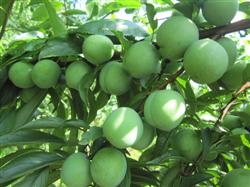
What are the key months for pest and disease control on plum trees?
Which pests and diseases should be controlled on plum trees in which months? Here is an introduction. For pest and disease control when growing plum trees, you can refer to the following: ① The main insect pests of Brown plum are aphids (mid-March to mid-April), scarab beetles (April to August), fruit borers (May to August), peach fruit moths (late May to mid-July), and fruit-piercing noctuid moths (before harvest). You can use Decis at 2000 times dilution, isocarbophos at 1000-2000 times dilution, and sumithion at 1000 times dilution for spraying, and use sugar-vinegar liquid for trapping and killing.
-
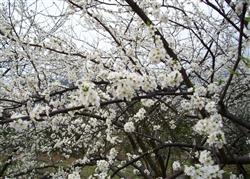
Correct Methods and Technical Key Points for Flower and Fruit Thinning of Plum Trees
How do you carry out flower and fruit thinning on plum trees? Please give an introduction. For flower and fruit thinning of plum trees, you can refer to the following methods: (1) Most Brown varieties produce many flowers and have a high fruit-setting rate. Without flower and fruit thinning, they will bear fruit in clusters, the fruit size will be uneven, quality will decline, and fruiting in the following year will be affected. (2) Flower thinning. This is usually done before flowering by cutting back the flower-bearing branches in the middle, and removing overly dense short fruit branches.
-
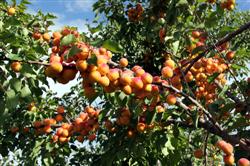
How to improve the fruit set rate of apricot trees? An introduction to practical methods
How to improve the fruit set rate of apricot trees? What methods can improve the fruit set rate? Please introduce: To improve the fruit set rate of apricot trees, the following methods can be used: pruning: lightly prune vigorous trees in winter, and appropriately thin or shorten branches or buds on weak trees to reduce nutrient consumption. For main branches, cut off 1/3 of the current year's growth to keep the main branches balanced. Shorten water sprouts, competing branches, and drooping branches; retain development branches and keep more small branches unpruned; for water sprouts in the canopy, cut 1/2~1/3 of the current year's new shoots so that strong shoots grow at the top and fruit branches form on the lower part; for thin and weak branches inside the canopy, cut from 4~5 buds outside the base; for aged and overlong fruit branches, renew large branches by retrenchment and shorten medium and small branches; after the extension shoots of main and lateral branches reach the standard, pinch off the top 3~4 nodes.
-
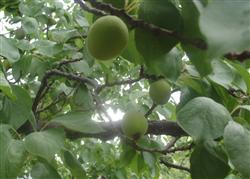
How to water apricot trees after fruit set? Methods and precautions
How to water apricot trees after fruit set? What should be noted? Here are the methods you can refer to for watering apricot trees after fruit set: 1. Irrigation during the fruit enlargement period. After fruit set on apricot trees, in the early stage of fruit growth, irrigation can be based on soil moisture conditions; if the soil is not very dry, do not irrigate. Excessive soil moisture easily causes vigorous growth of new shoots...
-
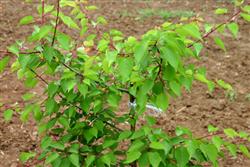
What are the key management techniques for apricot trees after harvest?
How should apricot trees be managed after harvest? A detailed introduction. Apricot fruits ripen early, and there is still a long period from harvest to the dormant season. This period is an important stage for apricot trees to restore tree vigor and accumulate nutrients in the tree body. Carrying out scientific management during this period can reduce the occurrence of pests and diseases and promote the reasonable growth of the tree...
-
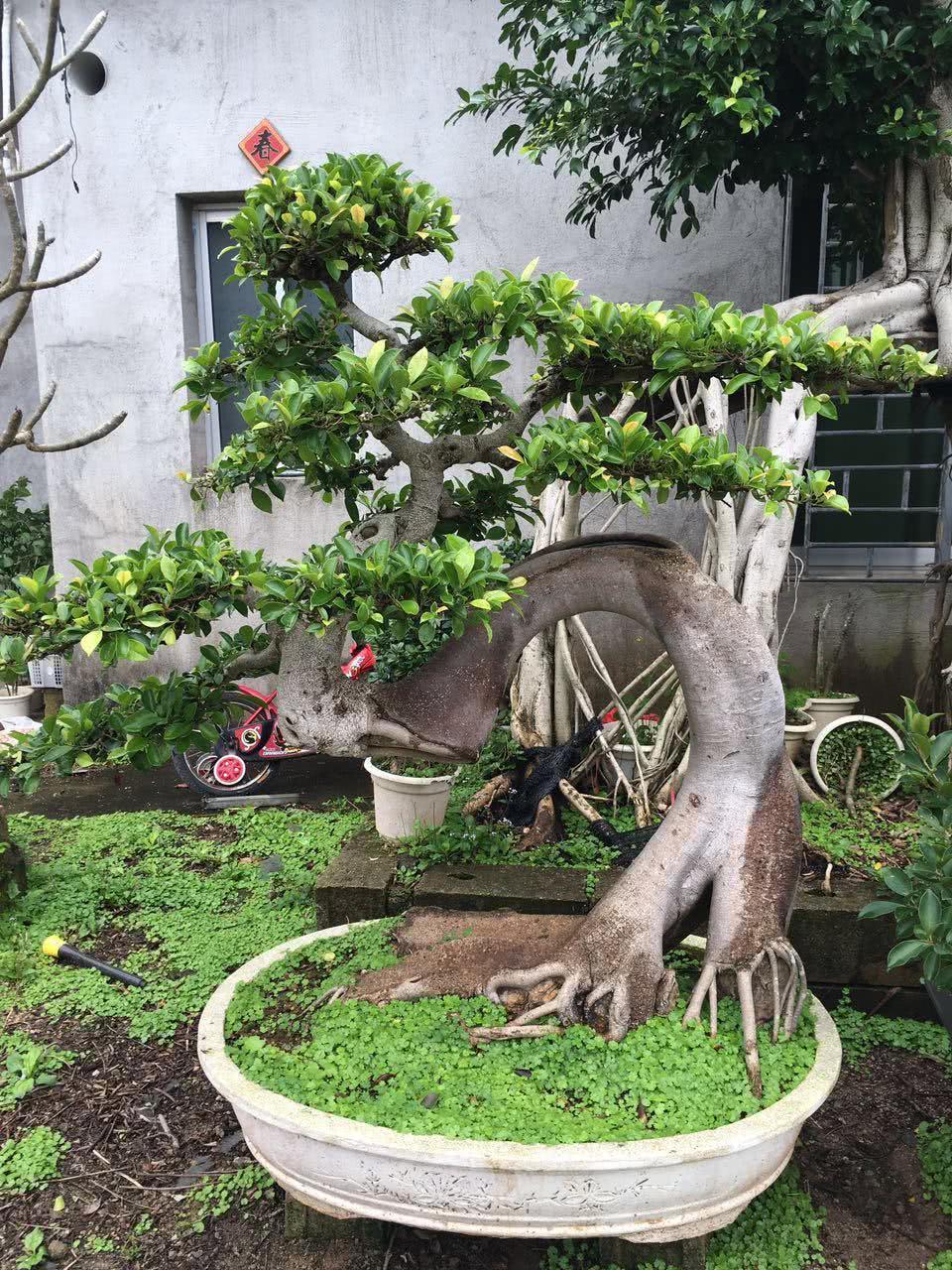
Trees that are easy to grow at home, survive with just a bit of water, and grow tall and upright with great form
I wonder if you all know about the banyan tree? In my impression, banyan trees are tall and big, carrying an old man's weathered endurance and sturdiness. When I was little, Grandpa often took Huahua to play under the banyan tree, and thinking back now, that feeling was so pure. Do you know? Actually...
-
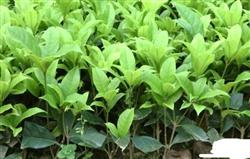
Detailed Explanation of Cutting Propagation Methods and Techniques for Osmanthus Trees
For cuttings, choose a suitable time. Osmanthus spring shoots stop developing at the end of April and by the end of June have become semi-mature sturdy branches. This kind of sturdy branch has the strongest vitality and is relatively easy to root when used for cuttings. The optimum temperature for osmanthus growth is 25°C-28°C; above 30°C growth slows. Therefore, in the lower reaches of the Yangtze River, the second half of June...
-
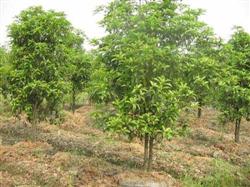
How to Propagate Osmanthus Trees by Cuttings? Detailed Method and Steps
The nursery plot should preferably be sandy loam or light loam with good drainage. If the soil is too clayey, some sand should be mixed in appropriately to adjust the soil texture. To prevent damping-off and root rot, pesticides should also be sprayed when preparing the beds to disinfect the soil. The cutting bed should be slightly raised, and drainage must be unobstructed. Practice has shown that water accumulating after rain most easily causes...
-
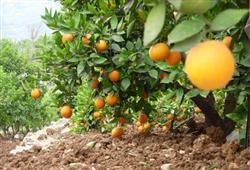
How should navel orange trees be managed when growing them?
How should navel orange trees be managed when growing them? Please give a comprehensive introduction. The following methods can be used for reference when growing navel oranges: (1) Soil management. The mineral nutrients and water needed by the navel orange tree are mainly absorbed from the soil through the root system. Soil is the foundation for the growth and development of navel oranges, and it is also the storage...
-

Man Spends 20 Years Protecting Herons, Uses Up His Savings to Plant Trees, Build Houses and Pick Up Litter
Images and sources: Yitiao ID: yitiaotv Heron photography: Guo Dagui Twenty years ago, Liao Quanfu, who was in the nursery stock business, leased 30 mu of farmland near Chengdu to grow trees. Five or six years later, the little saplings had all grown into big...
条件筛选