What are the key management techniques for apricot trees after harvest?
How should apricot trees be managed after harvest? A detailed introduction. Apricot fruits ripen early, and there is still a long period from harvest to the dormant season. This period is an important stage for apricot trees to restore tree vigor and accumulate nutrients in the tree body. Carrying out scientific management during this period can reduce the occurrence of pests and diseases and promote the reasonable growth of the tree...
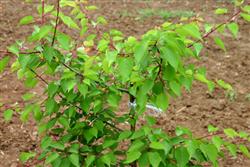
How should apricot trees be managed after harvest? A detailed introduction.
Apricot fruits ripen early, and there is still a long period from harvest to the dormant season. This period is an important stage for apricot trees to restore tree vigor and accumulate nutrients in the tree body. Carrying out scientific management during this period can reduce the occurrence of pests and diseases, promote the reasonable growth of the tree, promote further differentiation of flower buds, increase the number and quality of flower buds, and lay the foundation for a bumper harvest the following year. The specific management measures for apricot trees after harvest are summarized as follows:
I. Training and pruning
1. After apricot trees are harvested, the tree body is still growing, so it is necessary to control vegetative growth, moderate tree vigor, and improve the light conditions inside the tree canopy. For vigorous branches, pull them down and open the branch angle to moderate tree vigor and promote flower formation; perform a second pinching of new shoots to promote branching and develop branch groups. Fruit-bearing branches that are significantly weakened and drooping after fruiting should be appropriately retracted. For water sprouts sprouting inside the canopy, if there is space for growth, measures such as pinching and twisting should be taken to control their vegetative growth; water sprouts with no space for growth should be removed promptly. At the same time, remove dead branches, broken branches, pest- and disease-damaged branches, crossing branches, overlapping branches, and thin weak branches inside the canopy to reduce nutrient consumption in the tree body, improve ventilation and light penetration, and facilitate the formation of high-quality flower buds.
2. For apricot orchards with excessively vigorous growth, paclobutrazol (PP333) or the growth regulator PBO can be sprayed to control tree vigor and help form more flower buds.
II. Soil, fertilizer, and water management
1. After apricot fruit harvest, a whole-orchard intertillage and loosening of the soil should be carried out together with weed control. The general intertillage depth is about 10 cm. Before leaf fall, deep plowing should be carried out together with the application of base fertilizer, with a suitable depth of 30-40 cm.
2. After apricot fruit harvest, fertilizer should be applied as early as possible, especially for trees with weaker vigor and those that bore more fruit in the current year; fertilizer should be applied promptly to make up for nutrient consumption in the tree body. Immediately after harvest, apply a quick-acting fertilizer once to apricot trees, applying 0.5 kg of urea per mature apricot tree, then water. Combine foliar feeding with pesticide spraying by spraying a mixture of 0.3% monopotassium phosphate and 0.2% urea to increase nutrient accumulation in the tree body and improve the number and quality of flower buds. From late August to early October, apply base fertilizer, mainly high-quality farmyard manure, mixed with a small amount of phosphorus and potassium fertilizer. Generally, for 5-6-year-old trees bearing fruit for the first time, apply 30-50 kg of farmyard manure and 0.3-0.5 kg of superphosphate per tree; for trees in full fruit period, apply 70-100 kg of farmyard manure and 0.5-1.0 kg of superphosphate per tree, and water immediately after application.
3. After apricot fruit harvest, irrigate for the first time promptly so that soil moisture is most favorable for the growth and development of apricot trees. This irrigation can ensure normal flower bud differentiation and the growth, aging, and maturation of branches. If there is abundant rain during this period, irrigation may be omitted. At the same time, attention should be paid to drainage to prevent apricot trees from becoming diseased due to waterlogging and affecting the growth and development of the tree body. Irrigate properly for winter freezing; where conditions permit, apply one thorough irrigation before freezing to ensure that apricot trees overwinter safely.
III. Pest and disease control
After apricot fruit harvest, trees are often harmed by pests and diseases. Based on actual conditions, pesticides should be sprayed in a timely manner to protect leaves and increase nutrient accumulation in the tree body. A 2500-fold dilution of 20% fenvalerate can be sprayed to control aphids; a 1500-fold dilution of 40% methamidophos, a 1500-2000-fold dilution of 40% dicofol emulsifiable concentrate, or a 1000-fold dilution of pyridaben can be sprayed to control red spiders. Spray 2000-3000-fold fenvalerate or fenpropathrin 2-3 times to control tent caterpillars and pine lappet caterpillars. From August to October, spray Dacotech M-45, thiophanate-methyl, or carbendazim solution about every 15 days to control apricot scab and bacterial shot hole disease.
Click to get more apricot cultivation techniques
Click to get more fruit cultivation techniques