-
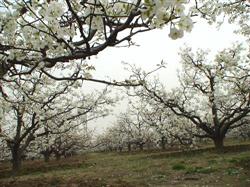
Detailed Explanation of Key Techniques for Spring Management in Pear Tree Cultivation
How should pear tree cultivation be managed in spring? Please provide guidance. For spring management of pear tree cultivation, you can refer to the following methods: I. Strengthen fertilizer management 1. Apply sprouting fertilizer well: It is required that after the Spring Festival, for each mature pear tree, supplement 1.5 kg of special fruit tree fertilizer per tree, and for young trees planted in the 2003 ecological construction along the mountains, supplement...
-
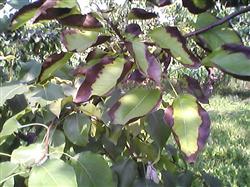
What are the main pests and diseases in pear tree cultivation?
What are the main pests and diseases in pear tree cultivation? Please explain. Common pests and diseases in pear cultivation include the following: 1. Pear tree valsa canker mainly damages the bark of main and side branches, causing rot. There are two symptom types, canker type and branch blight type, and in severe cases many branches die back, leading to death. For control, strengthen orchard management, control the fruit load,...
-
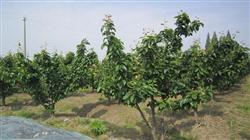
Detailed Explanation of Post-Harvest Management Techniques for Pear Trees
How should pear trees be managed after harvest? Please explain the methods. Post-harvest management of pear trees can refer to the following methods: 1. Clear the orchard and prune. After harvesting the fruit from pear trees, all kinds of weeds, dead branches, fallen leaves and fallen fruit in the orchard must be cleared away in time, and the shaded branches inside the canopy, as well as diseased and pest-infested branches, weak twigs, dry dead branches and overlapping...
-
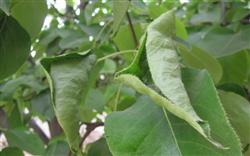
Common Pests and Diseases in Pear Tree Cultivation and Their Control Methods
What pests and diseases should be prevented in pear tree cultivation? Here is an introduction to the main pests and diseases in pear tree cultivation: For diseases, generally spray fungicide 7 days after flowering, then spray again at an interval of 15 days. After June, on sunny days, spray the protective agent 1:3:240 Bordeaux mixture 3 to 4 times, at intervals of 15 to 20 days. During the rainy season, fungicides can be sprayed on the trees. ① Black spot disease: 75% carbendazim at 800 times dilution.
-
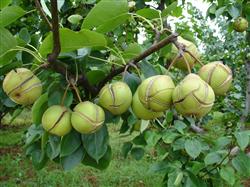
What to Do About Fruit Cracking in Pear Trees? Cause Analysis and Control Methods
What should be done about fruit cracking in pear trees? Please give guidance. Causes of fruit cracking in pear trees: First, excessive fruit growth, imbalanced soil moisture supply, and uneven fruit growth; second, no potassium fertilizer applied or insufficient potassium fertilizer causing fruit cracking; third, pear scab can also severely cause cracking. To control fruit cracking in pear trees, it should be done from May to July...
-
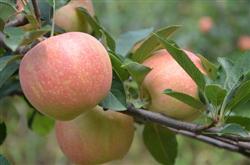
How to prune apple trees in summer? Detailed explanation of key technical points
How to prune apple trees properly in summer? Please give guidance. Summer pruning of apple trees can refer to the following methods: 1. The main targets of summer pruning are neglected trees, young vigorous trees, trees of bearing age that do not fruit, and varieties that flower with difficulty and set fruit poorly; overly weak trees generally do not undergo "summer pruning." 2. Generally, ring cutting and ring girdling are best done from late May to early June...
-
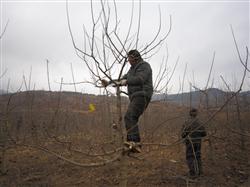
How should apple trees be pruned after entering an "on" year?
How should apple trees be pruned in an "on" year? Please provide guidance on the pruning principles for "on" year trees. On the premise of ensuring the current year's yield, appropriately control the amount of flowers and fruits retained, reduce consumption, increase accumulation, and promote flower bud formation. The specific methods are: 1. "On" year trees have many flower buds. To reduce flower buds and improve ventilation and light conditions, thin out or cut back poorly positioned auxiliary branches and large scaffold branches; thin out overly dense fruiting branches or fruiting branch groups; the outer extension branches should be cut at a plump bud, and the one-year-old excessively long branches below them should be appropriately thinned; for one-year-old vegetative branches in the inner canopy, except for specially long ones that are cut back, generally prune lightly or not at all, so as to form a certain number of flower buds for the "off" year.
-
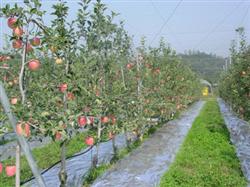
How should young apple trees be planted to bear fruit early?
How should young apple trees be planted to bear fruit early? Please give guidance. To get young apple trees to bear fruit early, you can refer to the following planting methods: 1. Management techniques. Young trees refer to trees that have not yet entered or have just entered the fruiting stage, aged 1 to 4 years. During this period, the key points of care are: first, growing the tree quickly; second, forming a good shape and developing a high-yielding framework that can carry the crop load...
-
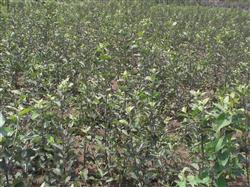
How to prune vigorous apple trees? These methods you need to master
How to prune vigorous apple trees? Please explain the methods. Vigorous apple trees are mostly young trees up to the early fruiting stage. To moderate tree vigor and promote flowering and fruit set, pruning should be done as follows: 1. Open the angle of the scaffold branches. Use propping, pulling, pressing and other methods to open the angle of the scaffold branches. For perennial and strongly vigorous scaffold branches, the multiple-saw method can be used to force the angle open and moderate tree vigor.
-
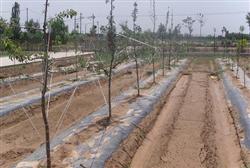
Proper Methods for Fertilizing and Bending Branches of Apple Trees
How do you fertilize and bend the branches of apple trees? Please explain in detail. 1. Fertilizing apple trees. (1) From the outer edge of the canopy outward, dig a ring-shaped trench 30 cm wide and 40 cm deep (for young trees) in the ground for fertilizing; for large trees, dig a ring-shaped trench 50 cm wide and 60 cm deep. (2) Mature orchards can use the method of digging trenches along the rows...
条件筛选