-

Control Methods and Rescue Measures for the Three Major Types of Pesticide Damage in Cotton
1. Strict operation and effective prevention. When using the various types of pesticides mentioned above on cotton, the operating procedures must be strictly followed and the pesticides used rationally (including the type, concentration, method and timing of application, etc.), so as to give full play to the pesticide's efficacy while reducing costs and preventing pesticide damage. 2. Timely "rescue" to eliminate the "danger". After pesticide damage occurs, a large amount of water can be sprayed on the leaves to wash it off; in the soil, irrigation, drainage to wash out the pesticide, or neutralization and detoxification with safeners can be used. If Bordeaux mixture is mistakenly used, since copper ions cause the pesticide damage, 0.5%-1% lime milk can be sprayed; spray equipment that has been used for
-
Brief Introduction to Zhong 9 You 1176, a New High-Quality Three-Line Hybrid Indica Rice Combination
Zhong 9 You 1176 is a new three-line hybrid indica rice combination developed by the China National Rice Research Institute by crossing Zhong 9A with the high-quality, multi-resistant restorer line R1176, featuring excellent grain quality, good yield potential, strong disease resistance, and excellent overall agronomic traits. 1. Yield: In 2002, this combination was entered in the Zhejiang Province "8812" joint variety trial, with an average yield of 481.49 kg per mu, comparable to the control Shanyou 63; in the 2002 single-season rice large-plot variety comparison at this institute, the yield was 643.5 kg per mu, an increase of 6.90% over the control Shanyou 63
-
Removing fish scales is very simple; three little tricks get it done easily.
Removing scales with vinegar: Before scraping the fish scales, you might put a little vinegar into a basin of cold water, then soak the fish in the basin for a while, or directly rub the vinegar over the fish several times. After that, use a tool to scrape the scales and it will feel much easier. Removing scales with rice wine: Besides vinegar, ordinary rice wine can also help scrape off fish scales. Just soak the fish in a basin of cold water beforehand, then add an appropriate amount of rice wine to the cold water. After waiting patiently for a while, take the fish out.
-
Detailed Explanation of Three Fish Feed Formulas and Their Mixing Methods
(1) Grass carp feed formula (1) Rice bran 40%, wheat bran 38%, soybean cake 10%, fish meal 10%, yeast powder 2%. The feed conversion ratio of this formula is 1.9; if green fodder is added separately, the feed conversion ratio is 2.2. This formula was provided by the Pearl River Fisheries Research Institute. (2) Rice straw powder 80%, soybean cake 10%, rice bran 10%. This formula was provided by the Yangtze River Fisheries Research Institute, with a feed conversion ratio of 4.9. (3) Corn meal 70%, fish meal 10%, soybean cake powder 15%, wheat bran 5%. Its additives and binders are: sweet potato 12%
-
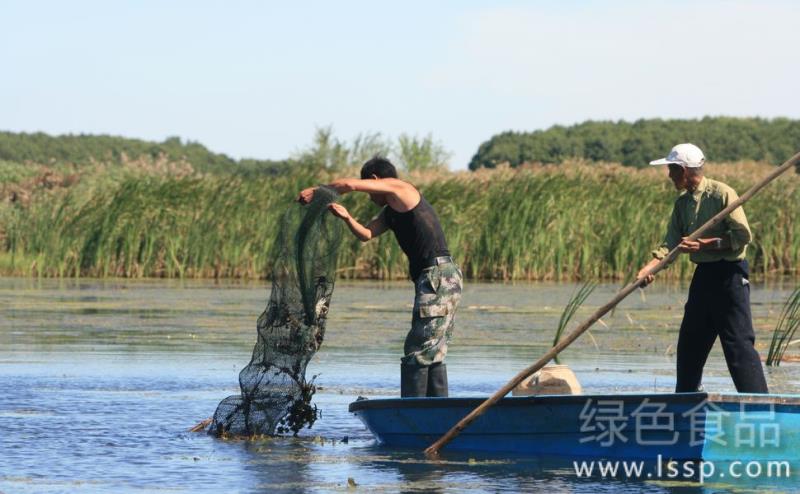
How to fatten river crabs? Three management measures for optimal fatness
How to achieve optimal fatness in river crabs: three management measures for fattening river crabs
-
Shiitake mushrooms achieve three-dimensional cultivation through shelving
In recent years, my family has always been growing shiitake mushrooms in a greenhouse, but perhaps due to technical and other reasons, the returns have never been ideal. I heard that shelf-layer cultivation of shiitake mushrooms can bring considerable returns. Could you introduce the shelf-layer cultivation method for shiitake mushrooms? Tian Shuzhen, Nong'an. Hello Tian Shuzhen: Shelf-layer cultivation of shiitake mushrooms is currently a new technique for increasing shiitake mushroom yields. Below I will introduce how to choose a good site and variety, and the management points to note, for your reference: 1. Site and setup for the mushroom shed site
-
Three key steps must be done well during the dehydration of shiitake mushrooms
Timely harvesting is the foundation for the bright color of the finished mushrooms. One of the main reasons shiitake mushrooms change color during drying is that the mushroom bodies are injured before drying. To overcome this shortcoming and enhance the resistance of the mushroom bodies to external pressure, timely harvesting is very important. When the veil has fully split and the cap has curled upward like a copper gong, they should be harvested. Do not spray water within 2 hours before harvesting. Use the "twist-harvest method" to pick them. After harvesting, handle them gently, remove debris and stems, and immediately send them to the nearest dehydration room for dehydration. Generally, from harvest to entering the drying stove, the distance should preferably not exceed 5
-
There's a right way to feed rabbits: keep these three dos and three don'ts in mind
Feed a complete mixed ration. The nutrient composition of a rabbit's daily ration is: 10% crude protein and 10% crude fiber, 5% fat, 2800 kcal of digestible energy per kilogram of ration, and 10% amino acids. If there is no way to feed a complete mixed feed, appropriately add concentrated feeds such as soybeans, soybean cake, wheat bran and corn, along with succulent feeds such as carrots. Feed heavily at night. Rabbits have a strong tendency to eat at night, and nighttime intake can account for more than 75% of their total daily intake. Therefore, provide rabbits with enough feed and drinking water at night. Change feed gradually. When one kind of feed has been fed for a long time, the rabbit has
-
Key Technical Points for Seedling Raising and Cultivation Management of Three-Cherry Pepper
I. Seedling Raising Three-Cherry Pepper can be raised in cold frames or small arch sheds, with small arch sheds being the main method. The specific practices are as follows. 1. Construction of the small arch shed The small arch shed is generally 1.5-2 m wide and 1 m high, with straw mats added at night depending on the climate. 2. Preparation of culture soil Use 7-8 parts fertile garden soil and 2-3 parts decomposed barnyard manure, mix well; if the soil is clayey, also mix in sandy soil. 3. Sowing time Spring sowing for seedling raising is generally arranged in mid-to-late February, and at the latest should not exceed March 5. Summer sowing is generally in mid-March,
-
Ginger, garlic and vinegar are the three great treasures for treating pig diseases
If a pig has an external injury, peel fresh ginger, wash it clean and mash it into a paste, then apply it to the wound to stop the bleeding. Replace the ginger paste once every 1 day, and after 1 week the pig's wound can heal completely. Take two heads of garlic, peel them and mash them into a paste, mix with 0.2 kg of water and pour it into the pig's stomach; this can disinfect and sterilize, and for piglets the amount can be halved as appropriate. Soak 100 grams of garlic and 50 milliliters of alcohol for one week, then take 10-20 milliliters of the liquid and administer it to the pig by drenching; this can treat gastrointestinal disorders in pigs. For every square meter of space, dilute 10 milliliters of vinegar with 1 times its amount of water, place it in a container and heat it to evaporate,
条件筛选