-

Three Major Disease Prevention and Treatment Methods for Pond Fish in Spring and Summer
1 Carp Hemorrhagic Disease 1.1 Symptoms and Causes The scales on the abdomen of the diseased fish, the fin rays and the caudal peduncle become congested and red. The diseased fish float up close to the ice layer or float on the water surface, gather in groups and swim slowly near the pond edge, and gradually die. ① Hemorrhagic septicemia. The diseased fish appear normal on the outside, or the area under the abdominal scales is congested and red. When the diseased fish is dissected, blood-tinged fluid emerges from the body cavity, and the internal organs have petechial hemorrhages. The disease is caused by Aeromonas hydrophila. ② Brown blood disease (hemorrhagic gill disease). The gill filaments of the diseased fish swell and become dark in color, and some gill filaments
-
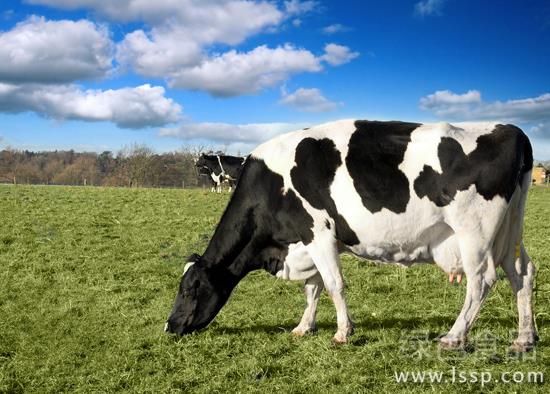
How to do a good job in daily dairy cattle management? Three measures to ensure the healthy growth of dairy cattle
How to ensure the healthy growth of dairy cattle: three measures for daily dairy cattle management
-
How to Keep Oyster Mushrooms Moisturized? Learn These Three Techniques
At present, growing oyster mushrooms in rural areas is fairly common, but yields are not high, mainly because after harvesting oyster mushrooms the water content of the substrate is low. But at this point the oyster mushroom mycelium has already spread throughout the entire substrate, making it very difficult to replenish water. How to keep the substrate moisturized and produce more mushrooms has become an important factor in whether oyster mushrooms can achieve high yields. There are three techniques: 1. Wall-style soil covering of mushroom logs for moisture retention. In the shed, lay a ridge of soil 15 to 20 cm thick along the length of the mushroom bags, and remove the plastic bags from the mushroom bags that have fully colonized and are about to fruit (these are called mushroom bags). Arrange the mushroom logs neatly
-
Variety Characteristics and Key Cultivation Techniques of the Three-Season Pear
Variety source: The Three-Season Pear originated in France and is preserved by the Dalian Academy of Agricultural Sciences. Characteristics: The crown of the Three-Season Pear is an inverted cone shape; young trees are relatively strongly upright, while mature trees are semi-spreading. In the Dalian region, flower buds break in late March, bloom from late April to early May, and the fruit is harvested in early August. Generally, trees begin bearing fruit 3-4 years after planting and enter full production at 8-10 years, with a yield of 50-100 kg per tree and 3000 kg per mu. It has moderate resistance to black leaf disease, strong insect resistance, moderate cold resistance, and is relatively wind-resistant. The fruit is large, with an average single fruit weight of
-
Differences Between Three Soft-Shelled Turtle Diseases and Their Prevention and Treatment Methods
In the process of soft-shelled turtle farming, some farmers cannot clearly distinguish white spot disease, white spot fungus disease and saprolegniasis, and blindly and indiscriminately use drugs when treating turtle diseases, thus affecting the effectiveness of disease prevention and treatment. Therefore, based on recent years of practice at soft-shelled turtle farms, the author summarizes the differences between the above diseases and comprehensive prevention and treatment methods as follows. I. Differences between white spot disease, white spot fungus disease and saprolegniasis in soft-shelled turtles 1. Different pathogens: the pathogen of white spot disease is Aeromonas hydrophila, Aeromonas sobria, etc.; the pathogen of white spot fungus disease is Mucor, which belongs to
-
Three Ways with Shrimp
Main ingredients: about two and a half jin of fresh shrimp. Auxiliary ingredients: oyster sauce, fish sauce, cilantro, tomato ketchup, salt. Rinse the fresh shrimp clean with water, take out part of them and remove the shrimp heads, and divide the rest into two plates. First way: salt and pepper shrimp heads. Coat the shrimp heads evenly with dry flour, and pour oil into the wok. Put the shrimp heads into the wok and fry, take them out and let them cool, then fry them in the wok again. Sprinkle with Sichuan peppercorn salt and they are ready to be plated. Features: crispy and fragrant. Second way: blanched shrimp. Pour water into the wok, bring it to a boil, take one plate of shrimp and blanch them in the water, then take them out and arrange
-
Three cloned pigs born successfully in Harbin
China's first cloned Northeast Min pig using adult somatic cells as nuclear donors has been born in Harbin. Three adorable black cloned piglets, just three days old, met with the media. This is also China's second successful cloned pig, following China Agricultural University. According to project leader Dr. Liu Zhonghua of the College of Life Sciences at Northeast Agricultural University, the difference between their cloned Northeast Min pig and previous cloned pigs lies in the use of adult somatic cells as nuclear donors; the donor nuclear cells were taken from a 3-day-old Northeast Min piglet
-
Three key points to master for high-yield Gastrodia elata cultivation
I. Armillaria must be "three new" 1. New technology: new methods to obtain new strains. The new method uses the latest biotechnology to detoxify the strains, which is by far the most advanced method of obtaining strains. Among traditional Armillaria strains, the best results come from those obtained by tissue isolation or spore isolation; most units or individuals use purchased mother cultures for subculturing and expansion, so the cultivation results are poor. 2. New strains: pure isolated strains within three generations are required. The pure isolated strains referred to in this article mean
-
Three key points for high-yield cultivation of Gastrodia elata
In recent years, as the area devoted to Gastrodia elata production has shrunk sharply while market demand keeps rising, the price of Gastrodia elata has shown a continuously upward trend. Recently many growers have called to inquire about cultivation techniques for Gastrodia elata. A reporter interviewed Gastrodia elata expert Professor Cao Debin of the Shandong Academy of Agricultural Sciences on this topic. The key points of high-yield cultivation techniques for Gastrodia elata are introduced here, in the hope of being helpful to the many Gastrodia elata growers. 1. Armillaria must be "three new" 1. New technology: new methods to obtain new strains. The new method uses the latest biotechnology to detoxify the strains, and this is by far the most advanced method of obtaining strains. Among traditional Armillaria strains, those obtained by tissue isolation or spore isolation have the best effect; ordinary units or individuals mostly use purchased mother cultures for subculturing and expansion, so the cultivation effect is poor.
-
Key Points of Three-Dimensional Cultivation Technology for Gastrodia elata and Soybean
Gastrodia elata is a traditional Chinese medicinal herb with effects such as benefiting qi, calming convulsions, nourishing the liver and stopping dizziness, dispelling wind-dampness, and strengthening bones and muscles. In recent years, on the basis of artificial box cultivation, we have made full use of the growth characteristics of Gastrodia elata and successfully adopted underground planting of Gastrodia elata with above-ground planting of the short-stalked crop soybean. According to investigation and measurement by the Agricultural Station of Shuidian Town, in three-dimensional cultivation of soybean and Gastrodia elata, the yield of commercial dried Gastrodia elata is 200-300 kg per mu, creating an output value of 8000-10000 yuan (calculated at 36-40 yuan/kg); the yield of soybean is 150-175 kg per mu, creating an output value of 360-
条件筛选