-
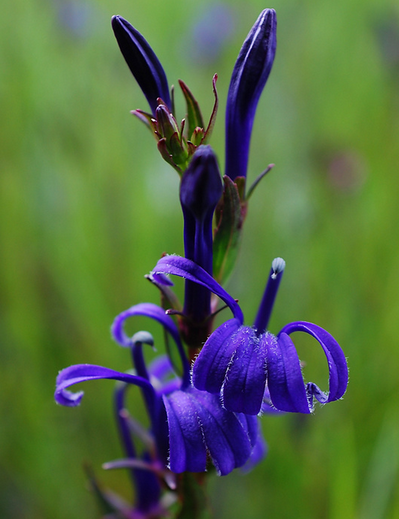
Three key points to note when growing gentian
Gentian is a perennial herb, 1-2 chi tall. The leaves are opposite; the 2-3 pairs of lower leaves are very small and scale-like, while the middle and upper leaves are lanceolate, dark green on the surface and light green on the underside, with three obvious veins and no petiole. The flowers grow at the branch tips or in the leaf axils near the tips, blooming as blue tubular bell-shaped flowers
-
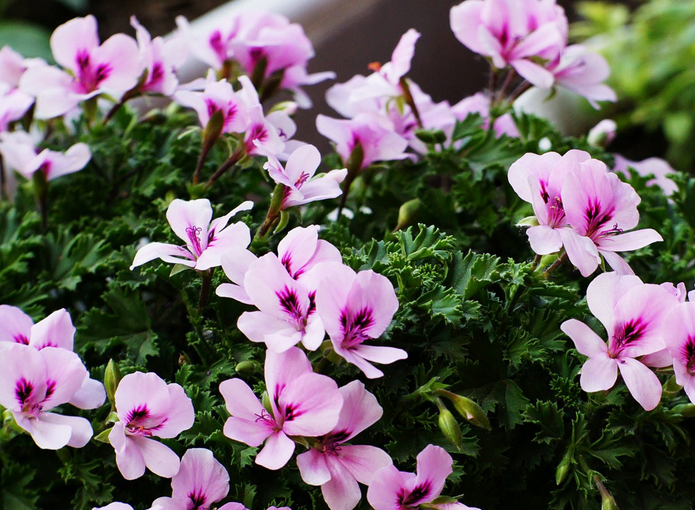
Three common ways geraniums die: suffocation, sunscald, and thirst
Many people love growing geraniums. The flowers are incredibly vibrant, and just one look lifts your mood. Yet geraniums are very prone to dying in summer. Let's look at the ways geraniums die in summer. The geranium is absolutely a charming beauty.
-
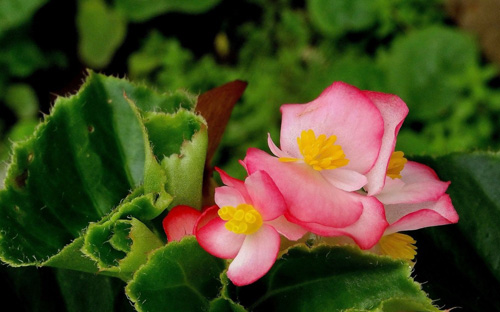
Propagation methods for wax begonia: three ways - seed sowing, cuttings, and division
Begonias can be said to be one of the most popular flowers among the general public in China, and for this reason many people grow begonias at home. Wax begonias prefer a warm, humid environment, are intolerant of cold, drought and intense heat, and dislike waterlogging, so they grow best in a semi-shaded, humid, warm environment.
-

-
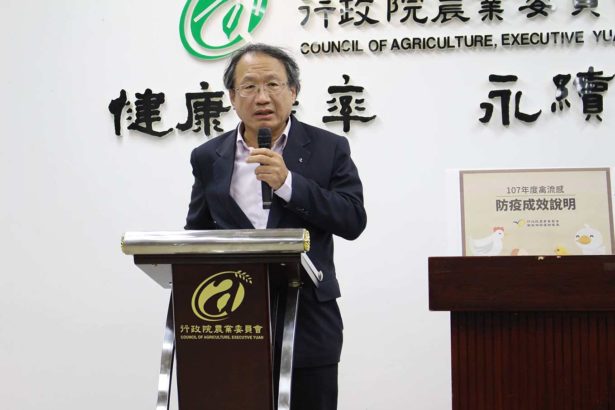
Avian influenza runs rampant in the cold winter, and mixed raising of three generations of laying hens is the toughest; open-air duck farming must be tightened and controlled
Battling the peak of avian influenza in the cold winter! Mixed raising of three generations of laying hens is the toughest; open-air duck farming must be tightened and controlled
-
Three key techniques for field management of autumn potatoes
Doing a good job in autumn and winter field management is the key technique for obtaining a high yield of autumn potatoes, and the specific measures are as follows: 1. Timely intertillage and weeding, and topdressing according to the seedlings: because autumn has short sunshine, which is suitable for tuber growth, the plants set tubers early and are not prone to excessive vegetative growth, so management should focus on promoting growth. When 60-70% of the potatoes have emerged, apply 2.5-3 kg of urea per mu, mixed with 1600-2000 kg of water and fertilizer, by hole application; when they grow to 30-40 cm, apply 500 kg of plant ash per mu, mixed with 40-50
-
Detailed Explanation of Key Technical Points for Controlling Two Diseases and Three Pests of Rice
The two diseases and three pests of rice refer to rice blast, sheath blight, rice stem borers, rice planthoppers, and the rice red-spotted black spittlebug. They cause great harm to rice and should be given attention for control. Rice blast: Long-term deep water irrigation or excessive drought, and one-sided application of nitrogen fertilizer lead to severe rice blast. There are three susceptible periods in the life of rice, namely the seedling stage, the peak tillering stage, and the heading and full heading stage. Neck blast has the greatest impact on rice yield and should be prevented early at the breaking stage and full heading stage. Rice blast is divided into: seedling blast, leaf blast, node blast, neck blast, and grain blast. Rice blast
-
Detailed Explanation of the Key Points of the "Three Supers" Rice Cultivation Technique
I. Select suitable varieties. Adapt to local conditions and choose high-quality varieties that can mature normally and safely in the local area, with moderate tillering, relatively large panicles, relatively high grain weight, strong stress resistance and disease resistance, upright leaves, a compact plant type, and outstanding high-yield performance. II. Sow early at the right time and sow sparsely to cultivate strong seedlings. (1) Seedling raising preparation. 1. Seedbed preparation. ① Seedbed selection: choose a pollution-free, flat and loose, fertile soil, good water-holding, wind-sheltered and sunny plot as a dedicated seedling field. ② Land preparation and arching: in order to achieve ultra-early sowing, prepare the seedbed soil and set up the frame the previous year, cover with plastic film in early to mid-March to promote thawing and raise soil temperature, shallowly plow the seedbed land 10 cm, and rake it level and fine. Make the bed 10 days before sowing, and dig a 13 cm deep ditch around the seedbed.
-
Detailed Explanation of the Three Fertilizations for Rice and Their Application Techniques
Scientific fertilization is one of the important measures for achieving high quality and high yield in rice. However, rice fertilization is a highly technical task, and in practice it must be flexibly managed according to variety characteristics, soil fertility, climatic factors, and cultivation conditions. As is well known, the fertilizer requirements of rice are expressed in the nutritional period, the critical nutritional period, and the period of maximum nutritional efficiency. For example, early rice has a short growth period and relatively low fertilizer demand, so fertilization should be early and concentrated. Middle rice and late rice have longer growth periods, high fertilizer demand, and strong absorption intensity, so the number of topdressings should be increased and the proportion of topdressing raised.
-
Detailed Explanation of the Three-Drainage and Three-Irrigation Water Management Measures for Rice
1. Three Drainages. First drainage: From the critical tillering stage to the stage when the penultimate leaf tip emerges (20 days before heading), the field should be drained and sun-dried to control the growth of ineffective tillers. For fields with vigorous seedling growth and dark green leaf color, as well as fertile fields and cold-waterlogged fields, heavy sun-drying should be carried out to promote fading of leaf color; for fields with poor seedling growth, as well as lean fields and fields with a low groundwater table, multiple light sun-dryings should be carried out, combining sun-drying with exposure, with the degree judged by the field not sinking underfoot. Second drainage: From 5-7 days before heading to the heading stage, a second drainage should be carried out to improve rice root vigor and enhance the roots' ability to absorb nutrients
条件筛选