Three key points to note when growing gentian
Gentian is a perennial herb, 1-2 chi tall. The leaves are opposite; the 2-3 pairs of lower leaves are very small and scale-like, while the middle and upper leaves are lanceolate, dark green on the surface and light green on the underside, with three obvious veins and no petiole. The flowers grow at the branch tips or in the leaf axils near the tips, blooming as blue tubular bell-shaped flowers. The fruit is oblong-elliptic and slightly flattened, splitting open into two valves when mature, with numerous very small seeds. The rhizome is short, with many slender roots clustered together, light yellowish-brown or light yellow. Nowadays many people grow gentian, so what are the key points for growing gentian? Next, let the editor of Together Decoration Network briefly introduce them to everyone!
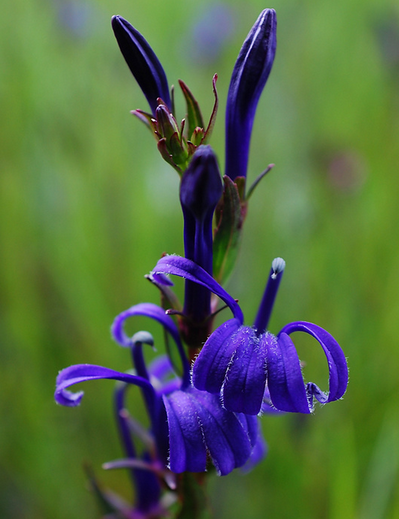
Three points to note when growing gentian
1. Site selection and land preparation
It is best to choose a relatively moist area with flat terrain and plenty of sunlight, and the soil should preferably be sandy soil rich in humus. Poor and heavy clay soil is not suitable for cultivation.
2. Field management
After sowing the seeds, attention should be paid to maintaining temperature and moisture. When the seedling emergence rate reaches 50%, for those covered with curtains, prop the straw curtains up to about 30 cm high; for those covered with grass, remove about half of the grass evenly to prevent it from pressing the seedlings. When the seedling emergence rate reaches 80%, remove the straw curtains and grass covering. During the seedling stage, promptly pull out weeds in the field to prevent weed infestation and keep the field clean. Maintain soil moisture. During the growing period, apply topdressing 1-2 times each year. After the flower buds form, the flower buds should be removed from commercial fields to promote root development. Gentian is averse to strong light, so shade crops can be planted.
3. Pest and disease control
1. Diseases
Gentian leaf blight: It mainly harms leaves and, in severe cases, causes the entire leaf to wither and die. A 1000-fold solution of 50% thiophanate can be used, sprayed once every 10 days after the start of summer, with good results. Also, before winter begins, clear the withered branches and fallen leaves in the field and burn them to prevent the spread of the pathogen.
2. Pests
In plots where mole crickets and grubs cause serious damage, soil disinfection can be carried out during land preparation, or control can be done during the growing period. For soil disinfection, 0.5-1.5 kg of 35% endosulfan per mu can be applied, or 0.5 kg of phoxim per mu, mixed into the ridge soil; if mole crickets occur during the growing period, black light traps can be used to lure and kill them.
Three points to note when growing gentian
What effects and functions does gentian have? Gentian cultivation techniques
[Common questions]What effects and functions does gentian have? How should it be grown?
[Expert answer]Gentian is a perennial herbaceous plant and a common Chinese medicinal material with extremely high medicinal value and good cultivation returns. The effects, functions and cultivation techniques of gentian are introduced as follows:
Image: Gentian cultivation
1. The effects and functions of gentian
1. Clearing heat and drying dampness:Gentian can treat damp-heat jaundice, swollen and itchy genitals, abnormal vaginal discharge, priapism, eczema itching and other conditions.
2. Purging liver and gallbladder fire:Gentian can treat jaundice, bitter taste in the mouth, red eyes, deafness, hypochondriac pain and other conditions caused by cholecystitis, gallstones and viral hepatitis.
3. Clearing fire and calming wind:Gentian can treat convulsions and spasms caused by fever.
4. Promoting diuresis and eliminating dampness:Gentian mainly treats eye pain, neck pain, pain in both hypochondria, upward rushing damp-heat and other conditions.
5. Expelling parasites and promoting digestion:Gentian can treat infantile malnutrition, latent heat in the stomach, seasonal warm-heat disease, heat diarrhea and dysentery, remove intestinal worms, benefit liver and gallbladder qi, stop fright and restlessness, and other conditions.
2. Gentian cultivation techniques
1. Growth habits:Gentian prefers a moist and cool climate and grows wild in mountainous areas, sloping land, forest edges and shrub thickets. It requires fairly high temperatures throughout the entire growing season of the plant. After introduction and planting in the Beijing area, it has consistently grown well. Sites with high, dry terrain and direct sunlight, as well as areas with overly sticky or poor soil, are not suitable for cultivation. Gentian likes fertilizer; when deep plowing the land, about 8000 jin of fully decomposed farmyard manure should be applied per mu. It sprouts in mid-April each year, blooms in August, the flowering period is August to September, the fruit matures in September, and the total annual growing period is about 180-210 days.
Image: Gentian cultivation
2. Propagation techniques
(1) Division propagation:Division propagation of gentian is mostly carried out in early spring in the first ten days of April before the buds emerge from the soil. Dig out all the roots, divide them into small clusters, each cluster should have 1-2 small buds, then plant them at a row spacing of 1.3 chi and a plant spacing of 0.7-1 chi. Do not let the buds be exposed above the soil surface, so they are not dried out by the wind.
(2) Seed propagation:Seed propagation of gentian can be divided into autumn sowing and spring sowing. Autumn sowing is generally done in November, and the seeds sprout the following spring. To sow evenly, mix an appropriate amount of fine sand or humus into the seeds and use drilling. Before spring sowing, gentian seeds should first undergo sand storage treatment, that is, after the seeds are collected, mix them with fine sand at 1:3, maintain a certain humidity, bury them outdoors, and after the low-temperature influence of winter, take them out and sow. Drilling row spacing is 1-1.3 chi, plant spacing is 0.7-1 chi, soil covering is 2-3 fen, and the sowing rate is 3-4 liang per mu.
3. Timely weed removal:When growing gentian, weeding should not be limited by the number of times. Following the principle of removing early and removing small, and pulling weeds as soon as they are seen, never wait until the weeds have grown up and formed a weed infestation before pulling them, as this both wastes labor and damages the seedlings.
4. Reasonable loosening of the soil:The purpose of loosening the soil is to prevent the soil surface of the ridge from crusting, improve soil aeration, reduce water evaporation, and remove sprouting weeds. In the first year after transplanting, this should be made a key task; in the second year, loosening the soil once when the plants emerge is enough. After transplanting and seedling recovery, promptly use your hands or an iron nail rake to break up the crusted layer on the ridge surface caused by watering. Note that transplanted seedlings are planted at a slant, so do not loosen the soil too deeply, to avoid damaging the seedlings or pulling them out. Generally, after transplanting, the gentian field should be loosened 2-3 times in combination with weeding.
5. Timely topdressing:After gentian transplanting and seedling recovery, to promote rapid recovery, carry out foliar topdressing. Foliar topdressing can be done twice, from after leaf expansion to the bud stage and from flowering to fruiting, using foliar fertilizers such as potassium dihydrogen phosphate, Yemianbao, Fengchansu, etc., at the concentration given in the instructions, and sprayed on the leaves. For 3-4 year old gentian, an appropriate amount of root topdressing can be carried out during the growing period. Generally, apply 100-150 grams of cake fertilizer, 50 grams of ammonium dihydrogen phosphate, and 3 kg of farmyard manure per square meter. The method is to open furrows in the spaces between rows, 2-3 cm deep, apply the above fertilizers into the furrows, and then cover with soil level.
6. Thinning flowers and removing buds:When growing gentian, in order to reduce nutrient consumption, promote root material accumulation, and accelerate rhizome growth, all flower buds should be removed after budding in fields not used for seed collection.
[Editor's summary]Gentian has the effects of clearing heat and drying dampness and purging liver and gallbladder fire, and its cultivation returns are good. The above has introduced the effects, functions and cultivation techniques of gentian for everyone, and I hope it can be helpful to everyone!
What plant is gentian? Gentian cultivation and planting techniques
Image: Gentian
[Common questions] What plant is gentian? Gentian cultivation and planting techniques
[Expert answer]
Gentian introduction:
Aliases: Longdan; aliases: Dancao, Caolongdan, Shanlongdan; Gentianaceae, Gentiana; perennial herb, rhizome prostrate or upright, with many thick, slightly fleshy fibrous roots. Stems solitary, upright, yellow-green or purplish-red, hollow, nearly round, with longitudinal ridges, the ridges with papillae, rarely smooth. Lower leaves of the stem membranous, light purplish-red, scale-shaped, apex separate, fused below the middle into a tubular sheath clasping the stem; produced in Inner Mongolia, Heilongjiang, Jilin, Liaoning, Guizhou, Shaanxi, Hubei, Hunan, Anhui, Jiangsu, Zhejiang, Fujian, Guangdong, Guangxi. Grows on mountain slopes and grasslands, roadsides, riverbanks, in shrub thickets, at forest edges and under forests, and in meadows, at an altitude of 400-**** m. It is also distributed in the Soviet Union, Korea, and Japan.
It is an alpine plant that prefers a moist and cool climate and grows wild in mountainous areas, sloping land, forest edges and shrub thickets. Throughout the entire growing season of the plant, the temperature is fairly high. After introduction and planting in the Beijing area, it has consistently grown well. Sites with high, dry terrain and direct sunlight, as well as areas with overly sticky or poor soil, are not suitable for cultivation. Gentian likes fertilizer; when deep plowing the land, about 8000 jin of fully decomposed farmyard manure should be applied per mu. It sprouts in mid-April each year, blooms in August, the flowering period is August-September, and the fruit matures in September. The total annual growing period is about 180-210 days.
Artificial cultivation and planting techniques for gentian:
1. Site selection and land preparation
It is best to choose a relatively moist area with flat terrain and plenty of sunlight, and the soil should preferably be sandy soil rich in humus. Poor and heavy clay soil is not suitable for cultivation.
Before sowing or transplanting, carry out land preparation, plowing to a depth of about 20 cm, apply sufficient base fertilizer in combination with land preparation, then level and harrow finely, and make large ridges 60-65 cm wide or ridge beds 1-1.2 m wide.
2. Propagation methods
Seed propagation and division propagation. Seed propagation can be divided into autumn sowing and spring sowing. Autumn sowing: generally sown in November, sprouting the following spring. To sow evenly, mix an appropriate amount of fine sand or humus into the seeds and use drilling. Spring sowing: sand storage treatment should be carried out beforehand, that is, after the seeds are collected, mix them with fine sand at 1:3, maintain a certain humidity, bury them outdoors, and after the low-temperature influence of winter, take them out and sow. Drilling row spacing is 1-1.3 chi, plant spacing is 0.7-1 chi, and soil covering is 2-3 fen. The sowing rate is 3-4 liang per mu. Division propagation is mostly carried out in early spring in the first ten days of April, before the buds emerge from the soil. Dig out all the roots, divide them into small clusters, each cluster should have 1-2 small buds, then plant them at a row spacing of 1.3 chi and a plant spacing of 0.7-1 chi. Do not let the buds be exposed above the soil surface, so they are not dried out by the wind.
3. Weeding
Weeding should not be limited by the number of times. Follow the principle of removing early and removing small, and pulling weeds as soon as they are seen. Never wait until the weeds have grown up and formed a weed infestation before pulling them, as this both wastes labor and damages the seedlings.
4. Loosening the soil
The purpose of loosening the soil is to prevent the soil surface of the ridge from crusting, improve soil aeration, reduce water evaporation, and remove sprouting weeds. In the first year after transplanting, loosening the soil should be made a key task; in the second year, loosening the soil once when the plants emerge is enough. After transplanting and seedling recovery, promptly use your hands or an iron nail rake to break up the crusted layer on the ridge surface caused by watering. Note that transplanted seedlings are planted at a slant, so do not loosen the soil too deeply, to avoid damaging the seedlings or pulling them out. Generally, after transplanting, the gentian field should be loosened 2-3 times in combination with weeding.
5. Topdressing
After transplanting and seedling recovery, to promote rapid recovery, carry out foliar topdressing. Foliar topdressing can be done twice, from after leaf expansion to the bud stage and from flowering to fruiting, using foliar fertilizers such as potassium dihydrogen phosphate, Yemianbao, Fengchansu, etc., at the concentration given in the instructions, and sprayed on the leaves. For 3-4 year old gentian, an appropriate amount of root topdressing can be carried out during the growing period. Generally, apply 100-150 g of cake fertilizer, 50 g of ammonium dihydrogen phosphate, and 3 kg of farmyard manure per square meter. The method is to open furrows in the spaces between rows, 2-3 cm deep, apply the above fertilizers into the furrows, and then cover with soil level.
6. Thinning flowers and removing buds
In order to reduce nutrient consumption, promote root material accumulation, and accelerate rhizome growth, all flower buds should be removed after budding in fields not used for seed collection.
7. Disease control
Leaf blight is the most important disease of gentian. It harms leaves, and the lesions on the leaves are nearly round, brown, lighter in the center, and dark brown at the edges, with a diameter of 3-15 mm. The lesions expand between the leaf veins and merge in severe cases, causing the leaves to wither and die. Special attention should be paid to its control.
[Editor's review] Gentian is a perennial herbaceous plant. The editor of First Agricultural Economics has given a brief introduction to it above, with accompanying images, and also carefully introduced the artificial cultivation and planting techniques of gentian. Friends who are interested can read more articles related to gentian on this site. Today the editor will introduce it here for you. Thank you for your support and attention!