-

How to manage cotton in the mid-to-late stage? Hebei strengthens technical guidance
At present, spring-planted cotton in Hebei Province is successively entering the flowering and boll-setting stage from south to north. Due to a good sowing foundation, timely field management, abundant early rainfall, and sufficient sunlight, the cotton in Hebei Province has a neat plant type, steady growth, relatively light pest and disease damage, and field growth is generally better than in previous years. Recently, the provincial cotton expert advisory group conducted a field survey of cotton in 21 counties (cities) across 4 cities: Handan, Xingtai, Hengshui, and Cangzhou. According to the survey, the average plant height is 60-70 cm, the number of main stem leaves is 15-17, and the number of fruiting branches is 8-12. The growth and development process is basically normal, and a foundation for high yield has been established.
-
How to manage cotton after rain? Strengthening management by category is key
In view of the current complex state of cotton seedling growth, in order to promote balanced growth and enhance staying power, corresponding measures should be taken with guidance by category, management should be strengthened, and efforts should be made to fight disasters and secure a bumper harvest. 1. Seize the season and quickly supplement fertilizer. Applying topdressing quickly is the main contradiction in cotton management, but it must be implemented by category. For cotton that has already flowered and set bolls, apply flower-and-boll fertilizer heavily, with 15 kg of compound fertilizer, 10 kg of urea, and 15 kg of potash fertilizer per mu; for cotton entering the full bud stage, apply 2000-2500 kg of decomposed organic fertilizer per mu, or biological organic
-
Strengthen pig drinking water management to effectively improve pig farming benefits
Strengthen pig drinking water management, supply sufficient drinking water according to the physiological characteristics of pigs, and meet the water needs of growth and development, especially for fattening pigs, water management should be strengthened even more. The specific methods are: 1. Set up drinking troughs. In order to meet the drinking water needs of pigs and avoid all the disadvantages caused by insufficient drinking water, pig farmers should give pigs drinking water at least 4 to 5 times a day. It is best to set up dedicated drinking troughs in the pig house or activity yard so that pigs can drink freely and meet the water needs of pig growth and development. 2. According to the physiological characteristics of pigs
-
How can dog management among urban and rural residents be strengthened? These suggestions can serve as a reference
1 Strengthen leadership and raise awareness. Business departments of governments at all levels should vigorously publicize the harm of rabies to people's health and the medical knowledge for preventing and controlling rabies. Mobilize the whole population to jointly control and eliminate rabies. 2 Formulate unified regulations for the prevention and control of rabies as soon as possible. As an animal, dogs should be managed by animal epidemic prevention supervision departments in accordance with the provisions of the Animal Epidemic Prevention Law, and implementation measures should be formulated as soon as possible, the law enforcement body should be clarified, other departments should actively cooperate, and the management of rabies should be brought
-
Strengthen field management after wheat sowing to promote early seedling growth
1. Intertillage to raise temperature and promote seedling growth. Intertillage and compaction before winter can loosen the soil and preserve moisture, crush soil clods, firm the soil, raise soil temperature, remove weeds, and promote early seedling growth. Intertillage can be carried out in combination with winter topdressing and winter irrigation when there is sufficient soil moisture, compacting first and then intertilling. Fields where wheat seedlings have tillered can be shallowly intertilled, and care must be taken not to damage roots or seedlings during intertillage. In early spring, intertill 1-2 more times to retain and raise temperature, lift and preserve soil moisture, and prevent cold and frost damage, so as to promote seedling growth. 2. Fertilize to promote tillering and increase spikes and grains. Late-sown wheat fields are mostly prepared hastily, with little or no basal fertilizer applied
-
Processing Technology and Production Method of Deer Tendon Bone-Strengthening Wine
Deer tendon bone-strengthening wine is scientifically formulated with deer bone, deer tendon and pure grain liquor as the main raw materials, together with safflower, angelica and other medicinal and edible Chinese herbal medicines. Deer bone is extracted under high pressure to obtain small-molecule polypeptides that can be absorbed by the human body; deer tendon and Chinese herbal medicines are extracted by hot reflux and subjected to low-temperature sedimentation. The finished wine body is clear and transparent, lustrous, golden yellow, with a harmonious and mellow taste. Deer tendon bone-strengthening wine has the biological effect of strengthening tendons and bones; the compound deer tendon bone-strengthening wine is based on "nourishing and strengthening, supporting healthy energy and consolidating the constitution" and is used for rheumatic pain and cold arthralgia and other symptoms. This wine is a
-
Detailed Explanation of the Key Points of Mudskipper (Boleophthalmus pectinirostris) Breeding Technology in Earthen Ponds
The mudskipper (Boleophthalmus pectinirostris) is a warm-water fish with broad temperature and salinity tolerance. Its flesh is delicious and has nourishing and strengthening effects, and it is deeply loved by coastal people in Zhejiang, Fujian, Guangdong, Taiwan, China and other provinces as well as by Japanese consumers, so market demand is very large and the price is high. Because mudskipper resources are gradually declining, in the 1980s, mudskipper aquaculture began along the southeast coast of China. Because the mudskipper has a short food chain, few fish diseases, live fish tolerate long-distance transport, and the breeding technology is easy to master, the breeding cost is low and the economic benefits of breeding are high, mudskipper aquaculture
-
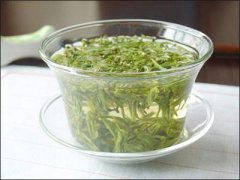
Is Green Tea's Anti-Cancer Effect Real? Interpreting the Latest Research Findings
New Findings on Green Tea's Anti-Cancer Mechanism, Did You Know? Do you drink tea? Do you know whether green tea can really fight cancer? Let's find out together. Professor Thomas A. Gasiewicz and colleagues at the University of Rochester Medical Center found that green tea can fight cancer by affecting cancer-related proteins.
-
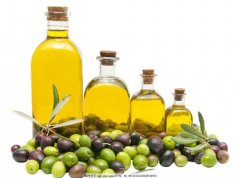
How should you eat olive oil to make it healthy and suitable?
Which kind of oil do you buy? Do you always buy very expensive oil? Actually, you do not need to. Let us take a look at this article below and see that some oils are expensive yet not worth the price. Choosing expensive olive oil to cook food is not necessarily healthier, beware of improper
-

How do you wash fruits and vegetables to get rid of pesticide residue thoroughly?
How to wash fruits and vegetables so you can eat with peace of mind: To remove pesticide residue from the surface of fruits and vegetables, consumers usually have to treat them before eating. The following methods, such as washing, peeling, storing and cooking, can all remove pesticide residue, letting people eat with peace of mind. Let's take a look.
条件筛选