-

Experts from the Chinese Academy of Tropical Agricultural Sciences carry out science and technology services in Hainan, Guangdong and Guangxi
Website news In recent days, expert service teams from the Chinese Academy of Tropical Agricultural Sciences have been active in Hainan, Guangdong and Guangxi, carrying out science and technology disaster relief. After Typhoon Rammasun, the Chinese Academy of Tropical Agricultural Sciences, in accordance with the emergency deployment of the Ministry of Agriculture, launched the "Hundred Experts Science and Technology Disaster Relief Action", sending out a
-
Promoting green pest control technology requires clearing three hurdles
Based on earlier exploration and practice, several years ago, Kecheng District of Quzhou, Zhejiang, successfully established a national-level demonstration zone for quality and safety of agricultural products for export food (citrus), and was also designated a national demonstration zone for green crop pest and disease control. Through the demonstration-driven approach, the results have also been quite notable
-
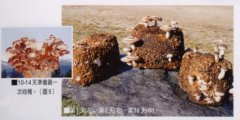
Practical Shiitake Cultivation Techniques and New Fast-Growing, High-Yield Technology
The scientific name of shiitake is Lentinus edodes. It is a low-calorie food; eating 50 grams of shiitake per day provides only 15 calories. Its protein and fiber content is also high, and it is rich in calcium. In addition, shiitake contains two components that have been proven to have medicinal effects, namely shiitake mycelium extract (LEM) and lentinan, both of which are currently sold as commercial products.
-
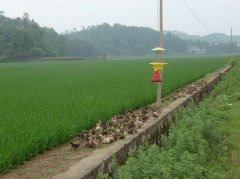
New Technology for Ecological Duck Farming in Rice Paddies: An Introduction to Efficient Duck Farming Methods
Natural ecosystems are diverse, with various organisms coexisting in harmony. We can raise many animals in rice paddies to increase income. Let's take a look at how to raise ducks in the fields. Also, beneath this beautiful ecology lie troublesome problems. For organic farms
-
What are some modern agricultural technologies? These three treasures are products of technological development
The Taiwan Agricultural Research Institute's fruit and vegetable cultivation greenhouse uses a double-net and insect-proof walkway design to reduce pest problems inside the greenhouse, and by adjusting crop cultivation row and plant spacing to reserve space for small agricultural machinery to move through, the number of plants cultivated per unit area not only does not decrease, but can also be coordinated with agricultural machinery for
-
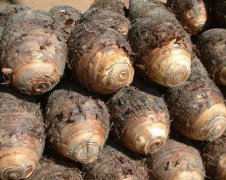
Organic rice costs too much, so is organic taro cultivation technology and yield better?
Do you know whether it is better to grow organic rice or organic taro? In fact, the organic rice market is now saturated. If you grow organic rice, you will not make much money. It would be better to try growing organic taro, which can bring high returns and is easier than growing
-

Chukar Partridge Farming Technology and Profit, How Long Until It Lays Eggs and Purchase Price
Many people are now farming chukar partridges, which shows that the profits from farming chukar partridges are relatively high. Wild chukar partridges usually nest among rock piles or in hillside shrubs and grass, and also nest at the base of overhanging rocks, under stone slabs at the mountain edge, or in shrubs and grass between mountains and valleys.
-

Breakthrough in Artificial Breeding of Blue-banded Angelfish Fry, Creating Value While Balancing Ecology
Brilliant colors and dazzling postures, with schools of fish swimming gracefully underwater, are extraordinarily therapeutic, and have also made the ornamental aquarium industry a star industry under trends such as the stay-at-home economy and physical and mental stress relief; according to the Food and Agriculture Organization of the United Nations (FAO)
-
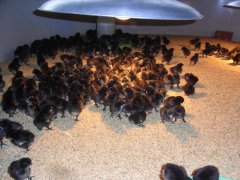
New black velvet silkie breed is dual-purpose for eggs and meat, technology transfer could be available as early as the end of the year
Because native silkie chickens do not lay many eggs, they have long been used mainly as meat chickens. To improve the egg-laying performance of silkie chickens, the Livestock Research Institute obtained eggs of the "black silkie" from China and, after about 20 years of selective breeding, successfully developed a new silkie
-
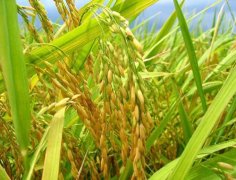
Four Key Points of Rice Seedling Cultivation Technology and Materials Needed for the Seedling Soil Formula
Rice is now our most important food, it is our staple food, so how much do you know about rice cultivation methods? Let's first take a look at the rice seedling cultivation methods below! Seedling cultivation methods 1. Seedbed soil Use one part wood shaving compost (each box weighs about 520 grams, 125 kg per hectare), add one part crushed rice husk (each box weighs about 150 grams, 36 kg per hectare), add one part soil (each box weighs about 800 grams, 192 kg per hectare), that is, a 1:1:1 volume ratio as the seedling cultivation material. The mixing method is carried out with a mixing mixer, or one part wood shaving compost and one part crushed rice husk are evenly spread on the upper layer of the soil pile, then mixed into the soil with a tractor, and finally screened with an electric soil crushing and soil sieving dual-purpose machine to obtain uniform seedbed soil. For covering soil, mix one part crushed rice husk with one part soil (that is, 1:1) for covering. The total soil amount including covering soil, calculated at 300 grams per box, is 264 kg per hectare. Compared with the current 432 kg of seedling soil mixed with rice husk and soil, this saves 168 kg per hectare (38.9%).
条件筛选