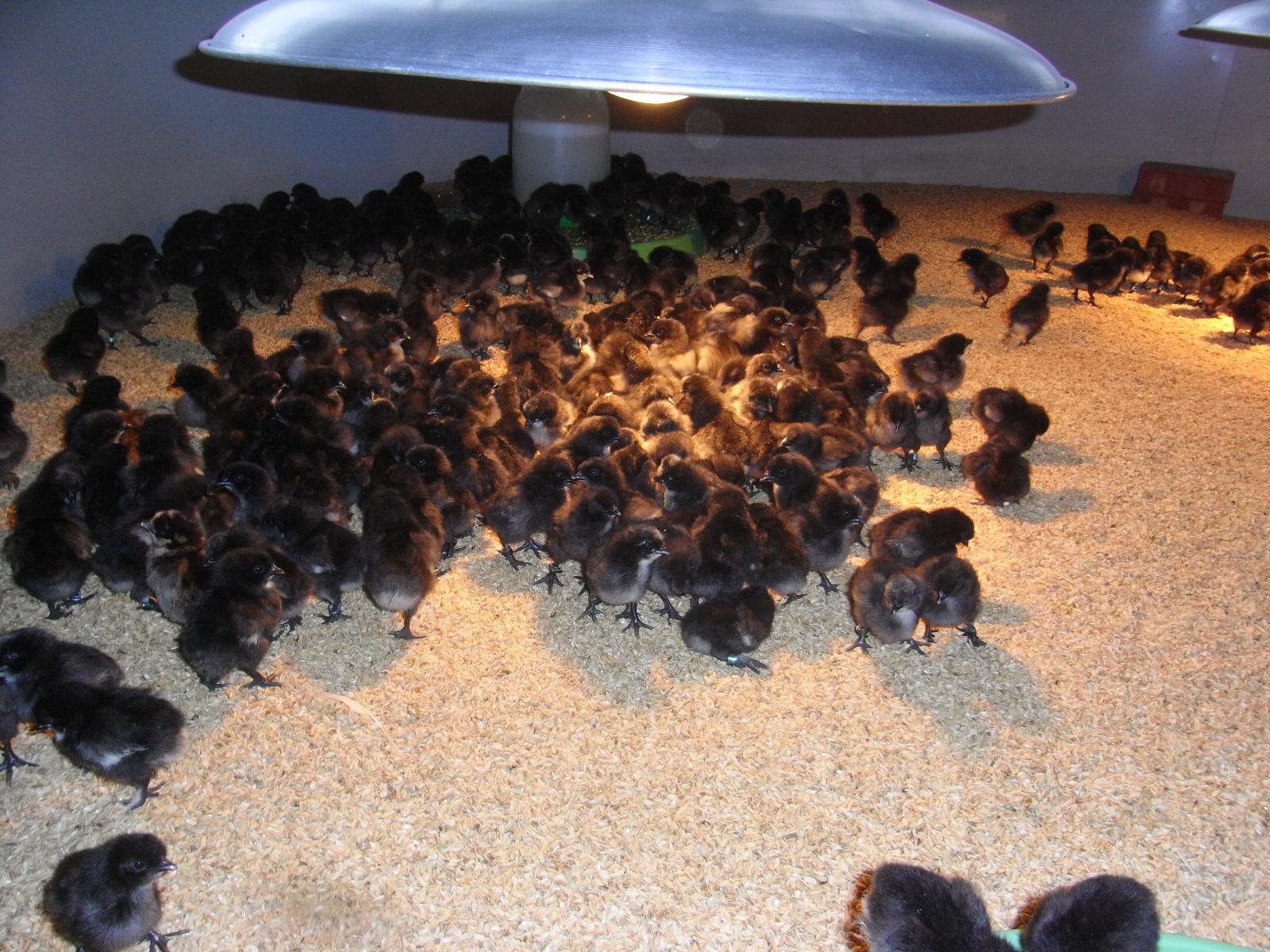
New black velvet silkie breed is dual-purpose for eggs and meat, technology transfer could be available as early as the end of the year
Because native silkie chickens do not lay many eggs, they have long been used mainly as meat chickens. To improve the egg-laying performance of silkie chickens, the Livestock Research Institute obtained eggs of the "black silkie" from China and, after about 20 years of selective breeding, successfully developed a new silkie breed, the "black velvet silkie," in March last year, and it passed breed approval on April 29, 108 ROC year (2019). Liu Xiaolong, an associate researcher at the Livestock Research Institute, said the new chicken breed can lay an average of about 100 eggs per bird and can also be used for meat at the same time, making it a dual-purpose breed for meat and eggs, and technology transfer could be offered externally as early as the end of the year.
Liu Xiaolong pointed out that after the Livestock Research Institute obtained 60 “black silkie” eggs introduced from China on June 28, 84 ROC year (1995), 49 chicks hatched on July 20 of the same year. After 11 generations of evaluation of growth and egg-laying performance and selective breeding, a new silkie breed, the "black velvet silkie," was developed on March 9, 107 ROC year (2018), submitted to the Animal Industry Division of the Council of Agriculture for breed registration review, and passed breed approval on April 29, 108 ROC year (2019).
Liu Xiaolong explained that the originally introduced "black silkie" could produce an average of about 70 silkie eggs per bird. After 11 generations of selective breeding, the egg production of the new breed, the "black velvet silkie," increased to about 102 silkie eggs per bird. Compared with Taiwan's native silkies, which produce an average of 40 to 44 eggs, the new silkie breed's egg production is clearly much higher. Although silkie eggs are smaller, their lecithin is about 23% higher than that of commercially sold brown-shell eggs, giving them high nutritional value.
Dual-purpose male chicks for meat and eggs can be used as meat chickens
Liu Xiaolong emphasized that layer farms usually select only female chicks to raise, while male chicks are mostly humanely culled. However, in addition to its egg-laying value, the black velvet silkie can also be used as a meat chicken, allowing layer farms, when selecting chick sex, to keep male black velvet silkie chicks as meat chickens, reducing the number of male chicks that are humanely culled.
When used as a meat chicken, the black velvet silkie has a light gray carcass, lighter in color than the meat of native silkie chickens, which is expected to increase public acceptance of silkie chicken meat. Liu Xiaolong mentioned that although the new silkie breed weighs only about 1.5 kg at 20 weeks and is smaller in size than native silkie chickens, the smaller carcass can better meet the needs of small families and reduce chicken preservation problems.
Because this is a new chicken breed, it must first undergo valuation at the Agricultural Technology Research Institute. After the technology transfer price is decided, the Livestock Research Institute's research and management committee will set guidance rules, and finally the Council of Agriculture's intellectual property review committee will evaluate the new chicken breed's economic benefits for chicken farmers based on the Animal Industry Division's opinions. Liu Xiaolong said review operations are still underway, and the review process could be completed and technology transfer opened as early as the end of the year.