-
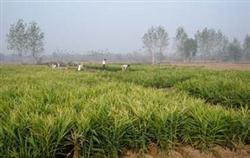
How to fertilize ginger for high yield? Detailed explanation of the key points of formula fertilization technology
Ginger has a long growing period and a high fertilizer requirement. Under medium fertility conditions, to produce general 2500 kg of ginger per mu, 25-40 kg of nitrogen, 10-22 kg of phosphorus (P2O5), and 30-50 kg of potassium (K2O) need to be applied. The absorption ratio of nitrogen, phosphorus, and potassium is 11:1:16 or 1:0.5:2. In addition, calcium, magnesium, boron, zinc, iron, and other medium and trace...
-
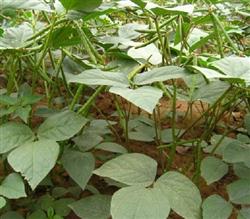
How is the fertilization and stress-response technology for mung beans implemented? A full analysis of the key points
Mung bean is a major crop in our city, with a planting area of more than 1 million mu every year and a yield of more than 110,000 tons, accounting for more than 30% of the country's annual mung bean output. Baicheng mung beans, with their large seeds, plump grains, bright color, fresh green appearance, no off-colors, no pollution, and high protein content, have become a sought-after commodity on the international market...
-
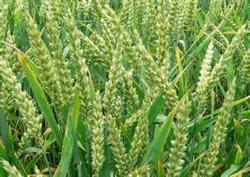
Detailed Explanation of Key Points of Barley Seed Coating Agent Cultivation Technology
1. Establish a seed propagation base and a rational improved-variety breeding system. Use the "three-plot field" established by scientific research breeding units or improved-variety farms; the stock seed plot propagates pre-stock seed and stock seed, or stock seed is propagated directly from breeder seed; improved varieties are produced by specialized seed farms or specialized contract households, and the seed department arranges improved-variety production...
-
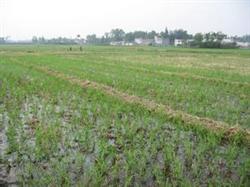
Key Operational Points for No-Till Rice Seedling Broadcasting Cultivation Technology
No-till rice seedling broadcasting refers to a new rice tillage and cultivation technique in which, after harvesting the previous crop, without any plowing or harrowing of the paddy field, herbicide is first applied to kill weed plants and shed-grain seedlings and to wither rice stubble, then the field is irrigated and fertilized for retting, and after the water layer naturally drains or shallow water is released, plastic-tray seedlings or paper-tube seedlings are broadcast-transplanted into the main field...
-
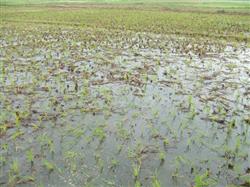
Detailed Explanation of Rice No-Till Dry Direct Seeding Cultivation Technology
(1) Paddy field selection: Select a field where the previous crop was rice and which has not been plowed for no-till dry direct seeding cultivation. Fields with many malignant weeds, heavy clay soil, etc. are not suitable for no-till cultivation. (2) Weed treatment: 4 to 6 days before sowing, choose a sunny or cloudy day with a temperature above 15 degrees, use 10% "Glyphosate" 2 kg + 20% "Gramoxone" 100 ml per mu, diluted in 60 kg of water (four containers of water), and add one tablespoon of laundry detergent to each container of water, then spray to control weeds. If rain occurs within 4 hours after spraying, re-spray, otherwise the weed control effect will be poor.
-
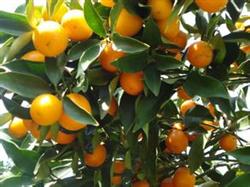
Detailed Explanation of Postharvest Commercial Handling Technology for Navel Orange Fruit
I. Growth and Development Indicators for High-Yield Navel Orange 1. Tree shape, plant height and canopy spread. For 4-5 year old trees, cultivate a natural round-headed shape; for mature trees, control the trunk height at 40 cm and tree height at about 2.5 m; the high-yield canopy spread should be maintained at about 2.80 m x 2.60 m. 2. Diameter and grading. The branch trunk diameter of Newhall should be...
-
Harmless production technology for early spring potato-stevia-autumn cabbage
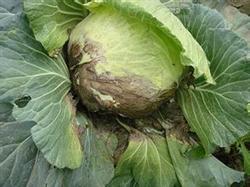
This spring has seen more low-temperature and low-light days, which favors the occurrence of cabbage sclerotinia rot. Vegetable growers are urged to take control measures early to reduce the damage. 1. Symptoms and characteristics: After seedlings are infected, water-soaked light brown lesions appear on the leaves, with indistinct edges, and the diseased tissue soft-rots, causing damping-off. When plants are infected during the head-forming stage, on the stem bases near the ground...
-
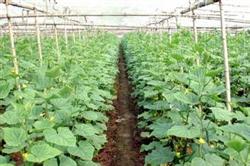
Detailed Explanation of Multi-Layer Covered Seedling Cultivation Technology for Cucumbers in Spring Greenhouses
1. Do not arbitrarily change the light-receiving angle of the greenhouse. The angle of the solar greenhouse currently used for cucumber cultivation has been scientifically verified over a long period. Its north-south span, height, and rear slope angle should not be arbitrarily changed. 2. Do not apply concentrated fertilizer at transplanting. Various chemical fertilizers, especially nitrogen fertilizers, under humid and high-temperature conditions, will produce large amounts of...
-
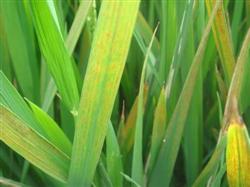
Key Points and Correct Operation Methods of Rice Seed Soaking Technology
Rice premature aging refers to the premature senescence of leaves during the heading to maturity stage of rice, with leaf color turning brown, dirty-white dead areas appearing at leaf tips, leaves thin and curved, root growth weakened, and even a few black roots occurring. There are many factors causing rice premature aging; besides pests and diseases, the main ones are the following...
-
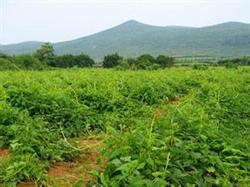
Detailed Explanation of Key Points for Standardized Yam Production Technology
I. Environmental Conditions Yam cultivation has relatively strict soil requirements. Generally, loam or sandy loam plots with deep soil layers, loose soil texture, and no tree roots, stones, or rubble within 1 m below the surface should be selected for planting. Clay land can also be planted, but it will reduce the commercial quality of yam and make harvesting difficult. II. Cultivation...
条件筛选