-

Where in China does the best matsutake grow? Take a look at this ranking of producing areas
Matsutake is a rare and precious natural mushroom in the world, known as the "king of mushrooms." Matsutake is rich in nutritional value and incomparably delicious. At present, matsutake is basically wild matsutake and cannot yet be cultivated artificially, so its market price is relatively high. Every matsutake production season, many people
-
What are the common varieties of air plants? A complete guide
Today let's take a look at what common air plant varieties there are. Friends who are not familiar with them may think of fruit when they see the word "pineapple," but air plants are actually ornamental flowers. Because they do not need soil to grow, are easy to care for, clean and attractive, save
-
What excellent loquat varieties are there? Take a look at these three!
Loquat is native to China and is a fruit tree variety that flowers in winter and fruits in spring. Its fruit ripening period falls in the off-season for fresh fruit in late spring and early summer, so it sells well on the market at 10-20 yuan per kilogram, with obvious economic value. There are many loquat varieties; below we mainly look at several excellent varieties.
-
An introduction to distinctive winter melon varieties - take a look at these unique, excellent varieties
Winter melon is a relatively common vegetable in rural areas. Besides being used as a vegetable, the fruit is also used to preserve various candies. Its flesh is white and juicy, and its nutritional and medicinal value is very high. It has very good effects on treating cancer, high blood pressure and other diseases, and is suitable for
-
Where in China is sweet potato grown that tastes the best and sweetest? See if your hometown is on the list
Sweet potato is itself a food with a relatively high sweetness, sweet whether eaten raw or cooked, but the sugar content of sweet potatoes still differs between varieties and growing regions. Some friends just like sweet potato varieties that come out sweeter when roasted. Below, let's take a simple look together at all of China
-
Where Is the Best Kelp Produced? A Look at Three Major "Hometowns of Chinese Kelp"
Kelp can be said to be one of the more common foods on the dining table. It not only has a unique taste, but also enjoys the reputation of being a "longevity vegetable," and it is very rich in nutritional value. Eating kelp regularly is also greatly beneficial to the body. At present, in China's Zhejiang, Fujian
-
Ranking of China's Hometowns of Ginger Revealed, Shandong Takes First Place
Ginger is a fine Chinese medicinal herb. It can not only be used to cook all kinds of dishes, but when steeped in water and drunk it can relieve the surface and dispel cold, warm the stomach, and improve blood circulation, bringing good therapeutic results to people with deficiency-cold type conditions, so growing ginger has now become very popular.
-
What care points should be noted after flower cuttings are taken?
What should be noted after flower cuttings are taken?
-
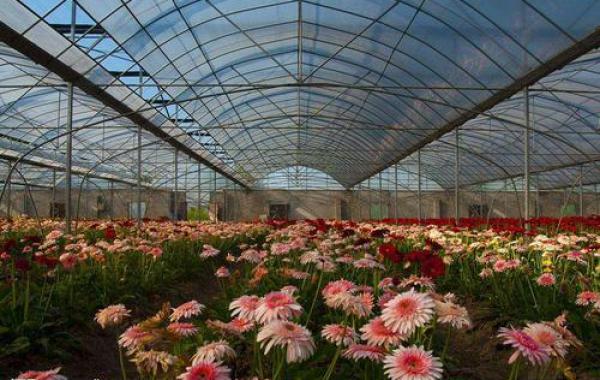
What precautions should be taken when spraying pesticides on flowers in greenhouses?
What precautions should be taken when spraying pesticides on flowers in greenhouses?
-
At what size do crucian carp spawn, and how many days does it take for the eggs to hatch into fry?
Crucian carp, commonly known as crucian, with local names such as jiguazi, yuejizai and tuji, can produce many new varieties through artificial breeding and selective breeding. So at what size do crucian carp spawn? How many days does it take for the eggs to hatch into fry? According to farmer Mr. Zeng, the gonads of crucian carp mature earlier than those of other fish; fish in their second year can spawn, and they continue to grow in size while spawning. One-year-old crucian carp can already spawn. Moreover, the spawning period is long, lasting from spring all the way to autumn, and the number of eggs laid is large; the eggs are laid on aquatic plants or other objects in shallow water. The strong reproductive capacity of crucian carp is an important reason why it is widely distributed and abundant. There is another point: crucian carp still forage for food during the spawning period, which is different from other fish. <p style="text-align: center;"></p> <p style="text-indent:2em;"><span style="color:#FF0000">How many days does it take for the eggs to hatch into fry?</span></p> <p style="text-indent:2em;">Generally, it takes 3—7 days from the laying and fertilization of the eggs to the hatching of the fry. If the average water temperature is 15—20°C, the hatching time is 5—7 days; if the average water temperature is 20°C, the fry can hatch in 4—5 days; if the average water temperature is 20—25°C, only 2—3 days are needed. In short, the lower the water temperature, the longer the hatching time.</p> <p style="text-align: center;"></p> <p style="text-indent:2em;"><span style="color:#FF0000">Crucian carp farming techniques</span></p> <p style="text-indent:2em;">1. Pond conditions</p> <p style="text-indent:2em;">Crucian carp has the habits of liking to gather in groups, burrowing into mud, and leaping upstream to escape. The pond area for mainly farming crucian carp should not be too large; generally about 2 mu is suitable, and it should not exceed 4 mu. The pond bottom should be relatively hard, generally with a mud thickness within 10 cm; when it exceeds 10 cm, the mud must be cleared to facilitate the catching (catching) of crucian carp. The pond embankment should be solid and not leak water, and sturdy and reliable fish-blocking screens should be installed at the water inlet and outlet. The fish-blocking screen should be 50 cm higher than the highest water level of the pond.</p> <p style="text-indent:2em;">2. Variety selection</p> <p style="text-indent:2em;">At present, there are many crucian carp varieties sold on the market, and it is inevitable that good and poor ones are mixed. Practice has proved that allogynogenetic silver crucian carp and high-back allogynogenetic silver crucian carp (abbreviated as high-back crucian carp) are suitable for main farming, and their growth speed is 2 times and 3 times faster than ordinary crucian carp respectively. Allogynogenetic silver crucian carp and high-back crucian carp are similar. The differences between allogynogenetic silver crucian carp and ordinary crucian carp are: allogynogenetic silver crucian carp has 31-32 scales along the lateral line, while ordinary crucian carp has 28-29; allogynogenetic silver crucian carp and high-back crucian carp have the same number of lateral line scales, but high-back crucian carp has a short head, high back, thick body, and round abdomen.</p> <p style="text-indent:2em;">3. Stocking density</p> <p style="text-indent:2em;">From the perspective of farming economic benefits, if the stocking number exceeds 2000 fish/mu, although a higher yield can be obtained, the individual commercial fish raised are small, the selling price is low, and the benefit is not ideal; if the stocking number is less than 1000 fish/mu, although the individual commercial fish are larger, the total yield is not high and the sales income is low. Stocking 1400 fingerlings of 30 grams each per mu or 1200 fingerlings of 50 grams each per mu, with an appropriate amount of silver carp, bighead carp and summer grass carp, with the total number of mixed fish not exceeding 600, can achieve a net yield of more than 500 kg of crucian carp and about 200 kg of other fish, giving an ideal effect.</p> <p style="text-indent:2em;">4. Water quality management</p> <p style="text-indent:2em;">The calcium and phosphorus content in the body of crucian carp is more than 2 times that of other fish, so the water is required to be rich in calcium and phosphorus to meet the physiological needs of crucian carp. Apply quicklime solution once about every 20 days, with 60 kg per mu each time; apply superphosphate once every 15 days, with 15-20 kg per mu each time. Superphosphate can only be applied 3-5 days after applying quicklime, to prevent the water from being too alkaline and reducing the effect of phosphate fertilizer.</p>
条件筛选