-

Black-eyed Susan: How to Grow It and Its Main Value and Uses
Black-eyed Susan is generally sown in spring and autumn. March in spring and September in autumn are the best times for sowing during natural growth. The sowing time is closely related to its natural flowering period: sown in March in spring, it blooms from June to July; sown in September in autumn, it is planted out into pots in November and blooms the following spring (May to June).
-

Harvesting and Fresh-keeping Methods for Black-eyed Susan Cut Flowers
[Other Chinese Names]Dui Xin Ju, Black-eyed Susan, Black-eyed Coneflower, Black-eyed Susan, Black-eyed Coneflower, Sunflower, Featherleaf Coneflower[Family and Genus]Asteraceae, Rudbeckia[Place of Origin]North America[Plant Characteristics]Black-eyed Susan is a perennial herbaceous plant with persistent roots. The plant height is 30-120 cm. The flower head is 3-5 cm in diameter; the ray florets are bright yellow; the disc florets are purple-black, densely arranged in a spherical shape. The natural flowering period is from June to September.[Cut Flower Harvesting]The harvested part is the flower head of Black-eyed Susan with its stem. It can be harvested after most of the ray florets have opened, and the operation
-
A Detailed Guide to the Ornamental Value and Cultivation Methods of Black-Eyed Susan
[Latin name]: Rudbeckia laciniata [Family and genus]: Asteraceae, Rudbeckia [Alias]: Cutleaf Coneflower [Place of origin]: Canada and the United States. Its morphological characteristics are those of a perennial herbaceous flowering plant. It is generally grown as a 1-2 year plant, with rough branches and leaves, and the ground plant can reach 1-2 m in height; in pot culture it is dwarfed to 20-30 cm, and it is much branched, with relatively wide and thick leaves; the basal leaves are pinnately divided into 5-7 lobes, and the stem leaves are 3-
-
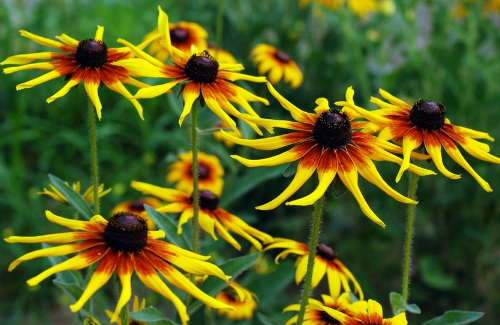
How to Grow Black-Eyed Susan and Things to Note
1. Soil: Because black-eyed Susan has strong adaptability, it is not demanding about soil; the soil only needs to be loose, airy and well-draining. We generally choose sandy soil, which is very suitable for the growth of black-eyed Susan. 2. Temperature: Black-eyed Susan likes a warm and well-ventilated growing environment.
-
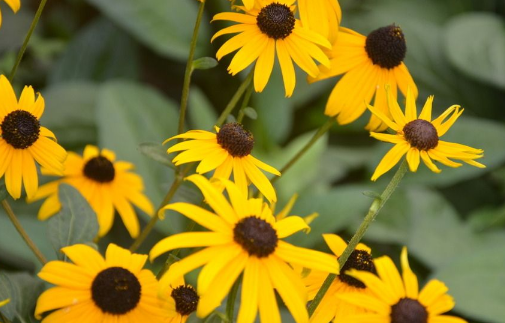
How to plant black-eyed Susan seeds? Detailed sowing method
In autumn, we can harvest black-eyed Susan seeds from the flower heads of the black-eyed Susan. After choosing the right season, we also need to prepare the soil for sowing black-eyed Susan. It is best to choose soil with good drainage that is rich in humus and nutrients, as this helps the black-eyed Susan seeds break through the soil and sprout.
-
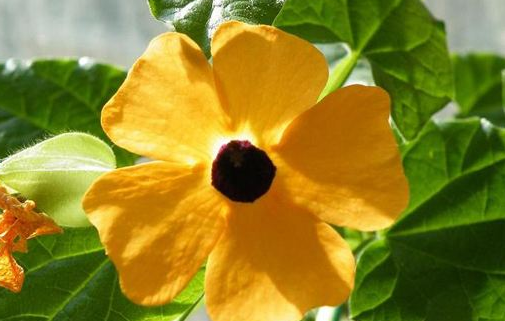
How to Grow and Care for Black-Eyed Susan Vine
Environment: It likes a warm and humid environment and prefers plenty of sunlight. The optimal growing temperature is 20-30°C. It is not cold-tolerant; once the temperature drops below 8°C, it is difficult to maintain normal growth. Fertilizer: It is a plant that greatly loves fertilizer, and once it begins to grow, fertilizing must be carried out strictly.
-

How to Propagate Black-Eyed Susan Vine by Seed? A Detailed Guide to the Method
Tools Needed: For seed propagation, you will need a flower pot, potting soil, a trowel, seeds, a watering can, and so on. Preparation Work: Seeds. Before propagating by seed, the first thing to do is choose seeds. Select healthy black-eyed Susan vine seeds, dry them in the sun, and then store them to prevent the seeds from germinating or becoming moldy.
-
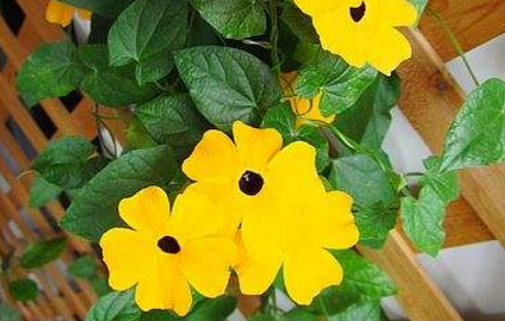
Why does Black-eyed Susan need especially careful care in winter?
The reason it is said that Black-eyed Susan needs careful care in winter is simply that Black-eyed Susan is not a very cold-tolerant plant, so care is needed in winter to prevent it from dying. From reference materials and the care experience of some gardeners,
-
-
条件筛选