Black-eyed Susan: How to Grow It and Its Main Value and Uses
Black-eyed Susan is generally sown in spring and autumn. March in spring and September in autumn are the best times for sowing during natural growth. The sowing time is closely related to its natural flowering period: sown in March in spring, it blooms from June to July; sown in September in autumn, it is planted out into pots in November and blooms the following spring (May to June). Today, we bring you the cultivation methods for black-eyed Susan. Let's take a look at the details.
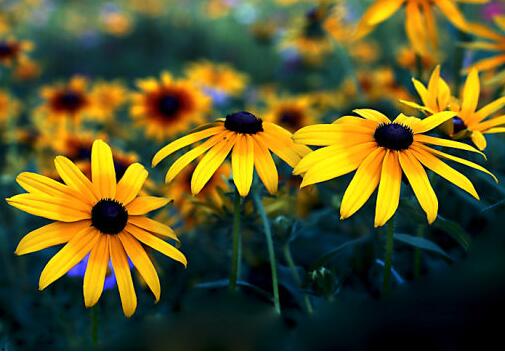
How to grow black-eyed Susan:
Soil: Black-eyed Susan is highly adaptable and has no special requirements for soil, though it is best grown in well-drained, airy, loose and fertile sandy loam. Black-eyed Susan is often grown in the ground.
Temperature: The optimum germination temperature for black-eyed Susan is 21°C-30°C, and it can be sown at this temperature in spring, summer and autumn. The optimum growing temperature for black-eyed Susan is 10°C-30°C; during the day it should not exceed 26°C, while at night it should be kept at 10-15°C. Only at suitable temperatures can black-eyed Susan keep growing and flowering without going dormant.
Light: Black-eyed Susan likes a growing environment with plenty of sunlight, and it should have ample light during its growth period. In summer, when the light is intense, black-eyed Susan should be shaded and cooled to prevent it from going dormant due to high temperatures. In winter, because temperatures are low and there is little sun, to prevent insufficient light and low temperatures from affecting its growth, it should be placed indoors in a sunny spot for care, with attention paid to keeping it warm.
Water and fertilizer: Black-eyed Susan is not demanding when it comes to fertilizer and water. When it is growing well, it generally only needs appropriate topdressing with nitrogen, phosphorus and potassium fertilizers. When watering black-eyed Susan, follow the principle of watering when dry and letting it dry out between waterings, so that the flowers are even more beautiful.
Pests and diseases: When cultivating black-eyed Susan, pay attention to drainage and ventilation, so that poor drainage does not cause root rot.
The main value of black-eyed Susan:
Landscape use: It blooms profusely and is suitable for courtyard arrangements, as a flower border material, or for planting along the edges of lawns in a naturalistic style.
The new black-eyed Susan lines are award-winning varieties in Europe, having won the AAS Winner and Fleuroselect Awards. These lines offer variety diversity and provide customers with a range of excellent choices; they can be used as windowsill plants, park potted plants, for regional planting or as background plants, and can also be grown as a main flower or in large concentrated plantings. They have the following outstanding advantages:
1. They have brilliant colors, greatly enhancing their visual appeal.
2. The flowering period lasts a very long time, increasing sales opportunities.
3. They are award-winning varieties in European gardens, and their excellent characteristics are widely recognized.
4. There is a wide choice of growth habits and flowering forms, giving them broad possibilities for use.
5. They are heat-tolerant and long-lasting, increasing consumer satisfaction.
Black-eyed Susan flower meaning, black-eyed Susan cultivation methods, black-eyed Susan pictures, black-eyed Susan seed prices
The black-eyed Susan is just as its name suggests: its flower center is black, which is its most obvious feature. But it is precisely this black center that sets off its golden-yellow petals, making them dazzling. Whether seen with the naked eye or filtered and beautified by a camera, it presents an incomparably beautiful appearance. Such a beautiful chrysanthemum deserves a detailed introduction, so let us take a closer look below.
I. Introduction to black-eyed Susan
The full name of black-eyed Susan is black-eyed coneflower. It belongs to the Asteraceae family and originally grew in the eastern United States. Although its cold hardiness is not strong, it can also be cultivated in central China. It is commonly believed that its flower center is black, but more precisely it is purplish brown. Around the flower center are petals of similar size; the common petal color is golden yellow, but there are in fact also red, bicolor and other different colors.
II. The flower meaning of black-eyed Susan
The flower meaning of black-eyed Susan is just like the bright color of its petals: it represents justice and beauty, symbolizing a sunflower that always faces the sun and full of bright connotations. In love, the flower meaning of black-eyed Susan represents a love that stands apart from the crowd, unafraid of being questioned, loving thoroughly and fearlessly.
III. How to grow black-eyed Susan
1、Soil: Black-eyed Susan has low soil requirements because of its strong adaptability, but if it can be grown in well-drained, airy, loose and fertile sandy loam, it will grow even better.
2、Temperature: The suitable growing temperature for black-eyed Susan is 10°C-30°C, and the suitable germination temperature is 21°C-30°C; during the day it should not exceed 26°C, while at night it should be kept at 10-15°C. As for temperature conditions, spring, summer and autumn are all suitable, and only at suitable temperatures can black-eyed Susan keep growing and flowering without going dormant.
3、Light: Black-eyed Susan likes plenty of sunlight, so it grows well in places with ample light. However, it must not be exposed to the scorching sun outdoors in summer, or it will wither. In winter, when sunlight is scarce and temperatures are low, to prevent insufficient light and low temperatures from affecting its growth, black-eyed Susan needs to be moved to a sunny spot to get more sunlight.
4、Water and fertilizer: Black-eyed Susan grows relatively well under suitable fertilizer conditions, but it is essentially not demanding about fertilizer and water. When it is growing well, it only needs appropriate topdressing with nitrogen, phosphorus and potassium fertilizers, and the flowers it produces will be even more beautiful.
IV. Price situation of black-eyed Susan
Black-eyed Susan is relatively small in size and fairly cheap: currently on the market, one black-eyed Susan plant costs about 0.8 yuan-1 yuan. It is worth mentioning that black-eyed Susan has a strong ability to reproduce and regenerate; it also scatters seeds during growth, resulting in more black-eyed Susan plants.
That is all for our introduction to black-eyed Susan. After seeing the pictures of black-eyed Susan and its price, don't you feel very tempted to buy seeds and grow it? Attracted by its appearance, and after learning about its flower meaning and simple cultivation methods, the editor thinks black-eyed Susan is truly suitable for home growing and also has ornamental value.
How to grow black-eyed Susan: cultivation methods and points to note
Because black-eyed Susan has relatively high economic value, the economic benefits it can bring from cultivation are very high. Although black-eyed Susan is not native to our country, it has already become an important cash crop for our farmers. Friends who are interested can try growing a small amount first.
How to grow black-eyed Susan
Black-eyed Susan is native to North America and is a perennial herbaceous plant, often cultivated as a 1-2 year plant. Black-eyed Susan is highly adaptable and relatively cold-tolerant. It is very easy to cultivate and relatively drought-tolerant, and is not strict about soil, but well-drained sandy soil should be chosen. Black-eyed Susan likes a warm growing environment with plenty of sunlight.
Black-eyed Susan cultivation methods and points to note
1. Soil
Black-eyed Susan is not demanding about soil and is highly adaptable; it is suitable for planting in well-drained, loose, airy and fertile sandy loam.
2. Temperature and light
The suitable growing temperature for black-eyed Susan is between 10°C and 30°C; only by maintaining a suitable temperature can black-eyed Susan keep growing and flowering. As for light, black-eyed Susan likes an environment with plenty of sunlight and needs ample light during the growth period to grow vigorously and bloom brightly. In summer, with strong light and excessively high temperatures, black-eyed Susan should be given appropriate shade and cooling measures, such as spraying water. In winter, when temperatures are low and sunlight is scarce, in order for black-eyed Susan to keep growing, it should be placed indoors in a sunny spot for care, with attention paid to keeping it warm.
3. Water and fertilizer
Black-eyed Susan is not demanding about fertilizer and water. Watering generally follows the principle of watering when dry and letting it dry out between waterings. During the growth period, black-eyed Susan needs a relatively large amount of water, so it should be watered appropriately more. During the bud stage, the potting soil should be kept moist and watered sufficiently, and watering can be done in the morning or evening. When black-eyed Susan is flowering, watering should be moderated to prevent the plant from lodging. As for fertilizing, besides adding appropriate base fertilizer at planting time, generally when the growth condition is good, only appropriate topdressing is needed to supplement the missing nitrogen, phosphorus and potassium elements and ensure sufficient nutrients. During the flowering period of black-eyed Susan, the application of phosphorus and potassium fertilizers should be increased to make the flowers bloom brightly.
4. Propagation
Black-eyed Susan is mainly propagated by division, and can also be propagated by sowing in spring and autumn. In addition, tissue culture and cutting propagation are also used to some extent.
5. Pruning
During the growth of black-eyed Susan, it should be pruned frequently. During the plant's growth period, pinch off the growing tips in time to promote branching and make it bloom more. When the leaves are too dense, promptly prune away old leaves and diseased leaves from the plant to keep the plant shape graceful and improve light and ventilation conditions, reducing the occurrence of pests and diseases.
6. Pests and diseases
When cultivating black-eyed Susan, note that it may break out with root rot or leaf spot disease, and pests and diseases should be controlled in time.
The uses of black-eyed Susan
1. The ornamental use of black-eyed Susan
Black-eyed Susan is a flowering ornamental plant, and of course its main use is still ornamental.
Black-eyed Susan has beautiful flowers; when in bloom the flowers are abundant and have brilliant colors, very attractive. Black-eyed Susan is suitable as a material for courtyard arrangements or for arranging flower borders. It can also be planted in a naturalistic style to decorate lawns and woodland, creating a different kind of ornamental scenery that is very beautiful.
Black-eyed Susan can be grown in pots; potted black-eyed Susan can be placed on windowsills or used as park potted plants. It can also be planted as a main flower or as a background plant. Planting black-eyed Susan in large quantities can also create a sea of flowers and plays a role in beautifying the environment.
2. The variety value of black-eyed Susan
Black-eyed Susan is in fact a relatively famous flower species.
The new lines of black-eyed Susan are award-winning varieties in Europe. The new lines offer variety diversity in black-eyed Susan, giving flower lovers who like it more choices. A long flowering duration, improved heat tolerance, and other advantages all make flower lovers more satisfied with and fond of black-eyed Susan.
3. The economic use of black-eyed Susan
Black-eyed Susan has excellent varieties and very high economic value.
Black-eyed Susan is relatively easy to cultivate and can also sell for a relatively high price on the flower market, which can increase the income of flower growers. It is easy to plant and has beautiful, brightly colored flowers, which can also satisfy consumers. To some extent, black-eyed Susan has driven the development of the flower market economy.
The flower meaning of black-eyed Susan
Although black-eyed Susan is named "black-hearted," it is actually not black at all; its flower meaning is fairness and justice!
Although black-eyed Susan is called "black-hearted," only its flower center is black; everything else, including the meaning it represents, is not black at all. It stands for fairness and justice and is a very bright and upright flower, which of course is also an important reason why people like black-eyed Susan.