-
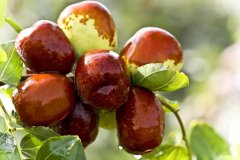
China Fresh Jujubes Proposed for Export to the United States: Pest Risk Analysis Completed
According to Perishablenews.com, the United States Department of Agriculture Animal and Plant Health Inspection Service (APHIS) has completed a pest risk analysis for the import of fresh jujubes from China and is currently receiving comments. After a comprehensive analysis, researchers at the USDA Animal and Plant Health Inspection Service
-
Current State of China's Seed Exports and Taiwan's Seed Export Ranking; Taiwan Also to Promote Organic Seeds
Under the impact of global climate change, many countries are paying increasing attention to the quality of seed production in order to maintain crop yields. According to statistics from the International Seed Federation, Taiwan ranks 22nd in the world in seed exports, and its export volume has grown year after year, with most exports going to India, the mainland, Thailand, Vietnam and other countries, mainly leafy vegetables, melons and gourds, and solanaceous crops.
-

The habitat of the pheasant-tailed jacana reflects the current state of agricultural conservation, and the crisis of population aging is severe
In March this year, media reports pointed out that a green energy company was lobbying farmers in the Guantian area to lease their farmland as sites for installing solar photovoltaic panels, offering an annual rent of 40,000 yuan (higher than the going rate of 6,000 yuan per fen) on 20-year leases to attract farmer landowners to join; some
-
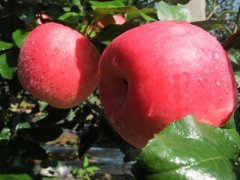
Introduction to the Honeycrisp Apple Variety from the United States: How Does It Taste, and Is It a Hybrid Variety?
The Honeycrisp apple (Malus pumila) is an apple cultivar (cultivated variety) developed by the Horticultural Research Center at the Minnesota Agricultural Experiment Station of the University of Minnesota Twin Cities in Minnesota. Honeycrisp was designated as the MN 1711 test brand in 1988,
-
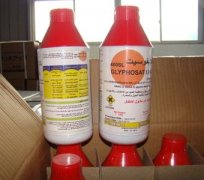
Glyphosate Roundup Cancer Case: US Court Orders Monsanto to Pay 2 Billion USD
On May 13 local time in the United States, a San Francisco court ordered German chemical and pharmaceutical giant Bayer to pay 2.05 billion USD to a couple; the plaintiffs argued that they were diagnosed with cancer after using Roundup herbicide (also known as RangerPro, glyphosate) under Bayer's subsidiary Monsanto. This is already the
-

Which fruit varieties are suitable for growing in Ningbo?
Ningbo is a major port city on the southeast coast of China and the economic center of the southern wing of the Yangtze River Delta, as approved by the State Council. It lies on the Ningbo Plain, at a moderate latitude, with a subtropical monsoon climate, mild and humid, with ample sunshine and four distinct seasons. So what fruits are suitable for growing in Ningbo?
-
How to water the Sedum rubrotinctum succulent and points to note, teaching you to grow it into a red, vibrant state
Watering and light are truly the two biggest issues affecting succulent growth. Once done poorly, they often cause all kinds of symptoms in succulents, truly wearing out every devoted plant parent's heart. The editor here provides everyone with watering techniques for Sedum rubrotinctum, hoping it can help
-
Detailed Explanation of Egg Incubation Methods in Gecko Breeding
In the wild, the incubation of gecko eggs relies on natural temperature. The length of the incubation period is closely related to the ambient temperature and also closely related to how early or late the eggs are laid during the laying season. Eggs laid before July 15 that can hatch into juveniles in the same year are called same-year incubation eggs; eggs laid after July 15 of the year that cannot hatch into juveniles in the same year are called overwintering incubation eggs. The incubation period of same-year incubation eggs falls in summer and autumn, when temperatures are suitable and embryonic development is rapid. The embryonic period is 92-119 days, averaging 105.1 days, with an average accumulated temperature of 2875.65°C. The embryonic development period of overwintering eggs enters the low-temperature period of the year, and embryonic development is slow. The embryonic period is 280-315 days, averaging 297.5 days, with an average accumulated temperature of 5738.05°C. If the accumulated temperature during hibernation is excluded, the embryonic period of overwintering incubation eggs is actually 116-134 days, averaging 125 days, with an average accumulated temperature of 2961.9°C. It can thus be seen that, excluding the hibernation period, the embryonic periods and accumulated temperatures of same-year incubation eggs and overwintering incubation eggs are similar. <p>In the wild, the incubation of gecko eggs relies on natural temperature. The length of the incubation period is closely related to the ambient temperature and also closely related to how early or late the eggs are laid during the laying season. Eggs laid before July 15 that can hatch into juveniles in the same year are called same-year incubation eggs; eggs laid after July 15 of the year that cannot hatch into juveniles in the same year are called overwintering incubation eggs. The incubation period of same-year incubation eggs falls in summer and autumn, when temperatures are suitable and embryonic development is rapid. The embryonic period is 92-119 days, averaging 105.1 days, with an average accumulated temperature of 2875.65°C. The embryonic development period of overwintering eggs enters the low-temperature period of the year, and embryonic development is slow. The embryonic period is 280-315 days, averaging 297.5 days, with an average accumulated temperature of 5738.05°C. If the accumulated temperature during hibernation is excluded, the embryonic period of overwintering incubation eggs is actually 116-134 days, averaging 125 days, with an average accumulated temperature of 2961.9°C. It can thus be seen that, excluding the hibernation period, the embryonic periods and accumulated temperatures of same-year incubation eggs and overwintering incubation eggs are similar.</p><p></p><p>Characteristics of embryonic development and external factors affecting incubation. Experiments show that when gecko embryonic development enters the seventh day, the embryo can already be distinguished with the naked eye. There are marks on the yolk, and the appearance is dark gray. When the yolk is separated with tweezers, relatively obvious block-shaped embryos can be seen, about 4 mm in length. By the tenth day, the head can already be distinguished, and two black eye spots are clearly visible. At 50 days of embryonic development, it moves when touched. At 91 days of embryonic development, the yolk has basically disappeared or only a little remains, embryonic development is complete, and the juvenile gecko is curled up inside the eggshell.</p><p>Whether a fertilized egg can develop normally depends, apart from the internal factors of the egg itself, mainly on external environmental factors, namely temperature and humidity. The length of the incubation period is directly related to the incubation temperature. Within the temperature range for embryonic development, the incubation period is short when the temperature is high and long when the temperature is low. The temperature for embryonic development is 20-37°C. Below 20°C, embryonic development stops; at 20-25°C, embryonic development is slow; at 26-37°C, embryonic development is fast; above 38°C, embryonic development death can occur. The most suitable humidity for embryonic development is 70%-85%. Experiments prove that a relative humidity of 50%-90% is acceptable for gecko egg incubation. A relative humidity below 50% will cause fertilized eggs to lose water and affect embryonic development. Long-term relative humidity above 90% will cause fertilized eggs to mold, also affecting embryonic development. Therefore, during artificial incubation, humidity should be controlled at 70%-85%.</p>
-
Freshwater pompano (piaractus brachypomus) performs well when raised on soybean meal-based feed
The American Soybean Association (ASA), in cooperation with the Nanjing Jiangpu County Aquatic Technology Extension Station, the Jiangpu Fish Breeding Farm, the Jiangsu Provincial Aquatic Technology Extension Station, and the National Extension Center for Aquatic Technology (NEC), carried out a 2-month pond trial on the culture of freshwater pompano. The aim was to demonstrate the use of US
-
Jusheng No. 1 Grape Variety Introduction and Characteristics Analysis
Jusheng No. 1 grape is another new seedless grape variety introduced from California, USA, following the Red Globe grape. Extremely early-maturing, extra-large berries, natural fruit, no chemical treatment required, single berry up to 12 grams, uniform berries, basically no large or small berries, maximum sugar content above 20, labor-saving cultivation,
条件筛选