-

A Detailed Guide to Using Glyphosate Ammonium Salt
Glyphosate ammonium salt is a herbicide that can control annual and perennial grass weeds, sedges and broadleaf weeds. It has strong destructive power and a broad weed-killing spectrum, truly eliminating the weeds root and branch. Below is an introduction to the usage method of glyphosate ammonium salt. 1. Glyphosate
-
What Is the Difference Between Glyphosate and Glufosinate? Understand the Comparison in One Article
Glyphosate and glufosinate are both herbicides. Although their names differ by only one character, they are fundamentally different, and many people confuse them. Here we explain the differences between glyphosate and glufosinate. 1. Glyphosate is an amino acid type that inhibits enolpyruvylshikimate phosphate synthase, interfering with protein synthesis. It is systemic and translocates within the plant, mainly killing roots; glufosinate is a phosphinic acid type that accumulates ammonium and acts by contact, inhibiting glutamine synthesis. It is primarily contact-acting with weak systemic activity, killing leaves first and translocating within leaves.
-
What are the characteristics of 2,4-D glyphosate? A detailed explanation
2,4-D glyphosate has characteristics such as a broader weed-killing spectrum, faster weed-killing speed, and more obvious results, and its weed-killing effect is not affected by low temperatures, it is resistant to rain washout, and it has a long residual effect. It is a herbicide made by mixing MCPA-sodium and glyphosate ammonium salt, and it is mainly used on non-cultivated land
-
Will glyphosate herbicide harm tree roots?
Theoretically, glyphosate will not cause harm to crop roots. First, glyphosate loses its activity upon contact with soil; if it is poured heavily onto tree roots, the spray solution mainly flows into the soil around the tree roots and immediately has no herbicidal activity; second, glyphosate is generally absorbed through the leaves and translocated
-
What is the difference between glyphosate and paraquat?
Glyphosate is a systemic, translocated see below non-selective broad-spectrum herbicide that can basically kill all weeds, killing the roots, but it takes effect relatively slowly, taking 3 to 5 days, and is low in toxicity and highly effective. Paraquat is a contact-type broad-spectrum herbicide that acts quickly, but it cannot kill the roots; it can only kill the stems and leaves above the soil surface,
-
What is the difference between glufosinate and glyphosate?
The use of pesticides in agricultural cultivation has become unavoidable, and today there is a great variety of pesticides, with specialized pesticides available for various common crop pests and diseases. Many farmer friends, when using pesticides, always confuse glufosinate and glyphosate
-
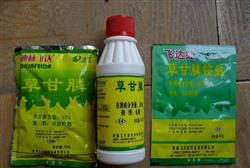
How to Use Glyphosate Herbicide and Its Soil Residual Period
How do you use glyphosate? Please give an introduction. Glyphosate only has a killing effect after it contacts green tissue. Because various weeds have different sensitivities to glyphosate, the dosage also differs. 1. For weed control in orchards, mulberry fields, etc., to control annual weeds, use 0.5-1 kg of 10% aqueous solution per mu; to control perennial weeds, use 10...
-

Ministry of Health and Welfare announces suspension of adding glyphosate pesticide residue tolerance levels, gaining public support
Thank you everyone, we did it together! The Ministry of Health and Welfare announces the suspension of adding glyphosate pesticide residue tolerance levels
-

No Loosening of Glyphosate Standards: FDA Shelves Planned Amendments, Civic Groups Applaud and Hope to Participate
The Glyphosate Controversy: No Loosening! FDA Shelves Planned Amendments to Glyphosate Standards, Civic Groups Applaud and Hope for Citizen Participation in the Future
-
条件筛选